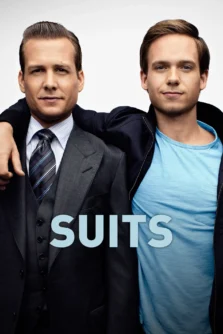
SUITS
Nine seasons of brilliant people lying well in expensive clothes — for adults who can filter it.
Should You Watch It?
Here is the decision in full. Suits is one of the most purely entertaining shows of its decade — fast, funny, endlessly quotable — and it is built, top to bottom, on a lie. A college dropout fakes being a Harvard lawyer, the man who hires him knows, and for seasons the show asks you to root for the cover-up. Nothing on screen is explicit; the moral gravity is the thing to weigh.
The screen content itself is basic-cable predictable: a steady drip of moderate profanity, implied bedroom scenes with no nudity, scotch in nearly every office, and a marijuana thread early on. It holds that level for three seasons, rises noticeably in Seasons 4 and 5, and softens after the prison arc — the season strip above is the honest map.
So: for discerning adults, this is a watchable show and a genuinely rich conversation about integrity, loyalty and what success is for — precisely because the show is slow to condemn its heroes. For kids and younger teens, no: not for gore they'd see, but for a world where lying well is the job and the bed scenes never stop coming.
The Story
NO SPOILERS — WE KEEP THE SURPRISESMike Ross has a photographic memory, no law degree, and a bag of marijuana he very much needs to get rid of. Fleeing a deal gone wrong, he stumbles into a job interview with Harvey Specter — the best closer in New York — who is bored of Harvard clones and hires the kid on the spot. The firm believes Mike is a lawyer. He isn't.
What follows is nine seasons of that secret straining against the people who keep it: the managing partner who built the firm, the paralegal Mike falls for, the rivals who smell blood. The show's real subject isn't law — it's loyalty, and what it costs to be loved for someone you're pretending to be. How the lie ends is the series' best turn, and we won't give it away.
Is It Any Good?
Three stars, and here's what they mean. At its best — roughly Seasons 1 through 5 — Suits is a machine: two leads with real chemistry, dialogue that snaps, and a case-of-the-week engine that never forgets the secret ticking underneath it. Gabriel Macht's Harvey and Patrick J. Adams' Mike are one of TV's great mentor pairings, and Sarah Rafferty and Rick Hoffman steal every third scene.
What costs it the fourth star is the back stretch. When the premise finally resolves and half the cast departs, the show reboots itself around firm politics and never fully recovers its pulse; Seasons 7 and 8 are competent television running on brand. The final season is a warm, self-aware farewell lap that sticks the landing better than it had any right to.
The Worldview
The world of Suits is a Manhattan where winning is the only scoreboard: money, victory and reputation are the trinity, God is never mentioned, and the firm is church. That absence matters more here than in most shows, because Suits is genuinely about ethics — it just has to improvise them without any foundation deeper than loyalty.
What the show honors is real: fierce, sacrificial loyalty; mercy for people who don't deserve it; the slow discovery that winning without integrity tastes like nothing. And to its credit, the lie is not free — consequences arrive, hard, and the story's most moving stretch is watching a man finally stop running from the truth. "Whoever walks in integrity walks securely, but he who makes his ways crooked will be found out" (Proverbs 10:9) could be the series' logline.
The discipleship concern is subtler: for long stretches the show rewards the fraud, and charm does the moral laundering. Watch it with that lens on — the question isn't whether these people are likable (they are), it's whether likability is the same thing as goodness (it isn't).
The Content Guide
The show at its typical level and at its worst — spoilers included by nature. For a specific night’s episode, use the season-by-season checker below.
Foul Language
Moderate and constant: a steady stream of s-words, "hells" and "damns," regular misuse of God's name, and one signature insult repeated across all nine seasons. No f-words in the aired cuts. Heaviest in Seasons 4–5
Violence
Light for a drama: occasional punches thrown in anger, threats and intimidation as standard negotiating tools, and a prison arc in Season 6 with beatings and menace — the show's violent peak
Sex
Frequent implied sex between unmarried couples — characters shown kissing into bedrooms, waking up together, undressing to underwear — plus wall-to-wall innuendo in office banter. An affair storyline in the middle seasons. Nothing explicit is ever shown, but the frequency is the issue: it's most episodes
Nudity
No explicit nudity — basic cable standards throughout. Upper male nudity, women in underwear or sheets in bedroom scenes
Alcohol Use
Pervasive. Scotch is practically a character: office pours to celebrate, to grieve, to negotiate. Occasional drunkenness played for both comedy and consequence. If your household is sensitive to normalized drinking, this is the category to weigh
Smoking and/or Drug Use and Abuse
Marijuana is central to the premise and recurs through the early seasons — dealt, smoked, and joked about, with consequences that arrive late. Brief prescription-pill misuse under exam pressure;
Miscellaneous Immorality
The big one. Sustained fraud as the premise; blackmail, perjury, evidence-burying and betrayal as recurring plot devices — often committed by the heroes, often rewarded for seasons before the bill comes due. The show does eventually make the case that the truth was worth more. It takes its time.
Season by Season
Pick a season: its verdict, what changes, and a ten-second content check for any episode. Llanguage Vviolence Ssex Ddrink & drugs
The premise lands: a weed deal gone wrong, a hire that should never have happened, and a secret four people are already keeping. Content sets the show's baseline — moderate language, innuendo, scotch everywhere — with the marijuana thread heaviest here.
A drug handoff drives the plot and Mike smokes marijuana; one implied sex scene (no nudity); a dozen light profanities; scotch throughout.
Marijuana use played for stakes, not laughs; mild language; innuendo in one scene.
Boardroom betrayal; several scenes of social drinking; a handful of s-words.
Flirtation and one suggestive scene; mild profanity; wine with dinner.
A brief physical altercation and threats; light sensuality; usual language.
Deception theme front and center — a good discussion episode; mild content otherwise.
A making-out scene and a charged kiss; a shoving match; moderate language.
The marijuana storyline returns; otherwise one of the mildest episodes.
Threats and intimidation; scotch-heavy; scattered profanity.
Thematically the season's sharpest mirror; screen content mild.
An adultery plotline discussed, not shown; moderate language.
Tense confrontations; mild content; the cliffhanger is the point.
The lie stops being Mike's problem and becomes the firm's policy — the season's real content is moral, not visual. A power struggle brings blackmail and buried evidence; screen content holds at Season 1 levels, with one Atlantic City episode spiking sensuality and drinking.
The firm absorbs the lie — the season's biggest moral beat; screen content mild.
Innuendo and one suggestive scene; usual language.
Workplace warfare; scattered profanity; office drinking.
A strong episode about cut corners catching up; mild content.
Stimulant pills under pressure, played with consequence; mild otherwise.
Casino setting with gambling and heavier drinking; an implied one-night stand; language typical.
Fallout season: a merger nobody wanted, an affair storyline in the margins, and anger doing most of the talking. Language ticks up slightly; sensuality holds at baseline. Episode checks in progress.
The turn. Mike crosses to high finance and the show trades courtrooms for bedrooms: implied sex scenes become near-weekly, and the language sharpens. This is where families who were fine with S1–S3 should re-decide.
The heaviest season: panic attacks, a betrayal from inside, and the arrest the whole show has been dreading — with sensuality and language still at Season 4 levels. Also the season where consequences finally start telling the truth.
The prison arc. Violence ticks up — beatings, menace, an inmate with a vendetta — while bedroom content eases off. Morally, the strongest season: the lie is finally paid for, and it's the stretch most worth discussing with an older teen.
Back to the firm and back to baseline: boardroom politics, an on-again relationship conducted mostly in implication, and the first signs the engine is tiring. Content steady at pre-S4 levels.
The post-Mike reboot: new leads, knife-fight politics, and noticeably less bedroom content than the middle seasons. Competent, safer, and the season most viewers skim.
The farewell lap: a wedding, confessions, and closure. The mildest season since the pilot year — one last round of scotch, and the show finally says out loud what the truth was worth.
Talk About It
Questions for the drive home, the dinner table, or the youth group.
Mike is genuinely brilliant at a job he lied to get. Does being good at something make it yours to take?
Proverbs 10:9 · Ephesians 4:25Harvey's scoreboard is winning. What's the difference between pursuing excellence and worshiping success?
Mark 8:36 · Colossians 3:23Nearly everyone in this show lies for someone they love. When does loyalty become complicity?
Proverbs 27:6 · Acts 5:29When the truth finally comes out, it reads as relief. Where have you seen confession cost something — and still be worth it?
Psalm 32:3–5 · 1 John 1:9The Final Word
Suits is charm weaponized: a show that makes deception look like excellence for five seasons, then quietly spends its last four proving it wasn't. Adults who watch with their eyes open will find terrific entertainment and a surprisingly durable conversation about integrity. Just don't hand it to the kids, and know that Seasons 4 and 5 are the stretch to watch with the remote handy.