SPRINGSTEEN: DELIVER ME FROM NOWHERE
A fascinating portrait of artistic integrity, made for grown-ups only.
Should You Watch It?
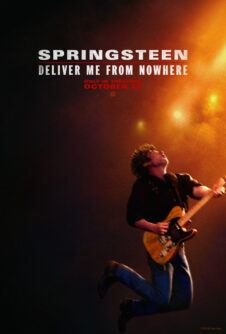
Here's the decision. This is a fascinating, often striking film about an artist choosing integrity over commercial expectation — Bruce Springsteen, fresh off his biggest tour, insisting on releasing a stark, unglamorous acoustic album against his label's wishes. Jeremy Allen White plays him well, and the dramatic and musical moments land with real weight.
But it's not a film for the whole family. The language is gratuitous and strong, including several "f" words and profanities that misuse Christ's name. There's a partially depicted bedroom scene between Springsteen and a woman invented for the film, plus upper male nudity. The movie also treats Bruce's psychological crisis in purely humanist terms, with therapy as the answer and little spiritual framing.
If you're an adult who appreciates music biography and can weather the rough language and one sexual scene, this is worth your time. If you're choosing for children or teens, this one isn't for them.
The Story
NO SPOILERS — WE KEEP THE SURPRISESIt's 1981. Bruce Springsteen has just finished the tour for his biggest album yet, and he retreats to a quiet lakeside home near Asbury Park to figure out what comes next. Haunted by memories of his difficult father and worried that fame is swallowing the working-class roots at the heart of his music, Bruce starts writing songs alone in his bedroom — dark, spare songs about criminals, fathers, and people in trouble. What he does with those songs, and what it costs him, is where the film goes from here.
Is It Any Good?
Three stars means this is a solidly good film with real strengths and real gaps. The dramatic and musical moments are genuinely strong — Jeremy Allen White gives a good performance as Springsteen, and the film is consistently engaging as it traces the making of two very different albums.
Where it falls short is detail. The movie barely explains what most of the songs on NEBRASKA are actually about, aside from the opening track. It never resolves Bruce's relationship with the fictional woman he dates, since she's a composite invented for the film rather than a real person. And it saves the actual nature of his psychological crisis for a written epilogue after the story ends, leaving viewers in the dark for most of the runtime about what he's truly struggling with.
The Worldview
This is a mixed pagan worldview film, and it's worth understanding what that means here. The movie's central theme — artistic integrity — is filtered through a strong Romantic view of art: creative expression as something that answers only to itself, rather than to transcendent truth. When Bruce's depression comes to a head, the film's answer is a therapist, not a pastor or a spiritual framework — a humanist solution to what the film frames as a purely psychological problem.
That said, the film isn't without moral substance. It values integrity, treating other people rightly, and helping others, even as it locates the source of that goodness in personal conviction rather than in God. The film also notes, almost in passing, that Springsteen was raised Catholic and that his songwriting carries a real sense of the darkness of sin — an inheritance the movie doesn't dwell on, but doesn't erase either.
That tension — an artist who can name darkness but reaches for a secular fix — is the film's real subject, whether it means to be or not. Springsteen's own song ends with the line, "And I believe in a promised land." Scripture says that longing runs deeper than any album can reach: "they desire a better country, that is, a heavenly one" (Hebrews 11:16).
The Content Guide
The specifics — spoilers included by nature — so you can judge for your own family.
Dominant Worldview and Other Worldview Content/Elements
Mixed pagan worldview with a strong Romantic view of art and personal expression, a humanist view of treating psychological problems, and some moral elements about integrity, helping other people and treating other people right
Foul Language
Seven obscenities (including two “f” words), one strong profanity mentioning the name of Jesus, two GD profanities, and two light profanities
Violence
Drunken father hits young son when father encourages son to do some boxing (viewers can’t actually see the blow), son wielding a baseball bat hits father in the back as father’s arguing with the boy’s mother, but father doesn’t strike back but grabs the bat and tells the boy that’s right you should always protect and defend your mother, and title character gets angry and hits his empty passenger seat and then drives his car fast, and the car spins out of control on a rural road but doesn’t crash
Sex
Partially depicted fornication in a bedroom scene between the title character and a fictional woman meant to represent a composite picture of his love life, plus and some passionate kissing between them
Nudity
Upper male nudity in a few scenes, including after the aforementioned bedroom scene
Alcohol Use
Alcohol use and title character’s father comes home drunk in two or so scenes when title character was young and argues with boy’s mother
Smoking and/or Drug Use and Abuse
Smoking but no drugs and mother tells 36-year-old son that his father’s stopped taking his meds (it’s not mentioned what problem the father has or what kind of meds he’s taking, but biographical reports state that both the title character and his late father suffered from bouts of depression);
Miscellaneous Immorality
Eight-year-old boy hears his parents arguing heatedly in two or more scenes.
Talk About It
Questions for the drive home, the dinner table, or the youth group.
Bruce insists on releasing a quiet, uncommercial album against everyone's advice because he believes it's true to who he is. What does it look like to value integrity over approval in your own life?
Proverbs 10:9 · Colossians 3:23The film treats Bruce's depression with therapy alone, leaving faith out of the picture. What role should prayer and community play alongside professional help when someone is struggling?
Psalm 34:18 · Galatians 6:2Bruce's father was hurtful and often absent emotionally, yet the film shows Bruce still wrestling with how to honor and understand him. How does Scripture call us to deal with imperfect parents?
Ephesians 6:2–3 · Colossians 3:13Springsteen's lyric says, "I believe in a promised land." What is he really longing for — and where does the Bible say that longing is ultimately satisfied?
Hebrews 11:16 · Revelation 21:1–4The Final Word
This is a fascinating, well-acted film about an artist choosing conscience over convenience — and it's also a hard-R-adjacent portrait with language and a bedroom scene that make it unsuitable for family movie night. So here's our answer: worth the trip — adults only. Looking for something the whole family can watch together instead? Start with our latest family-friendly picks.