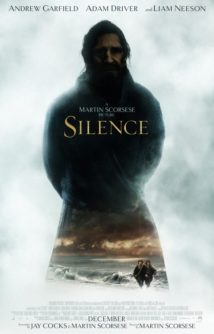
SILENCE
A brutal, beautiful epic that affirms faith through suffering — for grown-ups.
Should You Watch It?
Martin Scorsese has made one of his finest films — a slow, often heartbreaking meditation on faith under fire that, remarkably for this director, ends up honoring the Christians it depicts rather than mocking them. Andrew Garfield and Adam Driver anchor it with excellent performances, and the film's final act actually confirms faith in Christ's work on the cross. That's rare, and it's worth taking seriously.
It's also unsparing. The persecution scenes are extreme and disturbing — real torture, real executions, filmed without flinching. The theology is genuinely complex, touching on historic heresies most viewers won't recognize by name, and it may need a conversation afterward to land rightly.
If you're an adult or an older teen who can sit with hard suffering and hard questions, this film will reward you. If you're choosing for children, this one isn't for them.
The Story
NO SPOILERS — WE KEEP THE SURPRISESTwo young Portuguese priests, Sebastian and Francisco, sneak into 17th-century Japan during a brutal government campaign against Christianity. Word has reached Europe that their mentor, a revered missionary priest, has renounced his faith under torture. The two men go to find out if it's true — and find a nation where believing in Jesus can cost you everything. What happens once Sebastian is captured, we'll leave for the screen.
Is It Any Good?
Four stars, and they're earned. Scorsese directs with restraint and weight, and the naturalistic, unhurried style — closer to an art film than a blockbuster — gives the persecution scenes their terrible power. Garfield gives another excellent performance following his work in Hacksaw Ridge; Driver and the Japanese cast match him scene for scene. The film is a little overlong and, at times, deliberately slow, which will test some viewers' patience. But the craft is real, and the film's best scenes — a martyrdom on the beach, a final confrontation of conscience — are unforgettable.
The Worldview
This is a Christian, moral film set inside a pagan, brutal persecution — and it takes both faith and doubt seriously. It's full of positive references to Jesus, prayer, salvation, and heaven, and it stages real theological arguments rather than caricatures, including a former priest who argues against Christianity and claims Japan is a "swamp" where the faith can't take root. Some of this theology is dense enough that families may want a pastor or teacher to help unpack it afterward.
Doctrinally, the film lands in a good place. It rejects the legalism that says a forced or coerced denial of Christ automatically damns a person — but it also rejects the opposite error, showing a guide who recants and returns to faith over and over as a pitiable man who has likely never truly been born again. Real faith bears real fruit. The film's one real weakness is theological emphasis: it dwells on Christ's suffering far more than His resurrection victory, so viewers should remember what the film mostly doesn't say — that Jesus didn't just share our suffering, He conquered it.
The ache underneath this whole story is the ache of feeling abandoned by God in the middle of suffering. Scripture doesn't dodge that ache — it names it and answers it: "And he will wipe away every tear from their eyes, and death shall be no more, neither shall there be mourning, nor crying, nor pain anymore, for the former things have passed away" (Revelation 21:4).
The Content Guide
The specifics — spoilers included by nature — so you can judge for your own family.
Content Summary
Strong Christian, moral worldview of brutal pagan persecution of Christians in Japan, with many positive references to Jesus, faith, prayer, salvation, and Heaven, with some references to Buddhism and some theological nuances that may confuse some people and that may require some instruction by professional theologians, including one or two scenes with an ex-priest who makes some arguments against Christianity with a jailed priest and repeats an argument that Japan is figuratively a “swamp” where it alleges Christianity can’t take root; no foul language; scenes of extreme and strong, often disturbing violence with some blood includes a decapitation where the man’s headless body is dragged off screen, scenes where people are wrapped in straw mats and burned or deliberately drowned, scenes where people are tied to crosses and made to suffer (including having water from a hot springs poured or splashed on their heads and/or bodies), and instances where people are hung upside down with their heads in a pit after being slightly cut so that they slowly bleed to death; no sexual content, though priest is forced to commit apostasy and marry a Japanese widow; some naturalistic upper male nudity and partial rear male nudity; brief alcohol use in the form of sake and man appears to be a bit drunk in one scene; no smoking or drugs; and, persecution but rebuked and Christians are forced to renounce their faith but some don’t.
Talk About It
Questions for the drive home, the dinner table, or the youth group.
Father Sebastian repeatedly asks why God stays silent while His people suffer. Have you ever felt that silence yourself?
Psalm 22:1–2 · Psalm 34:18The guide keeps recanting his faith and then returning to it, and the film suggests his faith may never have been real. What's the relationship between genuine faith and the fruit it produces?
James 2:14–17The film dwells on Christ's suffering more than His resurrection. Why does the resurrection matter for how Christians face suffering today?
Romans 8:35–39 · 1 Corinthians 15:54–57Some believers in this story choose death rather than deny Christ; others recant to survive. How should Christians think about the line between wisdom and compromise under pressure?
2 Timothy 3:12 · Matthew 10:28The Final Word
Scorsese has made a rare thing: a violent, demanding film about faith that ends up affirming the faith it depicts. It costs viewers something real — extreme, disturbing suffering on screen and theology dense enough to need a follow-up conversation. For the right audience, older teens and adults ready to sit with hard questions, this is a film worth the trip. Choosing for younger viewers instead? Start with our latest family-friendly picks.