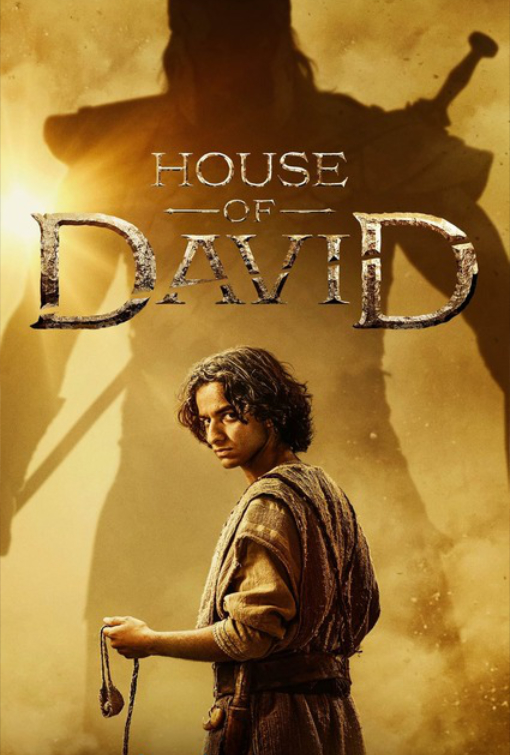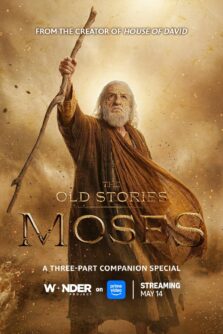
THE OLD STORIES: MOSES: Episode 1.1: “The Calling”
A short, striking retelling of the burning bush — worth your family's time.
Should You Watch It?
Yes — with one eye on your youngest viewers. This eighteen-minute opener to a three-part Moses miniseries, spun off from The House of David, tells the burning bush story with visual power and acting strong enough to hold your attention for every one of its brief minutes. It sets up the rest of the series well and leaves you wanting the next episode immediately.
It also earns its caution note. A flashback shows slaves being whipped, and a man is shown holding a bloody dagger after killing another out of righteous anger. None of it is graphic in the way an R-rated film might show it, but it's real enough that younger children should watch alongside a parent, or wait a few years.
For older kids and adults, this is exactly the kind of biblical drama Movieguide wants to see more of. Watch it together, and talk about what Moses is being asked to do.
The Story
NO SPOILERS — WE KEEP THE SURPRISESDavid's father, Jesse, is telling his children a story — and it carries us back in time to Moses, tending sheep alone in the desert near Mount Horeb. A fire catches his eye on the hillside: a bush wrapped in flame that never burns up. When he draws close, a voice fills the desert and gives him an assignment he never asked for — go back to the land where he is not welcome, and free God's people. Moses pushes back. What happens next, we'll leave for you to watch.
Is It Any Good?
Four stars means this short episode does everything a series opener should. The acting is described as superb, the visuals stunning, and the burning bush scenes are shot with real dramatic power — the kind that conveys the weight and grace of God without over-explaining it. For an eighteen-minute episode, it moves fast and never drags, laying a solid foundation for the two installments still to come. There's little here to criticize; the only caveat is that, being so brief, it's more table-setting than full meal — but as a first course, it's a strong one.
The Worldview
This episode tells the Exodus story straight, and that fidelity is its greatest strength. God is spoken of throughout with fear and reverence, not as a symbol or a metaphor but as the Lord who speaks, commands, and equips. The burning bush is rendered as Scripture describes it — a genuine encounter with the living God, not a psychological event Moses talks himself into. That alone makes this a rare and welcome offering.
The episode doesn't shy from the cost of obedience either. Moses's fear of being unwelcome, his doubt that anyone will listen, his internal wrestling between fear of man and commitment to God — all of it is honest, and all of it is resolved not by Moses growing braver on his own, but by God giving him power and presence to match the task. That is the heart of the passage this episode is named for: God's promise to Moses, "But I will be with you" (Exodus 3:12). Whatever calling frightens you, the same promise stands behind it.
The Content Guide
The specifics — spoilers included by nature — so you can judge for your own family.
Dominant Worldview and Other Worldview Content/Elements
A clear biblical worldview is displayed as the episode walks through the story of Moses starting with the burning bush, God is mentioned multiple times in fear and reverence, and there are recreated scenes from the Book of Exodus of Moses discovering the burning bush and speaking to God, and of Moses in Egypt where he sees a man mistreating a slave and decides to kill the man
Foul Language
No foul language
Violence
Slaves are whipped, a man is seen holding a bloody dagger after killing another man out of righteous anger, and there’s an image of a snake slithering in the grass near a lamb, but the lamb runs away when David, the shepherd, throws a rock at the snake
Sex
No sex
Nudity
Multiple men have no shirts
Alcohol Use
No alcohol use
Smoking and/or Drug Use and Abuse
No smoking or drugs;
Miscellaneous Immorality
Nothing else objectionable.
Talk About It
Questions for the drive home, the dinner table, or the youth group.
Moses tells God that the people won't believe him. Have you ever used your own doubts as a reason to avoid something God was asking of you?
Exodus 4:1 · Jeremiah 1:6-8God tells Moses, "But I will be with you." What does it look like to trust that promise when the task ahead feels impossible?
Exodus 3:12 · Joshua 1:9Moses has to return to the very place where he isn't welcome. Is there a "Egypt" in your own life — a place or a person you've been avoiding — that God might be calling you back to?
Exodus 3:10 · 2 Corinthians 5:20The episode shows slaves being mistreated. How does the Exodus story shape the way Scripture calls us to treat the vulnerable?
Exodus 22:21 · Micah 6:8The Final Word
This is a strong, reverent opening chapter — the burning bush handled with the seriousness it deserves, and a hero wrestling honestly with fear before obedience. Watch it as a family, talk through the harder moments with your younger kids, and let the older ones sit with Moses's question: what do you do when God asks you to go back to the place you're afraid of? Our answer stands: worth watching — ages 10 and up.