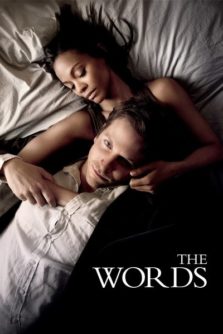
THE WORDS
A thoughtful story about truth, fiction, and the cost of stealing words.
Should You Watch It?
You should see The Words if you enjoy intelligent dramas that make you weigh truth against ambition. The film follows two writers whose insecurities bring them face to face with questions of originality, success, and honesty. Its story within a story within a story is insightful, and the performances are wonderful throughout.
The movie is not flawless. Its structure can be confusing, and its worldview moves between morality and materialism. Still, the objectionable content is kept to a minimum, while the central moral questions give you something meaningful to consider.
For teenagers and adults, The Words is worth watching with discernment; younger children should choose something else.
The Story
NO SPOILERS — WE KEEP THE SURPRISESRory Jansen longs to become a great writer, but financial pressure and self-doubt push him toward a conventional job. After marrying his girlfriend, he discovers a hidden manuscript that appears to be a true work of art.
Rory makes a choice that changes his life and brings him fame. Meanwhile, successful novelist Clay Hammond faces questions from a young intern about the originality of his own work. Both writers must confront their insecurities and decide whether truth or fiction will rule them.
Is It Any Good?
Three stars means The Words is enjoyable and worthwhile, though its flaws keep it from greatness. The film offers an intriguing story that moves between fiction and nonfiction, with an insightful story within a story within a story.
The performances are wonderful throughout, giving the material emotional weight. The main weakness is structural: the film’s movement back and forth between layers of storytelling can make it less clear and less satisfying than it might have been.
The Worldview
The Words presents a mixed worldview, moving between morality and materialism. It takes truth, guilt, and confession seriously, especially as its writers face the consequences of their choices. At the same time, success and material achievement remain powerful forces, and the film does not always clearly place them beneath moral truth.
The movie includes one passing reference to a historical pantheon of “the gods.” More positively, it offers a very loving portrayal of a father-and-son relationship. Its central moral question is whether people will choose truth or fiction when faced with fear, failure, and the desire to be admired.
Scripture calls God’s people to honesty: “Therefore, having put away falsehood, let each one of you speak the truth with his neighbor” (Ephesians 4:25). That command gives the film’s struggle with lies and truth a clear biblical frame.
The Content Guide
The specifics — spoilers included by nature — so you can judge for your own family.
Content Summary
Mixed worldview varying between moral and humanist elements with one passing reference to a historical pantheon of “the gods,” with a very loving portrayal of a father/son relationship; five obscenities and five profanities; very mild violence such as wife slaps husband in the face; no sex scenes but depiction of man and woman living together before marriage lying in bed together covered, married man kisses an intern but rescinds it, and one scene of married couple passionately kissing; upper male nudity; alcohol use; smoking; and, man plagiarizes book but later confesses his lying.
Talk About It
Questions for the drive home, the dinner table, or the youth group.
Rory faces a choice between protecting his success and telling the truth. Why can confession be costly, and why is truth still the right choice?
Ephesians 4:25 · Proverbs 12:22The writers struggle with insecurity and the desire to be admired. How can ambition become unhealthy, and what does it mean to seek approval from God instead?
Galatians 1:10 · Matthew 6:1The film gives a loving portrayal of a father-and-son relationship. What makes a relationship strong when one person is struggling or failing?
Proverbs 17:17 · Ephesians 6:4How should Christians think about the difference between creating fiction and using fiction to hide wrongdoing?
Colossians 3:9–10 · Philippians 4:8The Final Word
The Words is an enjoyable, thoughtful drama with wonderful performances and minimal objectionable content. Its structural problems and mixed worldview call for discernment, but teenagers and adults can find worthwhile questions here. WORTH THE TRIP — TEENS AND ADULTS.