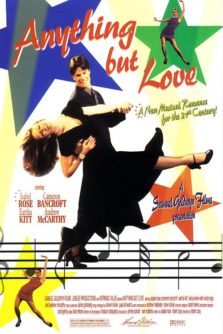
ANYTHING BUT LOVE
A forgettable romantic musical better suited to home viewing.
Should You Watch It?
Anything But Love may delight a true musical aficionado, especially one drawn to the 1950s and old movie musicals. Isabel Rose is charming as Billie Golden, a lounge singer who dreams of cabaret, and the film offers a recognizable crossroads between romantic dreams and real-life complications.
But the movie’s extravagant dream world may turn off most viewers. Billie struggles with her mother’s constant drinking, limited job opportunities, and the consequences of pursuing her desires without enough thought for others. The film also contains strong language, sexual material, substance abuse, smoking, and other mature content.
This is not a horrible film, but it is easily forgettable and somewhat amateurish. Watch it at home if your older teen or adult family member is interested; otherwise, choose something stronger.
The Story
NO SPOILERS — WE KEEP THE SURPRISESBillie Golden is a lounge singer who dreams of performing in cabaret and loves the fantasy world of 1950s movie musicals. When both love and professional opportunity appear, she must choose between cynical piano man Elliot and her handsome lawyer boyfriend, Greg.
As Billie faces difficult realities involving family, work, and romance, she must decide whether to keep chasing an idealized dream or confront life as it really is.
Is It Any Good?
Two stars means this movie has some charm but falls short in execution. Written by and starring Isabel Rose, Anything But Love gives musical fans an appealing central character and a clear affection for the era of old movie musicals.
The script needs more reality and depth. The editing and direction also would have benefited from more money. Billie’s dream world can feel extravagant, and her choices may frustrate viewers who want a more grounded or thoughtful story. The result is a romantic musical that is not terrible, but is easily forgettable and somewhat amateurish.
The Worldview
The film presents a strong romantic worldview in which Billie is guided almost completely by her emotions and sometimes takes drastic measures to support them. It includes a light Christian element through a wedding performed in a church, but it also contains references to men being attracted to each other, an anti-capitalist implication involving a lawyer who leaves work he loved to make more money, and an attempt to influence a girlfriend to make the same choice.
The movie treats romantic dreams as powerful, even when they hurt other people. It also treats divorce lightly. Alongside that, the film includes astrology, fate, lying, drinking, smoking, and pill misuse. Its central question—whether pursuing a personal dream harms anyone—deserves a more morally serious answer than the film provides.
Scripture recognizes the importance of our inner life, but it also calls us to wisdom rather than emotional self-rule: “Keep your heart with all vigilance, for from it flow the springs of life” (Proverbs 4:23).
The Content Guide
The specifics — spoilers included by nature — so you can judge for your own family.
Content Summary
Strong Romantic worldview where main character is completely guided by her emotions and sometimes takes drastic measures to support those emotions, with light Christian element as wedding is performed in a church, and some homosexual references including men attracted to each other, as well as anti-capitalist implication that lawyer sold out from the job he loved to make more money and tries to influence his girlfriend to do the same; five strong obscenities and four strong profanities; no violence; some passionate kissing and innuendo; no nudity, but woman shown in bra and underwear as she dresses; mother shown abusing alcohol and other characters often drinking in a bar; mother takes too many pills and various characters smoking; mother believes in astrology and influences daughter about fate, some lying, and divorce treated lightly. GENRE: Romantic Musical RoRo C Ho ACap L AAA D MM
Talk About It
Questions for the drive home, the dinner table, or the youth group.
Billie wants to live inside a “Technicolor dream.” How can you enjoy beauty and imagination without letting fantasy rule your decisions?
Proverbs 4:23 · Romans 12:2The film connects love with difficult choices and consequences. What does Scripture say genuine love seeks for another person?
1 Corinthians 13:4–7 · Philippians 2:3–4Divorce is treated lightly in the story. Why does Jesus describe marriage as a covenant rather than merely a feeling?
Matthew 19:4–6 · Malachi 2:16Several characters struggle with alcohol, pills, smoking, or other unhealthy choices. How can friends and families respond with both truth and compassion?
Galatians 6:1–2 · Ephesians 5:18The Final Word
Anything But Love has charm for dedicated musical fans, but its thin script, amateurish execution, and mature content make it an uncertain family choice. WAIT FOR HOME if older viewers remain interested; otherwise, choose another movie.