SIGHT
A blind orphan, a haunted surgeon, and a miracle worth believing in.
Should You Watch It?
Here's the decision. Angel Studios has given you a genuinely inspiring true story, told with great writing, strong acting, and likable characters — a four-star film about a poor Chinese immigrant who became one of the best eye surgeons in the world. It extols faith, family, prayer, hard work, and a life poured out for others. Christian viewers will find much to love here.
It does earn its PG-13. There are scary moments — a stepmother who blinds a child with acid, Communist terrorists who vandalize and kidnap, physical beatings. There are serious adult themes and a significant amount of whiskey drinking, as Dr. Wang tries to numb his past. None of it is gratuitous, but it is heavy, and younger children may find it frightening.
So: if you have teens or older children who can handle hard subject matter, this is a rewarding trip to the theater. For little ones, wait. Older children should have a parent beside them.
The Story
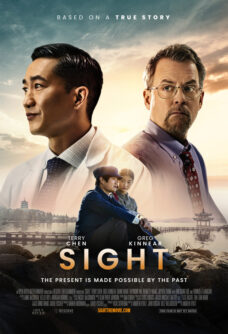
NO SPOILERS — WE KEEP THE SURPRISESDr. Ming Wang is a world-renowned laser eye surgeon who has helped countless people recover their sight. Success should bring him peace. Instead, he's increasingly haunted by his past.
Then a kindly nun, Sister Marie, brings him Kajal — a blind orphan girl from India whose stepmother deliberately maimed her. Ming declines; he doesn't believe her sight can be restored. But Sister Marie prays for a miracle, and the suffering child stirs up a whole world of hurt from the doctor's own childhood in Communist China. Before he can help the people who need him most, Ming must first make peace with what he's been running from.
Is It Any Good?
Four stars, and they're earned. This is a remarkable story told well: the writing is strong, the acting is strong, and the characters are people you come to like and root for. The film is filled with beautiful, inspiring moments that encourage perseverance, hard work, and above all love for others.
The one real weakness is structural. Sight leans hard on flashbacks to unfold Dr. Wang's past, and there are too many of them — they create some confusion and sometimes drain momentum from the present-day story. It's a flaw, but not a fatal one. The emotional payoff and the sheer strength of the material carry the film past its stumbles and make it, in the end, a winner.
The Worldview
Sight carries a very strong Christian and moral worldview, and it wears it plainly. A man dedicates his life to doing what was deemed impossible — recovering sight for the blind. A nun prays. A disabled little girl prays for the very man who could help her. The Cross and prayer beads appear on screen, a church is seen, and the film's heart is captured in a single line: the nun's declaration that a child is the miracle who helps other people find faith and hope. Alongside the faith runs a warm promotion of strong family life.
The film honors much that Scripture honors. Dr. Wang's parents work hard to provide and protect their family; when the odds are stacked impossibly against their son, they commit themselves to teaching him. Perseverance, sacrifice, and love for the vulnerable are held up as the goods they are. And the story leans, finally, into a belief in miracles — and into the surprising idea that the accomplished surgeon may be the one in deepest need of one.
That's the ache at the center of Sight: physical blindness restored, and a soul's blindness in need of the same grace. Scripture makes the promise the film reaches toward — that Jesus came "to proclaim recovery of sight to the blind, to set at liberty those who are oppressed" (Luke 4:18).
The Content Guide
The specifics — spoilers included by nature — so you can judge for your own family.
Dominant Worldview and Other Worldview Content/Elements
Very strong Christian, moral worldview here man dedicates his life to doing what was deemed impossible, recovering sight to the blind, plus there’s a praying nun, the disabled little girl prays for main character, images of the Cross and prayer beads, Church is seen, nun exclaims that a child IS the miracle who helps other people find faith and hope, and promotion of a strong family life
Foul Language
No obscenities but a few light exclamatory profanities
Violence
Some strong and light violence incudes woman pours sulfuric acid in her stepdaughter’s eyes, and terrorists attack, vandalize and kidnap
Sex
No sexual content
Nudity
No nudity
Alcohol Use
Main characters drink alcohol in many scenes
Smoking and/or Drug Use and Abuse
No smoking or drugs;
Miscellaneous Immorality
Some racism, bullying and kidnapping depicted but not promoted.
Talk About It
Questions for the drive home, the dinner table, or the youth group.
Dr. Wang is a great success who still can't find peace, because he hasn't made peace with his past. What does Scripture say about the difference between worldly achievement and true rest for the soul?
Matthew 11:28–29 · Ecclesiastes 2:10–11Sister Marie keeps praying for a miracle even when the surgeon says it's impossible. Where does the line fall between faith and wishful thinking, and how do we pray boldly?
Mark 9:23 · James 5:16The nun says the child herself is the miracle — the one who helps others find faith and hope. Have you ever seen God use a weak or vulnerable person to strengthen others?
2 Corinthians 12:9–10 · 1 Corinthians 1:27When Ming loses his schooling and then loses Lili, his parents refuse to give up on him. What does faithful, sacrificial love within a family look like when circumstances are cruel?
1 Corinthians 13:4–7 · Proverbs 22:6The Final Word
Sight is that rare thing: a four-star film with faith at its center and a true story worth telling. It's beautiful, inspiring, and honest about suffering — which is exactly why the youngest kids should sit this one out for now. For everyone else, it's worth the trip — ages 10 and up. Bring your teens, bring your older children with you, and be ready to talk afterward.