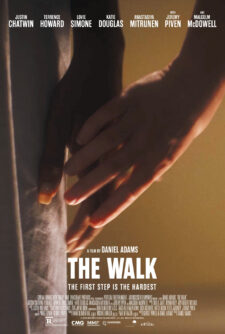
THE WALK
A morally serious Boston drama slowed by profanity and uneven pacing.
Should You Watch It?
The Walk takes a morally serious approach to racism and Christian responsibility. Its central question is whether Bill, a Catholic Boston cop, will do his duty and protect black students when many fellow officers and local power brokers choose to abandon them. The film emphasizes doing right, loving your neighbor, and standing up against racism.
That good purpose comes with real costs. The story moves slowly and unevenly, and its political framing makes white people the problem while presenting black people primarily as victims. The film also contains strong violence, racial violence, at least 76 “f” words according to the review, and more than two dozen other obscenities and profanities.
If you are an adult or an older teenager prepared for that content and interested in its moral questions, The Walk has enough value to merit the trip. For a family movie night, choose something else.
The Story
NO SPOILERS — WE KEEP THE SURPRISESIn 1974 Boston, a white Irish cop named Bill Coughlin is ordered to protect black students being bused into a white neighborhood school after a judge mandates desegregation.
Bill’s fellow officers, his daughter Kate, the local Irish mob, and angry white protesters all place pressure on him. As racism intensifies around his family and his job, Bill must decide whether to protect his own safety or stand up for the children in his care.
Is It Any Good?
Three stars means The Walk is a solid but flawed drama. The filmmaker and actors do a good job, and the personal story gives the film a serious emotional and moral center.
The movie’s strongest material concerns Bill’s struggle to do the right thing, serve others, and resist the racist “group think” around him. But the story is too slow and unevenly paced. Its points are often drawn out, and the political correctness weakens the drama by making white people the problem and black people just victims.
The Worldview
The film takes a broadly Christian, biblical position against racism. It presents doing the right thing, loving your neighbor, standing against racism, equality, and sacrificing to protect and help other people as moral obligations. Faith, including Roman Catholic faith, receives positive references.
The film focuses on personal drama rather than carefully weighing the political arguments for and against forced school busing. Its treatment of the issue is strongly shaped by political correctness, presenting white people as racial oppressors and black people as victims of systemic racism. The review also notes a line suggesting that people are basically good and another claiming that American society in 1974 remained systematically racist against black criminals compared with white criminals, without a caveat that conditions were improving.
The historical background in the review argues that forced busing had better alternatives, including an open-enrollment plan proposed by Boston’s school superintendent. It also says the program contributed to white flight, greater segregation in city schools, and failed to improve black students’ education levels or stop the destruction of the black family by the social welfare state.
The film’s strongest longing is for people to accept responsibility for one another rather than protect themselves through fear or prejudice. Scripture gives that duty a clear name: “You shall love your neighbor as yourself” (James 2:8).
The Content Guide
The specifics — spoilers included by nature — so you can judge for your own family.
Dominant Worldview and Other Worldview Content/Elements
Strong Christian, biblical worldview has multiple positive references to Christian faith (including Roman Catholic faith), promotes doing the right thing, loving thy neighbor, standing up against racism, equality, and sacrifice (specifically, putting your life on the line to protect and help other people), marred by some Romantic elements (including a line suggesting the false belief that people are basically good), and strong political correctness supporting social experiments by big government, and seeing white people as racial oppressors and black people as just victims of systemic racism by whites, plus a line of dialogue declares that, even after the passage of the Civil Rights Act in 1965 and other reforms in the 1960s, American society in 1974 was still systematically racist against black criminals compared to white criminals (there are no caveats about the society getting better)
Foul Language
At least 101 obscenities (including 76 “f “ words), several strong profanities a few light profanities, and some racial epithets such as the “n” word and “cracker” (one teenage girl’s father and especially her mother rebuke her use of the “n” word)
Violence
String and light violence includes high school student punches another student in the face multiple times in a fit of jealous rage, teenager girl throws rock at passing car because the passengers are black, a man is shot during a riot by the movie’s racist villain who was aiming a black teenage girl who was bused from her black neighborhood to a school in a white neighborhood, mother slaps her teenage daughter when daughter uses a rude racial epithet about black people, brief discussion about a past incident where a man beat his wife and then killed his wife’s black lover, and threats of violence
Sex
Some light references to illicit sex and adultery, and there’s a heavy kissing scene between two teenagers
Alcohol Use
Some scenes with alcohol use, including man drinks beers after coming home from work and police arrest a drunken criminal
Smoking and/or Drug Use and Abuse
Some smoking and people seem to be smoking marijuana in one or two scenes
Miscellaneous Immorality
Racism, but mostly rebuked.
Talk About It
Questions for the drive home, the dinner table, or the youth group.
Bill must decide whether to protect his family’s safety or protect vulnerable children. What does loving your neighbor require when doing right is costly?
Mark 12:31 · Philippians 2:4The film shows racism being taught and challenged within a family. How can parents correct prejudice while also examining the attitudes their children see in the wider community?
Ephesians 6:4 · James 2:1–9The story presents people serving within a broken system. When should Christians obey authorities, and when must they refuse to participate in wrongdoing?
Romans 13:1–4 · Acts 5:29The Final Word
The Walk is a well-acted, morally serious drama about resisting racism and protecting others. Its slow pace, political framing, strong violence, and extensive profanity make it unsuitable for children and young teens. For discerning adults and mature older teenagers, it is WORTH THE TRIP — ADULTS ONLY. For family viewing, see.