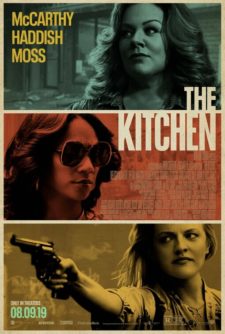
THE KITCHEN
A violent, foul-mouthed celebration of gangsterism in radical feminism.
Should You Watch It?
The Kitchen has a potentially compelling setup: three wives take over their husbands’ criminal rackets after the men are sent to prison. The acting is solid, the soundtrack is good, and the story includes violent mayhem and plot twists.
But the film’s weaknesses are substantial. It follows the ultraviolent, foul-mouthed format of a Martin Scorsese gangster movie without matching the polish or involvement. More seriously, the film’s worldview promotes selfishness, vengeance, lawlessness, and hedonism. By the end, the gangsterism seems to be celebrated in the name of radical feminism.
The source review rates The Kitchen two stars and gives it a −4 Family Content rating. That combination makes the practical answer clear: SKIP IT.
The Story
NO SPOILERS — WE KEEP THE SURPRISESIn 1978, the wives of three Irish gangsters are left without enough income when their husbands are sent to prison for three years. Ruby, Kathy, and Claire offer to collect protection money for the Irish mob, but the local boss refuses their help. So the women begin running the rackets themselves in Hell’s Kitchen, facing opposition from the Irish mob, the Italian mob, their husbands, and others who want control.
Is It Any Good?
Two stars means The Kitchen has some worthwhile elements but falls well short overall. The cast includes talented actors, and the soundtrack is good. The performances are solid, though not extremely impressive.
The larger problems are the writing, production values, and direction. The film has a few interesting moments, but it is not as polished or involving as the gangster movies it imitates. The review sees talent in first-time director Andrea Berloff that could develop in future work, while finding that this production needed stronger support.
The Worldview
The Kitchen presents a very strong Romantic, radical feminist worldview. It portrays society and men as ultimately exploitative or untrustworthy, and it moves its lead character toward relying only on herself. The film also depicts a deeply negative view of modern American society and includes strong anti-Christian content through its treatment of dependence on God.
The movie promotes lawless, hedonistic, immoral values, including selfishness, vengeance, and the idea that desirable ends can justify wrongful means. It appears to offer very few meaningful consequences for evil. Community support for the lead character’s criminal actions further suggests that the film approves of gangsterism when it is connected to her feminist independence.
That message departs sharply from a biblical view. Scripture does not excuse evil because it produces useful results: “And why not do evil that good may come?—as some people slanderously charge us with saying. Their condemnation is just” (Romans 3:8). The film’s self-reliance also conflicts with the biblical call to trust God rather than make power and personal survival ultimate.
The Content Guide
The specifics — spoilers included by nature — so you can judge for your own family.
Dominant Worldview and Other Worldview Content/Elements
Very strong Romantic, radical feminist, politically correct worldview promoting strong pagan values (including selfishness, vengeance, the ends justify the means, and other lawless, immoral, hedonistic behavior), with almost all the men (especially husbands) depicted as evil, venal or ultimately untrustworthy and the lead female character eventually feels she just has to just look out for Number One because society and men always takes advantage of women and people who are weak, plus there’s a very negative depiction of modern American society before the “woke” era of the Clinton and Obama administrations and today’s Me Too era and strong Anti-Christian content when lead female character gives a speech about not ever being able to rely on men and even God and though the Catholic priests in the Irish community in the movie can give a positive spiritual speech at a funeral, they are not shown opposing or even objecting to any of the gangsterism around them
Foul Language
At least 111 obscenities (including many “f” words and two “d” words in a song over the end credits), five strong profanities, five light profanities
Violence
Lots of extreme and some strong violence includes multiple pointblank shootings with blood spurting, a few images of bloody corpses, older woman is knocked down some street stairs to her death, hitman instructs a woman on how to cut up a dead body (viewers don’t see the body in the bathtub being cut up as he does), a couple dead bodies are put into a river leading to the ocean, man tries to rape a woman but then is shot in the head, and she gets his blood in her hair, husband punches wife in stomach two times before she kills him, two other women have their husbands murdered, a few people are beaten up in a couple scenes, and threats of violence
Sex
Partially depicted fornication and adultery in one scene, woman has a serious affair with an old lover after her physically abusive husband is sent to prison (she eventually murders the husband), another married man and his mistress are shown dead in bed after his wife has him murdered by hitmen, adulterous kissing, some New York street scenes where people walk by or stop near nude bars and strip clubs, references to prostitution (women gangsters take over the prostitution business in their territory), and some brief lewd sexual talk
Nudity
Upper male nudity, some brief female cleavage, images of street prostitutes with short skirts, and people walk by or stop near nude bars and strip clubs but no images of nudity in the advertisements
Alcohol Use
Some alcohol use and one or two scenes with drunkenness
Smoking and/or Drug Use and Abuse
Some smoking but no drug references (the gangsters in the movie, set in the late 1970s, strangely, only seem to be involved in running a protection/extortion racket and the local prostitution racket);
Miscellaneous Immorality
Very strong miscellaneous immorality includes deceit, manipulation, betrayal, gangsterism, extortion, resentment of men and white people, bad husbands and the only “good” husband ends up betraying his wife and trying to take their children away, the average local community leaders and citizenry (including local union members and leaders) eventually support the lead female gangster and prevent her from being killed in one scene because she did things for them and helped them get work (the movie seems to implicitly support most if not almost all of this), etc.
Talk About It
Questions for the drive home, the dinner table, or the youth group.
Can helping people or protecting a community make extortion and violence right? Why or why not?
Romans 12:17–21 · Romans 3:8What happens when a person decides to look out only for Number One? How does that compare with the biblical call to trust God?
Proverbs 3:5–6 · Philippians 2:3–4How should Christians respond when a community supports wrongdoing because it receives benefits from it?
Isaiah 1:17 · Micah 6:8How can a story’s treatment of men, women, and God shape the way viewers understand responsibility and human worth?
Genesis 1:27 · Galatians 3:28The Final Word
The Kitchen has solid acting and a good soundtrack, but its crude violence and deeply immoral worldview overwhelm those strengths. Because the film appears to celebrate gangsterism and offers little meaningful moral correction, our answer is SKIP IT. For better options, see.