THE DEATH OF ROBIN HOOD
A well-made legend with a bloody first half and an ending we can't recommend.
Should You Watch It?
Here is the hard part first. THE DEATH OF ROBIN HOOD is well made, and its second half is genuinely touching — a murderous man reaching for redemption, befriending a healing nun and fathering an orphaned girl. There is Scripture in it, and prayer, and a real ache for grace.
But two things make this one a no. The first half is savagely violent, showing Robin's brutality in bloody detail. And the ending implicitly promotes physician-assisted suicide — the movie's fatal turn, however gently it's framed. That's why Movieguide rates it excessive and unacceptable.
You can admire craft and still refuse a conclusion. This film asks you to sit with an act Scripture never permits us to bless, and it dresses that act in the language of peace. Redemption and self-destruction don't belong in the same breath, and here they end up there.
So our answer is plain: skip it. The good in the middle can't redeem the ending, and the violence alone puts it out of family reach.
The Story
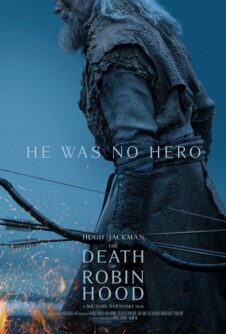
NO SPOILERS — WE KEEP THE SURPRISESThis is not the Robin Hood of legend. Here he's an aging, graying outlaw (Hugh Jackman) who freely admits he's a murderer, not a hero — a man with a long trail of enemies behind him.
His old friend Little John comes asking for help against his wife's angry relatives, and the errand goes terribly wrong. Gravely wounded, Robin is carried to a rural nunnery run by Sister Bridget (Jodie Comer), a renowned healer with a tragic past. Hiding his name, he begins to heal — in body, and perhaps in something deeper. What that costs him is the movie's real story.
Is It Any Good?
Three stars, and they're honestly earned. The filmmaking is strong, and the movie grows better as it goes — the tender second half, with Robin mending under Sister Bridget's care and becoming a father figure to little Margaret, is the most touching thing here. That's where the craft shows.
The first half is another matter: relentlessly, brutally violent as Robin fends off Little John's enemies. And the whole thing pivots on a sudden, unexplained twist that fulfills the title.
The source is drawn from two old ballads, one 17th-century and one 18th-century — but in both, Robin remains a hero. This movie deliberately unmakes that. The result is skillful and, in stretches, moving. It's also built toward a conclusion the craft can't rescue.
The Worldview
For a stretch, this film reaches toward something true. Its second half carries a strong Christian, moral thread: positive references to Jesus, to Scripture, to prayer. A woman quotes Jesus from John 14 — "My Father's house has many rooms... I am going there to prepare a place for you." A great and murderous sinner begins to find relief from his guilt by befriending a nun and mentoring an orphaned girl. That's a real picture of a soul turning toward grace.
Then the ending undoes it. The film implicitly promotes physician-assisted suicide — framed, the source notes, as taking responsibility for one's sins as death draws near. But dressing self-destruction in the language of repentance doesn't make it repentance. Life is God's to give and to take; our part is to entrust ourselves to Him, not to end the story on our own terms.
We'll add one editorial conviction, stated once: Movieguide strongly opposes the fashion of applying revisionist history to heroes and legends like Robin Hood, unmaking the good the old stories celebrated. This film does exactly that — turning the outlaw of legend into a self-confessed murderer.
The ache underneath it all is the ache for a home beyond this one. The film quotes it without trusting it: "In my Father's house are many rooms... I go to prepare a place for you" (John 14:2). The answer to guilt and death is that promise — not a chosen exit.
The Content Guide
The specifics — spoilers included by nature — so you can judge for your own family.
Dominant Worldview and Other Worldview Content/Elements
Strong Christian, moral worldview in the movie’s second half with positive references to Jesus Christ, Scripture and prayer (including woman quotes from John 14:2 and 3 where Jesus says, “My father’s house has many rooms” and “I am going there to prepare a place for you”) where a great and murderous sinner starts to find some redemption from his sins and relief from his guilt by becoming friends with a nun and by becoming a caring mentor to an orphaned girl, but the ending implicitly promotes physician-assisted suicide, though it’s in the context of taking responsibility for your sins as you get closer to death
Foul Language
No foul language
Violence
Very strong violence as medieval title character slits the throat of young female assassin, a man stabs a woman hostage brutally before her husband can save her, people are clubbed and stabbed and shot with arrows, title character appears to rip off a man’s jaw when the man’s down on the ground, arrow pierces teenage boy’s skull from behind, and he falls into a stream, but he’s later seen stumbling home, and viewers can see the arrow has pierced the boy’s right eye (boy dies), a young man’s cheek near his left eye has to be sewn up, and he wears an eyepatch, title character kills a wild boar and guts it and dresses it for eating so its entrails are shown, a healer uses bloodletting to heal a patient, the procedure is later used for someone to commit suicide, a character tells a terrible story of a man dying in a fire while trying to protect his children from the deadly blaze but failing, and a leper’s deformed face is revealed as he’s lying on his deathbed
Sex
No sex
Nudity
No nudity
Alcohol Use
No alcohol use
Smoking and/or Drug Use and Abuse
No smoking or drugs;
Miscellaneous Immorality
Revenge, past banditry is mentioned but left vague, murderous outlaw hides his identity and goes by another name, and another murderous outlaw has also changed his name.
Talk About It
Questions for the drive home, the dinner table, or the youth group.
Robin spends the film's second half trying to make up for a life of murder. What is the difference between trying to earn our way out of guilt and receiving forgiveness as a gift?
Ephesians 2:8–9 · 1 John 1:9The movie frames a chosen death as taking responsibility for one's sins. Why does Scripture treat life as something to entrust to God rather than to end on our own terms?
Job 1:21 · Deuteronomy 32:39A woman quotes Jesus' promise of a prepared place in His Father's house. What hope does that promise offer someone facing death and guilt?
John 14:1–3 · Revelation 21:4This film unmakes a hero, turning a legend into a murderer. Why do the stories a culture tells about its heroes matter, and what do they shape in us?
Philippians 4:8 · Proverbs 22:1The Final Word
There's real skill here, and a middle stretch that genuinely moves toward grace. But a brutal first half and an ending that quietly blesses physician-assisted suicide put this beyond what we can recommend. So our answer holds: skip it. Looking for something to watch together instead? Start with our latest family-friendly picks.