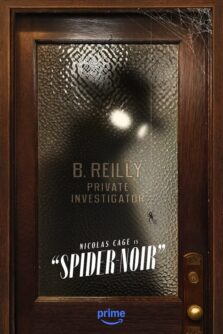
SPIDER-NOIR: Episodes 1.1 and 1.2: “Step into My Office” and “Tread Lightly”
Nicolas Cage in a superb, savage 1930s noir — for grown-ups.
Should You See It?
Here is the decision. These two episodes are excellent. Nicolas Cage plays Ben Reilly, a private detective who used to be a superhero and quit when he could not save the woman he loved, and the series around him is filmed and edited with real craft — it captures the atmosphere of 1930s and 40s film noir about as well as anything streaming. Cage's hero is genuinely admirable: he seeks justice, he helps crime victims, he protects people, he shows compassion, and he is realistic enough to know when a fight cannot be won.
The cost is real too. The first episode carries three strong profanities using the name of Jesus Christ and two GD profanities alongside 13 obscenities, plus one scene of extreme violence — a mob boss cutting a man's throat during an interrogation — and a crude sexual joke. The second episode's language is much lighter, but both episodes are violent, and the world they live in is run by criminals and bought officials.
So: if you are an adult who loves noir and can take that without harm to your conscience, this is very good television. If you are choosing for anyone younger, do not. This world was never built for them.
The Story
NO SPOILERS — WE KEEP THE SURPRISESNew York, the early 1930s. The mayor is bought, the police force answers to an Irish gangster called Silvermane, and the city could badly use a hero.
It had one. Five years ago Ben Reilly hung up the costume he wore as The Spider, after he failed to save his fiancée, Ruby. Now he is a private detective whose business is bad enough that his secretary has stopped expecting to be paid.
Then two jobs land on his desk — a man to follow, a wife to photograph. Neither is what he was told it was.
Is It Any Good?
Four stars, and the craft is why. These two episodes are filmed and edited nicely, and they capture the dark atmosphere of 1930s and 40s Hollywood film noir with unusual fidelity — not as pastiche, but as a mood the show actually lives inside. Exciting and absorbing at the same time, which noir frequently is not.
Cage is the anchor. Ben Reilly is a hero in the Raymond Chandler mold — not morally spotless, but a man of honor with, as Chandler put it, "a disgust for sham, and a contempt for pettiness" — and Cage plays the weariness without ever losing the decency underneath it.
One note on expectations. As in a great many noir films, the hero here is often overwhelmed by the darkness around him. Two episodes in, the series gives no clue whether Ben will succeed or fail by the end of Season One. A happy ending is not assured.
The Worldview
SPIDER-NOIR has a strong moral center, and that is what makes its darkness bearable. Ben Reilly seeks justice, helps crime victims, protects people and shows compassion — and he is clear-eyed enough to know that challenging the bad guys when you are seriously outnumbered is foolhardy rather than brave.
The world he moves through is genuinely corrupt. The mayor is on the take. The police answer to a gangster. When the mayor puts his hands on a woman who has not invited it, nobody is coming to help her but Ben. That is not edgy set dressing; it is the reason a hero is needed at all.
Noir argues with itself about endings, and this series has picked a side. Its classics can end in tragedy and still land somewhere redemptive — DOUBLE INDEMNITY closes on a mentor's mercy rather than on the sins committed. Raymond Chandler, who wrote that screenplay, put it directly: "In everything that can be called art there is a quality of redemption." Two episodes in, SPIDER-NOIR looks to be following that spirit.
Where it costs you most is the language. The name of Jesus Christ is used as a curse three times in the first episode, alongside two GD profanities. That is not atmosphere; it is the third commandment, and it is the single biggest reason a well-made show carries a warning this heavy.
Scripture is not squeamish about a city like this one: "Justice is turned back, and righteousness stands far away" (Isaiah 59:14).
The Content Guide
The specifics — spoilers included by nature — so you can judge for your own family.
Strong moral worldview where the hero seeks justice, helps crime victims, protects people, and displays compassion toward others but also is realistic when he realizes that sometimes it’s foolhardy to challenge the bad guys when you’re seriously outnumbered
13 obscenities (including three or four “s” words), three strong profanities using the name of Jesus Christ, and two GD profanities in Episode 1.1, and two “h” obscenities, one “s” word and one OG profanity in Episode 1.2
One scene of extreme violence in Episode 1.1 where the lead mobster slits the throat of a victim under interrogation, and lots of strong action violence in both episodes such as car knocks a man down, but he gets up, man turns himself in flames as part of his superpowers but gets shot in chest and starts a bigger fire and explosion when he falls down, images of a house burning and a flashback to the man starting the fire, man gets hit deliberately by an open car door, a Spider-Man type superhero fights a man turning into a Sandman on top of a skyscraper under construction (there are heavy punches and the Spider hero uses some boards to hit the other man, and the other man accidentally hits his head roughly on a steel girder, knocking him unconscious), and the superhero attacks some criminals in the climactic action sequence to Episode 1.2
There’s a crude double entendre about sex in Episode 1.1 and some very brief, but lighter innuendo in two or three other scenes
An image of a dead man’s chest with three bullet holes in a morgue
Alcohol use in multiple scenes
Lots of cigarette smoking, but no drugs;
The mayor is corrupt, and the mayor’s city and its police force are being controlled by an evil gangster.
Talk About It
Questions for the drive home, the dinner table, or the youth group.
Ben quit being a hero because he could not save the person he loved most. What does a failure like that do to a person's sense of calling — and what does God do with people who have quit?
John 21:15–17 · Psalm 34:18Ben knows when a fight cannot be won and walks away from it. Where is the line between wise restraint and cowardice, and how do you tell which one you are choosing in the moment? | Proverbs 22:3 · Esther 4:14In this city the mayor is bought and the police answer to a gangster. What does Scripture say about rulers who sell justice, and what does it ask of the people living under them? | Isaiah 1:23 · Amos 5:24Chandler said everything that can be called art carries "a quality of redemption." Where do you see that instinct in the stories you love most, and where do you think it comes from? | Romans 8:19–22 · Colossians 1:19–20The Final Word
Two episodes in, this is among the best-made things on streaming — a hero with honor in a city that has forgotten what the word means, shot with real love for the genre. It is also blasphemous in places and brutal in one, and that is not a footnote. Grown-ups who want it should take it; nobody else should. Our answer stands: worth watching — adults only. For family night instead, start with our family-friendly picks.