
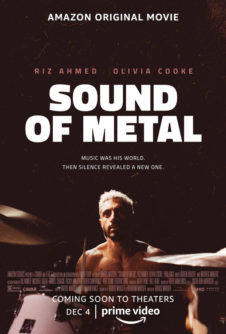
SOUND OF METAL
Well-acted, morally serious drama — for discerning adults only.
Should You Watch It?
SOUND OF METAL offers a serious, compassionate drama about addiction, identity, disability, and the search for meaning when life changes without permission. Riz Ahmed gives a fine performance as Ruben, and the film presents a positive and touching view of the deaf community. Its Christian and moral worldview is light but genuine, especially in its attention to silence, prayer, and the “Kingdom of God.”
The film is also slow, its messages could be stronger, and its ending is too open-ended to feel fully satisfying. The content carries real costs: about 68 obscenities, including one use of Jesus’ name as profanity, along with smoking, drug references, implied fornication, and a brief explicit nude drawing.
If you are an adult—or an older teenager whose parents carefully judge the material—the film has enough humanity and moral substance to merit a viewing; otherwise, choose something gentler.
The Story
NO SPOILERS — WE KEEP THE SURPRISESRuben is a heavy metal drummer who tours in an RV with Louise, the lead singer of his band and his girlfriend. When Ruben begins losing his hearing, a doctor warns that he could lose it forever if he keeps drumming.
A former heroin addict who has been sober for four years, Ruben reluctantly leaves Louise and enters a country home for deaf addicts affiliated with a church. There, he must face a new way of living while wondering whether he can return to the life he knows.
Is It Any Good?
Three stars means this is a worthwhile but imperfect drama. The acting is its clearest strength. Riz Ahmed delivers a fine performance as Ruben, and the movie handles its central emotional crisis with seriousness.
The film is a little slow. Its plot and positive messages could be stronger, and the ending is ambiguous and too open-ended. The result is a well-acted film with genuine moral interest, but not one whose story lands as powerfully or satisfyingly as it might.
The Worldview
SOUND OF METAL presents a light Christian, moral worldview through a deaf home and school affiliated with a church. A cross appears on the wall while a group seems to pray in sign language. Joe, the home’s Christian director, tells Ruben that silent moments can be the best moments for finding the “Kingdom of God.” Ruben begins as a nonreligious man, but the film eventually places him in silence, observing the world around him.
The movie offers a positive and touching view of the deaf community and portrays the home as willing to help people who are not religious. It also treats recovery from addiction, love, responsibility, and acceptance as serious moral concerns. However, the film sides with Joe’s belief that deaf people or people going deaf should never try to get their hearing fixed. That belief seems politically correct and intolerant toward deaf people who want hearing implants. The ending leaves the film’s message ambiguous.
The film’s central longing is for peace and meaning amid loss. Scripture also points us toward stillness before God: “Be still, and know that I am God” (Psalm 46:10).
The Content Guide
The specifics — spoilers included by nature — so you can judge for your own family.
Dominant Worldview and Other Worldview Content/Elements
Light Christian, moral worldview about a heavy metal drummer who finds he’s going deaf and starts living at a Christian-oriented home and school for the deaf (especially those recovering from an addiction), includes one scene showing an apparent prayer in sign language where a group stands in a room with a Cross on the wall, the head of the home tells the drummer that the Kingdom of God can be found in the silences, a positive and touching view of the deaf community, and the head of the home notes that they will help people who aren’t religious, but the home has a light politically correct belief that being deaf is not a handicap, so they don’t really cater to any deaf people who want to get any kind of a hearing implant for their deaf affliction, and the protagonist starts off as not religious but by the end of the movie he sits in silence as if he’s finally agreeing with the head of the deaf home and school about the Kingdom of God, but the ending is a little ambiguous and open ended, plus it’s implied that a side character is a lesbian
Foul Language
About 68 obscenities, one Jesus profanity and one light OMG profanity
Violence
Some violence in one scene where angry musician has an angry fit, throwing objects and yelling because he’s going totally deaf
Sex
Implied fornication and couple wakes up in bed together and are living in an RV together
Nudity
Man draws a fully nude woman for a tattoo that a deaf woman wants in one scene, and images of upper male nudity in other scenes
Alcohol Use
No alcohol use, but man says he’s a recovering alcoholic
Smoking and/or Drug Use and Abuse
Smoking, and a protagonist and another man mention that they were addicted to heroin;
Miscellaneous Immorality
Protagonist has tattoos (including one on his chest saying “Please kill me”), and protagonist hides his attempt to follow his band’s progress on the Internet and get hearing implants from the deaf man running the place where he’s staying, which are against the rules.
Talk About It
Questions for the drive home, the dinner table, or the youth group.
Ruben’s life changes in a way he cannot control. How can suffering expose what we have built our identity on, and where can we seek help?
Psalm 46:1 · 2 Corinthians 12:9Joe speaks about finding the “Kingdom of God” in silence. What might it look like to become still before God rather than simply trying to escape discomfort?
Psalm 46:10 · Luke 17:20–21The deaf home welcomes people recovering from addiction. How should Christians combine truth, patience, and practical care when someone is rebuilding a life?
Galatians 6:1–2 · James 2:14–17The film presents a strong opinion about hearing implants. How can we honor people with disabilities without assuming every person must make the same medical or personal choice?
1 Corinthians 12:12–26 · Romans 14:4The Final Word
SOUND OF METAL is well acted and morally serious, with a compassionate view of the deaf community and a meaningful attention to silence. But its heavy profanity, mature content, slow pace, open-ended conclusion, and one-sided message make it a film for discerning adults. Our answer is WORTH THE TRIP — ADULTS ONLY.















