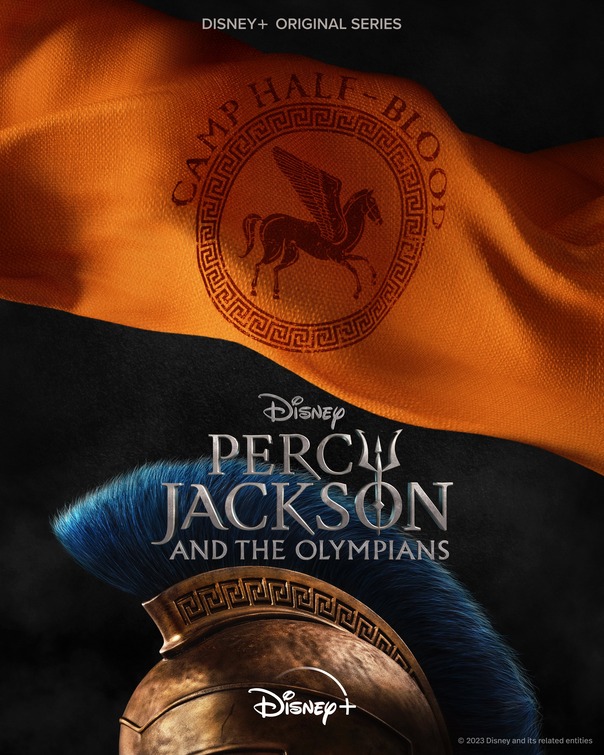
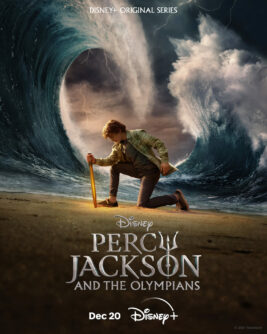
PERCY JACKSON AND THE OLYMPIANS: Episodes 1.1 and 1.2: “I Accidentally Vaporize My Pre-Algebra Teacher” and “I Become Supreme Lord of the Bathroom”
A charming demigod adventure — with pagan gods at its heart.
Should You Watch It?
Here is the honest call. These first two episodes of Disney+'s PERCY JACKSON are well made and easy to enjoy — strong acting, warm humor, sharp cinematography, and a story that celebrates bravery, self-sacrifice, and standing by your friends. Rick Riordan, who wrote the beloved books, is an executive producer, and it shows: the series keeps the middle-school-adventure spirit without talking down to anyone.
But this is a world where Greek mythology is simply true. Characters offer prayers and burn food to the Olympian gods. An oracle speaks a prophecy. The whole premise rests on demigods and deities as reality, not fable. That's why our content rating is −2, and why this one belongs at home under a parent's eye rather than handed off unwatched.
So: if you have older kids or teens who can hold pagan myth at arm's length as story, this is a fun watch worth doing together — with conversation ready to go. For younger or sensitive children, wait and see.
The Story
NO SPOILERS — WE KEEP THE SURPRISESTwelve-year-old Percy Jackson has spent his childhood catching glimpses of things no one else believes — monsters and marvels his classmates write off as nonsense. Then a school field trip to the Greek exhibit at the Met turns strange in a way he can't explain away.
Percy soon learns he isn't crazy — or ordinary. He's half-human, half-god, and the scent of a demigod draws monsters like blood in the water. When war threatens to erupt among the Olympian gods over Zeus's stolen lightning bolt, Percy is thrust into a dangerous quest, and a training camp for kids like him. Can he save the world in time?
Is It Any Good?
Three stars, and earned. The pilot pulls off something hard — introducing an entire mythological world in under forty minutes — with strong performances, a charming mother-son bond, and an exciting minotaur set piece. Its one stumble is a heavy exposition dump in a beach cabin that briefly derails an otherwise well-paced hour.
The second episode is the stronger of the two. It gives Percy real character growth, planting the seeds of his persistence and drive, while fleshing out his companions: Grover, the clumsy, loyal satyr, and Annabeth, the smug, sharp-witted daughter of Athena. There are laugh-out-loud moments with the camp counselors and a thrilling sword fight against the children of Ares. Faithful to Riordan's books without pandering, the show should please newcomers and longtime fans alike.
The Worldview
This is a series with a genuinely mixed heart. On one side, it celebrates virtues Scripture honors. Percy fights to protect his family. He stays loyal to his closest friends. His mother sacrifices herself to save him. And Percy himself models persistence, refusing to quit even when the other demigod children belittle him. These are not small things, and the show treats them as good.
On the other side stands its foundation: a strong pagan worldview in which the Greek gods are real. The demigods offer prayers and burn food to their Olympian parents. An oracle foretells a prophecy. Interestingly, those same gods are shown as neglectful and uncaring — a crack in the mythology worth noticing and discussing. But the ritual and reverence are presented straight, and that is the caution here.
The show's deepest ache is Percy's longing to be "claimed" — to be recognized and named by a father who has been distant and silent. That hunger to belong to a father is real, and the myth cannot finally satisfy it. Scripture answers it directly: "See what kind of love the Father has given to us, that we should be called children of God; and so we are" (1 John 3:1). The Olympians are absent fathers; the God of the Bible is not.
The Content Guide
The specifics — spoilers included by nature — so you can judge for your own family.
Dominant Worldview and Other Worldview Content/Elements
Strong pagan worldview mixes Christian and Greek ideals, the main character fights to protect his family from danger, a boy remains loyal to his closest friends, a mother sacrifices herself to save her son from a monster, a boy displays persistence despite the demigod children belittling him, the demigod characters offer prayers and food burnings to their Greek gods, an oracle foretells a prophecy, the demigods practice self-defense with Greek weapons and armor, and the Olympian gods are shown to be neglectful and uncaring
Foul Language
No foul language in Episode One or Two
Violence
No blood, but moderate action violence throughout, two scary monsters are stabbed to death and disintegrate into piles of dust, a woman is crushed into a sphere of golden light, teenage demigods engage in sword-to-sword combat, a boy receives visible sword cuts on his arms, a boy stabs a minotaur through the head, and three characters survive a major car crash
Sex
No sex
Nudity
No nudity
Alcohol Use
No onscreen alcohol consumption, but a boy’s stepfather is implied to be a drunkard, and the sarcastic god Dionysus briefly states how he lost his godly privilege to magically produce his own wine
Smoking and/or Drug Use and Abuse
No smoking or drugs, but a son of Poseidon heals his wounds by the way of water magic;
Miscellaneous Immorality
An abusive stepfather argues with his wife and his stepson, a father uses an online gambling website, three demigod teenagers physically intimidate the main character twice, a girl leaves the main character out of the loop with her game plan, a boy urinates in a forest, the main character’s allies gaslight him into believing he did not fight his teacher-turned monster, and the camp mentors withhold crucial information regarding the fate of a human mother.
Talk About It
Questions for the drive home, the dinner table, or the youth group.
Percy's mother lays down her life to save him. Where else have we seen a love that gives itself up for another — and what does that kind of sacrifice reveal about real love?
John 15:13 · Romans 5:8Percy longs to be "claimed" by his father, to be named and recognized. How does God answer that hunger to belong to a Father?
1 John 3:1 · Romans 8:15–16In this story the gods are worshipped with prayers and offerings — yet they're shown as neglectful and uncaring. What makes the God of the Bible different from the gods people invent?
Isaiah 44:9–20 · Psalm 121:3–4Percy refuses to quit even when others belittle him, and he stays loyal to his friends. Where does the courage to keep going and to stand by others come from?
Joshua 1:9 · Proverbs 17:17The Final Word
There's real charm here — good acting, warm humor, and virtues worth cheering. There's also a world built on the worship of Greek gods, and violence that pushes its rating. For families with older kids and teens, that makes this one worth watching together, questions in hand. Our verdict stands: wait and see — and if you'd rather choose something easier for younger ones, start here.