VISION
Before her time, a saint seeks truth, healing, and a place for women.
Should You Watch It?
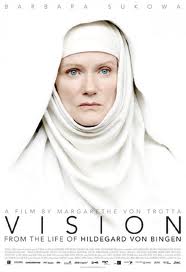
VISION offers a thoughtful portrait of Saint Hildegard, a Catholic nun whose visions, writing, music, healing ministry, and leadership bring her into conflict with church authorities. The film speaks positively about Jesus and Scripture, and it honors Hildegard’s opposition to self-flagellation and her desire to protect the women under her care.
The film is also uneven. Its attempt to cover Hildegard’s entire life makes the plot episodic, while the dialogue is often too long and the subtitles can move too quickly. Its Christian message is complicated by strong feminist, Romantic, and naturalistic ideas.
If your family includes middle schoolers or older viewers who can engage with those tensions, VISION is worth seeing for its faith-centered themes and beautiful filmmaking.
The Story
NO SPOILERS — WE KEEP THE SURPRISESVISION follows Hildegard, a girl given to a cloister at age eight and raised there by an older nun. As she grows, Hildegard becomes a leader among the nuns and reveals that she has experienced visions since childhood.
Her visions shape her calling toward healing, Scripture, Jesus, and a new life for the women in her care. Those convictions bring her into conflict with powerful people inside the church.
Is It Any Good?
Three stars means VISION is accomplished but mixed. The photography, acting, and music are all very good, giving the film an elegant and beautiful appearance.
The main weaknesses are structural. Because the movie attempts to cover Hildegard’s whole life, the plot becomes very episodic. The dialogue is also much too long, and subtitles are often difficult to read because they move quickly. Many viewers may be bored.
The Worldview
VISION presents a strong Christian theme through positive references to Jesus and Scripture. It also affirms biblical truth within a Catholic story about a famous Catholic nun. Hildegard’s belief that Jesus carried all Christian suffering leads her to speak against asceticism and self-flagellation.
The film also presents Hildegard’s visions as encouraging natural healing through herbs and plants, and it emphasizes looking toward the Bible and a personal relationship with Jesus rather than looking toward the church. These ideas are joined to strong feminist elements and strong Romantic, naturalistic elements. The filmmakers appear to be trying to bridge Christian teachings and feminism, and that mixture makes the worldview less consistent.
The film’s central longing is for truth, faithful service, and a personal relationship with Jesus. Jesus said, “I am the way, and the truth, and the life” (John 14:6).
The Content Guide
The specifics — spoilers included by nature — so you can judge for your own family.
Content Summary
Strong Christian, moral worldview with Christ-centered statements and an affirmation of biblical truth in a Catholic story about a famous Catholic nun in the 12th Century, marred by strong Romanticism, feminism and naturopathy, plus movie shows there are bad people and good people in the church; no foul language; three people die, characters flagellate themselves; implied fornication results in pregnancy and people greet each other with kisses on the lips; partial upper male nudity; alcohol use but abstinence is lauded; no smoking or drugs; and, botched abortion, lying, scheming, nun accuses protagonist of self-promotion.
Talk About It
Questions for the drive home, the dinner table, or the youth group.
Hildegard speaks against people beating or whipping themselves, saying that Jesus carried all our suffering. What does Jesus’ sacrifice mean for the way Christians understand suffering?
Isaiah 53:5 · 1 Peter 2:24The film shows both good and bad people within the church. How should Christians respond when church leaders or communities fail to live up to biblical truth?
Matthew 23:1–12 · Galatians 6:1Hildegard’s visions lead her to think about Scripture and a personal relationship with Jesus. How can you test spiritual claims and remain rooted in God’s Word?
Acts 17:11 · 1 John 4:1VISION connects healing with herbs and plants. What does Scripture say about wisdom, care for others, and the limits of human knowledge?
Proverbs 3:13–18 · James 1:5The Final Word
VISION is beautiful, thoughtful, and strongly Christian in its treatment of Jesus, Scripture, and faithful service. Its episodic story and complicated feminist and naturalistic elements call for discernment. For older children and adults, the answer is WORTH THE TRIP — MIDDLE SCHOOL AND UP.