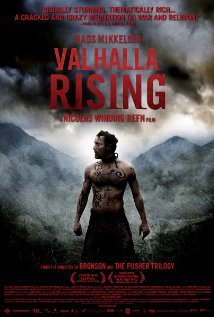
VALHALLA RISING
A stark, violent Viking parable better experienced at home.
Should You Watch It?
Valhalla Rising is not the epic Viking adventure its title may suggest. It is a dark, brooding psychological study with cold photography, an unsettling soundtrack, excellent acting, and a deliberately unusual approach. Its story is rich in paradox, symbolism, and Christian analogy, eventually reaching a powerful act of redemption.
But the movie asks a great deal of you. The pace is extremely slow, the message is sometimes muddled, and the violence is brief but extremely graphic. Characters are hacked, strangled, stabbed, and disemboweled. Norse pagan mythology also shares the film's spiritual landscape with early Christian belief.
If you want an escapist action movie, choose something more straightforward, such as The Vikings. For discerning adults drawn to challenging, symbolic films, watch this one at home, where you can control the experience.
The Story
NO SPOILERS — WE KEEP THE SURPRISESOne Eye, a one-eyed, mute, almost superhuman slave warrior, is kept in a cage by a ruthless Norse chieftain and forced to fight vicious contenders to the death. After breaking free, he is followed by Are, a young slave boy who has cared for him.
Together, they encounter a small band of self-proclaimed crusaders sailing to the Holy Land to fight for Christ. When their ship enters a thick fog and emerges in an unfamiliar land, the group's journey becomes a test of physical and emotional endurance.
Is It Any Good?
The two-star rating reflects a film with real artistic ambition but limited accessibility. The photography is often breathtaking and expressionist, exposing barren Scottish landscapes with a cold, stark beauty. The soundtrack is mesmerizing and unsettling, while the acting is excellent.
The film also deserves credit for avoiding standard formulas and probing the human psyche rather than pursuing ordinary commercial adventure. But its snail's pace, sparse dialogue, muddled message, and unrelenting agony make it difficult to sit through. It is a significant creative work, but not an enjoyable choice for viewers seeking unencumbered fun.
The Worldview
The film's worldview is ultimately redemptive, but it remains muddled and ambiguous along the way. It brings together Norse mythology and early Christian belief: some characters are Norsemen who believe in many gods, while others claim Christ as their savior. The title invokes Valhalla, the Norse hall of the slain, while the characters' journey also raises questions about Heaven, suffering, and redemption.
The Christian analogy becomes strongest through the final act of redemption. Yet the film does not present a clear Christian message. Its dark psychological focus and symbolic storytelling ask viewers to formulate their own questions and answers, while its violence and pagan mythology complicate its spiritual perspective.
The movie's central movement is from bondage and despair toward liberation and redemption. Scripture offers a clearer promise: “Therefore, if anyone is in Christ, he is a new creation” (2 Corinthians 5:17).
The Content Guide
The specifics — spoilers included by nature — so you can judge for your own family.
Content Summary
Ultimately light redemptive, moral ending and worldview, but with a mix of Norse mythology and early Christian belief where some characters are Norsemen, believers in many gods, while others claim Christ as their savior; brief foul language; brief but extremely violent scenes where characters are hacked, strangled, stabbed, and disemboweled; no sex; one group shot where naked male and females are briefly shown huddled together as freed captives; no alcohol; no smoking; and, slavery and men forced to fight in combat for sport.
Talk About It
Questions for the drive home, the dinner table, or the youth group.
The film places bondage, suffering, and liberation side by side. What does the Bible say true freedom looks like?
John 8:36 · Galatians 5:1Some characters claim Christ while others believe in many gods. How does Scripture describe the difference between the living God and idols?
Acts 17:22–31 · 1 Corinthians 8:4–6The movie uses ambiguity and symbolism instead of giving easy answers. When life feels confusing, where does Scripture tell us to seek wisdom?
James 1:5 · Proverbs 3:5–6The story ultimately points toward redemption. What makes biblical redemption more than simply escaping suffering?
Ephesians 1:7 · 2 Corinthians 5:17The Final Word
Valhalla Rising is an ambitious, visually striking work with excellent acting and a redemptive center. But its extremely slow pace, muddled message, pagan mythology, and graphic violence make it a difficult choice. For discerning adults who want to explore it, WAIT FOR HOME — ADULTS ONLY. Families seeking something more accessible should begin here:.