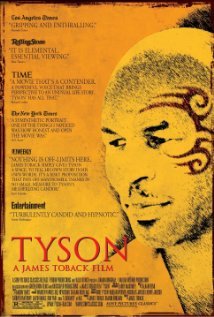
TYSON
An honest, well-made portrait of a champion searching for meaning.
Should You Watch It?
TYSON is a well-made documentary that lets Mike Tyson tell his own life story. Most of the film is Tyson talking, supported by archival photographs, boxing footage, and comments from people close to him. That directness makes the film absorbing as Tyson searches for an answer to its opening question: “Who am I?”
The search is also disturbing. Tyson speaks graphically about sexual exploits, rage, alcoholism, and his desire to dominate women. He calls himself a “god,” describes his Islamic faith as a religion of humanity, and recounts strong violence, including the infamous footage of him biting Evander Holyfield’s ear.
Adults willing to weigh those concerns may find a sobering portrait of talent, trauma, fame, and spiritual emptiness. For children and young teens, choose something else. WORTH THE TRIP — ADULTS ONLY is the practical answer.
The Story
NO SPOILERS — WE KEEP THE SURPRISESTYSON follows heavyweight boxing champion Mike Tyson from an abusive and unstable childhood through juvenile detention, boxing training, championship victories, personal collapse, and an ongoing search for identity.
Coach Cus D’Amato becomes a mentor and father figure, teaching Tyson discipline, character, and confidence. But fame, sex, money, rage, and self-worship pull Tyson in other directions. The documentary asks what remains when achievement cannot fill the emptiness within.
Is It Any Good?
Three stars means TYSON is a well-made and absorbing documentary, though its subject matter is deeply troubling. James Toback builds the film around Tyson’s own words, using archival photos, boxing-match clips, and interviews with people close to him.
The result is a direct portrait of a complicated life. Tyson’s openness gives the film force, especially as he describes his search for identity and meaning. The film’s value comes less from polished spectacle than from allowing its central figure to speak candidly about his rise, his self-destructive choices, and the emptiness fame could not cure.
The Worldview
TYSON presents a man searching for identity in fame, fortune, sex, violence, and self-worship. Mike Tyson describes Cus D’Amato as “my great god,” later declares, “I am a god,” and repeatedly returns to the idea that achievement cannot fill the emptiness inside him. The film also presents Tyson’s conversion to Islam; he says he became a Muslim in prison and describes Islam as a “religion of humanity.”
The documentary recognizes the importance of discipline, character, mentorship, and family. Cus D’Amato gives Tyson structure and belonging, and Tyson’s later collapse shows the damage caused by rage, lust, pride, and a life without discipline. Yet the film’s spiritual answers remain confused. Tyson contradicts himself about faith in God and adopts an identity shaped by rage, while self-worship and uncontrolled desire remain central concerns.
The source review sees Tyson’s emptiness as a longing that only God can fill, pointing specifically to Jesus Christ as the answer. Scripture gives that longing a clear direction: “My soul thirsts for God, for the living God” (Psalm 42:2).
The Content Guide
The specifics — spoilers included by nature — so you can judge for your own family.
Content Summary
Very strong pagan, Islamic worldview as main character who converted to Islam says it is a “religion of humanity,” mixed with elements of promiscuity and violence; two profanities, 12 vulgar statements, and 18 obscenities, including some graphic sexual descriptions; much strong boxing violence, man bites ear off another man with blood, and references to man’s violence toward women; two references to sex and one very detailed description of sexual acts; men in boxing shorts; alcohol is discussed but nothing on screen shown; illegal drugs and sales of illegal drugs are discussed; and, self-worship, lack of discipline, uncontrolled rage, man looks for his identity in fame and fortune, and references to stealing.
Talk About It
Questions for the drive home, the dinner table, or the youth group.
The film follows a man searching for identity in success, sex, and fame. Where do you tend to look for meaning, and what does Scripture say gives a person lasting identity?
Genesis 1:27 · Galatians 2:20Cus D’Amato teaches Tyson discipline and character. Who has helped shape your character, and how can you pursue discipline rather than impulse?
Proverbs 25:28 · 1 Corinthians 9:24–27Tyson’s rage repeatedly damages his life and relationships. What does biblical meekness look like, and how is it different from weakness?
Proverbs 16:32 · Matthew 5:5Tyson describes an emptiness that achievement cannot fill. What does it mean to seek God rather than ask success to save us?
Psalm 42:1–2 · Matthew 6:33The Final Word
TYSON is a well-made, candid documentary about a champion whose success could not answer his deepest questions. Its graphic sexual material, strong violence, self-worship, and confused spiritual claims make it unsuitable for children and young teens. For discerning adults, the honest portrait may be worth seeing. WORTH THE TRIP — ADULTS ONLY. For other choices, see.