
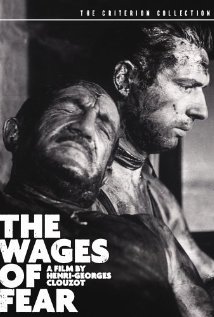
THE WAGES OF FEAR
Technically brilliant, deeply bleak, and best reserved for adults.
Should You Watch It?
This restored re-release is a technically excellent French classic. Its evocative black-and-white cinematography creates a harsh, memorable world, while Yves Montand and Charles Vanel lead an international cast with superb performances.
The cost is emotional and philosophical. The story sees life through an existential lens, where even those who win ultimately lose because death triumphs over all. That bleakness is not a side note; it shapes the film’s entire meaning.
If you are an adult who values powerful classic filmmaking and can engage a grim worldview with discernment, this is worth seeing. For family viewing or a hopeful movie night, choose something else.
The Story
NO SPOILERS — WE KEEP THE SURPRISESIn an impoverished Latin American town, four European men accept a dangerous assignment from an exploitative petroleum company. An oil well has exploded, and the only way to stop the fire is to use nitroglycerine.
Mario, Jo, Luigi, and Bimba must drive two trucks loaded with the highly volatile explosive across rugged, treacherous terrain. They are promised $2,000 each if they survive. But the journey will test more than their courage: it will expose the fears beneath their polished facades.
Is It Any Good?
Four stars means this is excellent filmmaking, and the source review’s praise is clear. The restored film is technically excellent, with evocative black-and-white cinematography that gives the dangerous journey a stark visual power.
The international cast is another major strength. Yves Montand and Charles Vanel are especially superb, bringing force to a story centered on fear, pressure, and the stripping away of outward appearances. The film’s principal weakness is not its craft but its existential bleakness.
The Worldview
The film presents life through existential underpinnings: people face fear and death, their outward facades are stripped away, and the final outcome remains bleak. Its central idea is that even those who win ultimately lose, because death triumphs over all.
That vision gives the story weight but offers no clear hope beyond human endurance. The film’s focus on fear, mortality, and the exposure of what lies beneath appearances can prompt serious reflection. But its existential philosophy leaves life extremely bleak rather than grounding it in God, redemption, or lasting meaning.
Scripture also takes mortality seriously, while pointing beyond it: “So teach us to number our days that we may get a heart of wisdom” (Psalm 90:12).
The Content Guide
The specifics — spoilers included by nature — so you can judge for your own family.
Content Summary
Roughly 5 obscenities & 3 profanities; brief naturalistic nudity of native children & woman bathing, & a small pin-up on wall; violent confrontations, none bloody; and, existential philosophy.
Talk About It
Questions for the drive home, the dinner table, or the youth group.
The four drivers’ polished facades are stripped away as they face fear. What do we learn about ourselves when pressure reveals what is beneath the surface?
Psalm 139:23–24 · Luke 6:45The film presents death as triumphing over everyone. How does the Christian hope of resurrection answer that vision?
1 Corinthians 15:54–57 · John 11:25–26The drivers accept extreme danger for money from an exploitative company. What responsibilities do employers and workers have toward one another?
Colossians 4:1 · James 5:4How can we face the reality of death without giving in to despair?
Psalm 90:12 · 1 Thessalonians 4:13–14The Final Word
This is a superbly made classic with striking black-and-white cinematography and excellent performances. Its bleak existential philosophy and mature content make it a choice for adults, not families with children. For a more hopeful family viewing option, see.
WORTH THE TRIP — ADULTS ONLY