
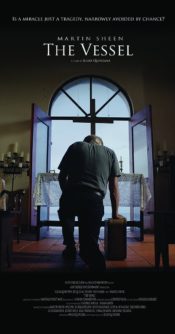
THE VESSEL
A lyrical Christian allegory for discerning adults.
Should You Watch It?
THE VESSEL is a serious, beautiful drama about a Caribbean fishing village devastated when a tidal wave kills its children. The town loses hope, while Leo, a kind young man burdened by his mother’s grief, becomes the center of a mystery after drowning and seemingly returning to life.
The film’s strongest qualities are its Christian symbolism, sacramental imagination, lyrical style, and very good acting and direction. It explores forgiveness, redemption, counterfeit forms of love, and the ache of people who feel overlooked. But the priest uses several profanities and obscenities, and the film includes sensuality, nudity, drunkenness, and anti-Christian doubts expressed through questions about faith and God.
If you are a discerning adult who can engage those concerns thoughtfully, THE VESSEL is worth watching. It is not appropriate for children or young teens.
The Story
NO SPOILERS — WE KEEP THE SURPRISESAfter a tidal wave kills the children of a Caribbean fishing village, the town becomes a place almost entirely emptied of hope. Leo cares for his grieving mother, Fidelia, who has not spoken since another son drowned.
When Leo later drowns with his friend Gabriel and seemingly returns to life, the local priest believes God may be giving the town a sign. Leo becomes a focus of hope, suspicion, desire, and spiritual questioning as he tries to find love and a way forward.
Is It Any Good?
Three stars means THE VESSEL is a strong, worthwhile artistic drama, though its subject matter and content require discernment. The film is very lyrical and compelling, with acting and direction that are especially good among the main characters.
Its Christian symbolism and allegory give the story weight, while the broken people in the village make its themes of forgiveness and redemption emotionally engaging. The film is artistic but entertaining. The source review offers limited detail about specific craft elements beyond the acting, direction, and lyrical quality.
The Worldview
THE VESSEL presents a very sacramental Catholic Christian worldview. Its fishing village is filled with broken people who have lost their children, and the film takes seriously forgiveness, redemption, doing the right thing, and the need for love.
The story treats love as the answer while exposing several counterfeit forms of love. Hero worship becomes hypocritical. Sexual attraction is not presented as the same thing as faithful love. Leo’s mother overlooks him while he longs for her love, and the priest must rediscover his faith. At the same time, the priest questions his faith, and the film repeatedly asks whether Leo’s resurrection is real and whether the vessel is a sign from God. Those doubts create a spiritual atmosphere that does not always offer clear biblical answers.
The film’s sacramental imagery and concern for redemption align with Christian themes, but its constant questioning of faith and God calls for adult discernment. Its central longing—for love that can heal neglected and broken people—echoes Scripture: “He heals the brokenhearted and binds up their wounds” (Psalm 147:3).
The Content Guide
The specifics — spoilers included by nature — so you can judge for your own family.
Content Summary
Very sacramental Catholic Christian worldview with strong themes of forgiveness and doing the right thing in the midst of a fishing village filled with broken people who lost their children to a tidal wave, with some negative views by the priest who is questioning his faith; four obscenities and five profanities, many from the priest, and young man urinates off the sea wall, spraying his friend; jeopardy and violence (but not bloody) dealing with two men who fall into the ocean, and one dies while one resurrects, man gets angry at his mother, people burn man’s boat, women try to punish woman they think is committing adultery, visual elements of destruction by water; man briefly looks at a woman through crack in the wall, man lusts after woman, and scenes of woman underwater, with some minor kissing; upper male nudity and rear female nudity; alcohol use and drunkenness; no smoking or drugs; and, constant questioning of faith, redemption and God, including from the priest, such as is this resurrection real and is the vessel a sign from God, plus the town cremates a drowned man, which was forbidden by the Catholic church until very recently, though it may be due to the geography of the rocky beach where the town’s located.
Talk About It
Questions for the drive home, the dinner table, or the youth group.
The village loses hope after the tidal wave. How can Christians grieve honestly while still waiting for God’s comfort?
Psalm 34:18 · Romans 8:24–25Leo longs for his mother’s love. What does faithful love look like when someone feels overlooked or rejected?
1 Corinthians 13:4–7 · Romans 12:10The film presents several counterfeit forms of love. How can you distinguish genuine love from desire, hero worship, or possession?
1 Corinthians 13:5 · Philippians 2:3–4The priest questions his faith and the meaning of Leo’s apparent resurrection. How should Christians bring difficult questions to God?
Mark 9:24 · James 1:5The Final Word
THE VESSEL is lyrical, compelling, and rich in Christian symbolism. Its acting and direction are very good, but its profanity, sensuality, nudity, and spiritual doubts make it a film for discerning adults, not children or young teens. For that audience, it is WORTH THE TRIP — ADULTS ONLY.















