
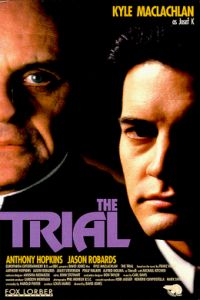
THE TRIAL
A superb, intense Kafka adaptation about injustice—for adults only.
Should You Watch It?
A four-star film can still require careful family judgment. THE TRIAL is an outstanding adaptation of Franz Kafka’s novel, with superb acting, an almost impeccable script, and brilliant photography. Its story makes the injustice of authoritarian systems vivid: innocent people can be charged, convicted, imprisoned, and even sent to their deaths for crimes they did not commit.
The film is also intense and complex. Its subject matter is not presented as a simple prison story, but as a nightmare of trying to understand an unjust conviction. Several expletives and sexual innuendos keep it from being an easy recommendation for younger viewers.
If you are an adult seeking serious, challenging drama, this is worth watching. For children under 16, choose something more accessible.
The Story
NO SPOILERS — WE KEEP THE SURPRISESOn the morning of his thirtieth birthday, Josef K. wakes to discover that he is being placed under arrest. He does not know the reason for the charge or understand the system now judging him.
His struggle to discover the truth becomes a nightmare of authority, accusation, and injustice. The film follows his attempt to find the real reason for his conviction.
Is It Any Good?
Four stars means this is an outstanding movie. The acting is superb, Harold Pinter’s screenplay is almost impeccable, and the photography is brilliant.
The current version compares favorably with Orson Welles’ 1963 adaptation, which Welles considered “the best film I’ve ever made.” David Jones’ interpretation gives Kafka’s masterpiece a shockingly modern turn, helping audiences understand the power of a fascist state and what took place behind the Iron Curtain for seventy years.
The Worldview
THE TRIAL is explicitly anti-Fascist and anti-Communist. It portrays systems in which authority can become overwhelming and justice can be distorted until innocent people are charged, found guilty, imprisoned, and even sent to their deaths for crimes they did not commit.
The film exalts the search for truth by placing Josef K. against an unjust conviction he cannot understand. Its modern political turn connects Kafka’s nightmare to the oppression associated with fascist states and the Iron Curtain. At the same time, the film’s surrealistic approach and complexity may leave viewers wrestling with ideas rather than receiving a simple resolution.
The story’s deepest concern is the horror of false judgment. Scripture gives a clear command against that kind of injustice: “You shall not bear false witness against your neighbor” (Exodus 20:16).
The Content Guide
The specifics — spoilers included by nature — so you can judge for your own family.
Content Summary
This surrealistic, anti-Fascist and anti-Communist story is marred by several expletives and sexual innuendos.
Talk About It
Questions for the drive home, the dinner table, or the youth group.
Josef K. is accused without understanding the reason for his conviction. Why is truth important when someone is judged, and what does Scripture require of witnesses?
Exodus 20:16 · Proverbs 12:22The film shows the power of a fascist state and the oppression that took place behind the Iron Curtain. What happens when human authorities are treated as if they cannot be questioned?
Acts 5:29 · Psalm 146:3–7How should Christians respond when an innocent person is treated unjustly?
Micah 6:8 · Isaiah 1:17The Final Word
THE TRIAL is superbly acted, written, and photographed, but its intensity and complexity make it a film for adults. For mature viewers seeking serious drama about injustice, it is WORTH THE TRIP — ADULTS ONLY. For younger viewers, choose from our family-friendly picks.















