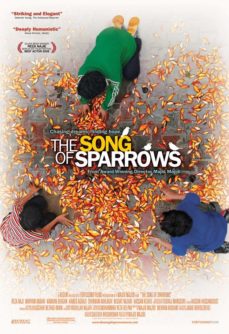
THE SONG OF SPARROWS
An Iranian family drama about work, wealth, and what matters most.
Should You Watch It?
THE SONG OF SPARROWS has a worthwhile center. It honors family duty and the bonds between family members, while asking whether the pursuit of material goods can damage a person's relationships and connection to nature. Karim's struggle gives the film a compassionate concern for the way work and financial pressure shape family life.
But the film is too cryptic for its own good. Its values and symbolism are not always clear, and its Romantic preference for rural life over the modern city leans too strongly against capitalism. The content concerns are relatively limited, but the film's ambiguity may frustrate viewers who want a direct message.
This is best saved for home viewing, where older teenagers and adults can discuss its ideas together.
The Story
NO SPOILERS — WE KEEP THE SURPRISESKarim is the foreman at an ostrich farm in the countryside. After an ostrich escapes, he loses his job. At the same time, his deaf daughter damages her expensive hearing aid.
Karim travels by motorcycle to Tehran to seek help repairing it. When repair proves impossible and a new one is beyond his means, he begins earning money as a taxi for the city's busy businessmen. His new work and growing interest in material goods begin to change him, troubling his family and neighbors.
Is It Any Good?
Two stars means this is a thoughtful film with meaningful ideas, but its execution is uneven. The family-centered concerns are clear enough to give the story emotional purpose, and the film's rural and city settings support its contrast between a laid-back community life and modern urban bustle.
The weakness is that the movie is too cryptic. Its symbolism involving ostriches, sparrows, and fish does not always communicate clearly, and the values it espouses can be difficult to identify. The result is a film with a worthwhile subject but limited accessibility.
The Worldview
The film honors family duty and the bonds between family members. It also explores how a narrow focus on material goods and earning a living can disrupt family life and a person's relationship with nature. Those concerns can align with a biblical recognition that work and possessions are not the whole of life.
At the same time, the movie leans toward a Romantic, somewhat anti-capitalist worldview. Its depiction of Tehran emphasizes aimless hustle and bustle, while rural society is presented as more laid-back and preferable. The film seems to rebuke materialism and capitalism too strongly, even though the Bible values hard work and private property. Overt references to Islam are fairly positive but incidental rather than central to the story.
The film's central longing is for balance between livelihood, family, and the created world. Scripture warns against making wealth our master: “You cannot serve God and money” (Matthew 6:24).
The Content Guide
The specifics — spoilers included by nature — so you can judge for your own family.
Content Summary
Relatively strong but not contentious or didactic Romantic, anti-capitalist worldview set in a Muslim country, counterbalanced by some strong moral elements supporting family, plus some overt references to the false religion Islam but that is somewhat incidental to the story and premise; four obscenities and one light profanity; light violence includes man injures himself in an accident; no sex; no nudity; no alcohol use; smoking; and, materialism and capitalism are rebuked a bit too strongly to fit the movie’s Romantic worldview.
Talk About It
Questions for the drive home, the dinner table, or the youth group.
Karim’s work begins to affect his family relationships. How should we balance work responsibilities with our commitments to the people God has given us?
1 Timothy 5:8 · Ephesians 5:25The film questions the pursuit of material goods. What is the difference between providing responsibly and letting possessions control us?
Matthew 6:19–21 · 1 Timothy 6:6–10The story contrasts rural life with the bustle of the modern city. What can we appreciate about creation and community without turning either into an idol?
Genesis 2:15 · Romans 1:25When a film's message is unclear, how can Christians practice discernment without assuming more than the work actually says?
Acts 17:11 · Philippians 1:9–10The Final Word
THE SONG OF SPARROWS has a humane concern for family, work, and the danger of materialism, but its symbolism and worldview are not always clear. Older teenagers and adults may find worthwhile discussion in it, but its cryptic presentation makes it better for home viewing. Our verdict: WAIT FOR HOME.