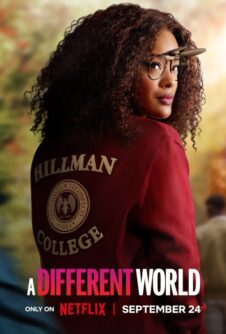
A DIFFERENT WORLD: Episodes 1.1-1.3
A new group of freshman tackle life, love, and college classes in this reboot
Should You Watch It?
Yes. This well-written college sitcom delivers high production value and a great cast. Each episode focuses on a central problem that teaches the main character, Deborah, something, whether it shows her the importance of academic responsibilities or prompts her to consider other people’s feelings. The show includes several members of the original cast, making this reboot a fun watch for fans of the original.
The first three episodes feature characters focusing on doing the right thing, from helping fellow students to understanding the importance of academic and financial responsibility. Episode 2 includes some discussion of feminism and the patriarchy.
Opposing viewpoints appear without judgment, and the students’ professor encourages the class to see and understand both sides of the argument. A Christian character, Hazel, frequently speaks about her faith, and other characters view this behavior positively.
Despite strong language, suggestive humor, and other immoral content, the show balances its college comedy with positive lessons about responsibility, empathy, and faith, giving viewers more to consider than just a few laughs.
The Story
NO SPOILERS — WE KEEP THE SURPRISESDeborah Wayne stands ready to take on Hillman College. She works to escape her parents’ shadow and make her own name. An attempt to stand up for her roommate makes her infamous on campus. Deborah must figure out what kind of person she wants to become. With help from her new friends, Deborah takes on academic challenges, fights for fair treatment of other students, and learns what it means to grow up. She experiences plenty of hilarious missteps along the way.
Is It Any Good?
These episodes earn four stars for a great cast of talented actors, both new and experienced, well-written scripts, and high production value. This reboot is really special, taking elements of the original A DIFFERENT WORLD and updating them for today’s teens.
The show features a stellar cast of young actors, along with plenty of the original series’ stars, and brings the action back to the beloved fictional campus of Hillman College.
The episodes tackle realistic challenges young people face, create comedic moments, and impart lessons about responsibility, doing the right thing, and learning from mistakes.
Fans of the original show love the nods to the 90s classic, while new viewers enjoy this entertaining and thought-provoking look at a group of college students’ adventures.
The Worldview
The series carries a strong moral worldview with some Christian elements. The characters try to do the right thing, help others and learn from their mistakes. Deborah, the main character, wants to shed her "party girl" image, get serious about school and earn her parents' trust.
When the college takes away a student's grant money after she misses curfew, Deborah stands up for her, since the school let every other student off the hook. Later, the student tells Deborah she had no right to make her finances public, and Deborah apologizes. The show rewards her humility, not just her good intentions.
Faith plays a real part too. Hazel, one of Deborah's friends and classmates, follows Jesus and talks about her faith often. She mentions prayer and tells her class that her father led her home, just as Scripture teaches, and that her home felt "full of love." Nobody mocks her. In fact, many characters compliment Hazel on her beliefs. Viewers rarely see that kind of respect for a Christian character on TV.
Episode 2 raises some feminist ideas, but the show gives the other side an equal voice, and the professor urges her students to love one another above all else. The series contains some light objectionable content, such as foul language, light alcohol use and a few lies. Still, it makes a great series that encourages viewers to do the right thing and learn from their mistakes.
The Content Guide
The specifics — spoilers included by nature — so you can judge for your own family.
Dominant Worldview and Other Worldview Content/Elements
A strong moral worldview, with characters focused on doing the right thing, helping each other, learning from their mistakes, and trying to grow as people. Characters apologize when they make mistakes, and do kind things for each other. Christian elements, with a Christian character, who speaks about her faith and is complimented by other characters for her strong faith. A light Feminist discussion in Episode 2, but both viewpoints are discussed fairly
Foul Language
18 obscenities, including 9 “d” words, 2 “s” words, 4 “h” words, 3 “a” words, and one OMG profanity, as well as some suggestive humor, for example, A male character talking about a female character’s body, a married couple vaguely referring to the sex act;
Violence
Episode 2 features a physical fight between two football players, but it is brief and there is no blood
Sex
Couples kiss throughout the episodes, but nothing further, a character admits she had an extramarital affair but that she and her husband worked through it and are still together, two students are shown testing their “gaydar,” guessing who is gay on campus;
Nudity
Upper male nudity while football players are in a locker room after practice;
Alcohol Use
Scenes with social drinking, but no one drinks to excess;
Smoking and/or Drug Use and Abuse
No smoking or drug use; and,
Miscellaneous Immorality
The heroine's mother makes prejudiced comments about a classmate after she learns where the classmate comes from. Her husband rebukes her and urges an open mind. A student admits he spent a year in juvie before college but doesn't say why. A football player fights a teammate and hides it from his coach, and the coach benches the teammate and gives the other player his spot. A recently fired school employee misuses school funds, and the story rebukes her behavior. The heroine lies about knowing a celebrity to get the celebrity to perform at the school's Homecoming concert.
Talk About It
Questions for the drive home, the dinner table, or the youth group.
Deborah struggles to keep up with the pace of her college classes. What spiritual obstacles get in the way of your own academic potential? Proverbs 18:9
When Rashida explains to Deborah that, while standing up for her was nice, it wasn’t done in the best way, Deborah learns a lesson and apologizes. What is the difference between just saying “I’m sorry” and understanding the other person’s point of view? James 5:16
In Episode 2, the students debate feminism and the idea of patriarchy, with both sides of the argument discussed fairly. How can we balance standing firm in our Christian beliefs, while still remaining respectful to others’ point of view? Romans 12:10
The Final Word
A DIFFERENT WORLD takes a fun, thoughtful look at the challenges young people face as they grow up. The show blends the best parts of the original series with fresh storylines, and its first three episodes encourage viewers to do the right thing and learn from their mistakes. However, some strong language and other immorality make this one a skip for younger viewers.