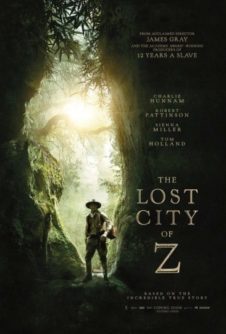
THE LOST CITY OF Z
A lush, thoughtful adventure undone by obsession and paganism.
Should You Watch It?
If you want a fast, action-packed expedition movie, this is not that film. The Lost City of Z is a slower, more elegant drama about Percival Fawcett’s search for a legendary city and the personal cost of pursuing it for decades.
The film’s lush atmosphere, intriguing jungle details, and strong emotional performances give it real merit. It also presents the loyalty of Fawcett’s wife positively, even as his obsession makes him an increasingly distant husband and father. But the movie’s pagan mysticism is presented matter-of-factly, and its violence includes cannibal imagery, spear attacks, and an intense World War I battle.
Adults who can engage those elements with discernment may find a thoughtful historical drama here. For children and young teens, choose something else. The practical answer: see it only if you are a discerning adult prepared for its pagan worldview and intense content.
The Story
NO SPOILERS — WE KEEP THE SURPRISESBritish army officer and explorer Percival Fawcett receives an opportunity to redeem his family name through a dangerous expedition into uncharted jungle between Bolivia and Brazil.
There, evidence of an ancient city leads him toward a new purpose. Though Fawcett returns home, the search continues to draw him away from his wife and children and back into the jungle. His expedition partner Henry Costin joins him as the quest grows more personal and perilous.
Is It Any Good?
Three stars means this is a strong, thoughtful film with clear flaws. It is not an action-packed thrill ride. Instead, writer-director James Gray gives the story an elegant, stately pace and focuses on the human cost of Fawcett’s quest.
The movie is particularly strong in atmosphere. Lush cinematography and memorable details, including an outdoor opera house deep in the jungle, make the world compelling. Charlie Hunnam leads a cast that conveys the deeper emotions behind Fawcett’s obsession.
The film’s central weakness is that its protagonist’s pursuit repeatedly harms his family life. Still, it succeeds as a rare adventure movie with substantial ideas and emotional weight.
The Worldview
The Lost City of Z presents a strong Romantic and pagan worldview. Fawcett’s search for the lost city becomes an obsession that repeatedly takes him away from his wife and children. The film also presents pagan mysticism among primitive natives, including a tribe of ruthless cannibals, as part of its world.
The movie challenges European ideas about civilization and portrays Fawcett as seeking to prove that the supposedly savage natives had a higher culture than Europeans believed. It also depicts Fawcett’s wife as a feminist while giving her a positive portrait of lifelong loyalty. Fawcett sees a fortune teller, whose prediction seems to become at least partly true.
The film rightly recognizes that devotion to a grand pursuit can damage family responsibilities. Yet it frames Fawcett’s longing through Romantic obsession and paganism rather than a biblical understanding of truth, worship, and duty. Scripture warns that “where your treasure is, there your heart will be also” (Matthew 6:21).
The Content Guide
The specifics — spoilers included by nature — so you can judge for your own family.
Content Summary
<strong>Worldview</strong> Very strong pagan worldview where protagonist is defeated by his politically correct Romantic obsession and revisionist view of history trying to undercut European notions of civilization and paganism among primitive natives, which takes the form of a pagan tribe of cannibals, but protagonist’s wife remains loyal to him despite his obsession with his work involving a search for a fabled lost city, but she’s also depicted as a feminist, plus protagonist sees a fortune teller and her prediction seems to become at least partly true; three obscenities (including one “f” word) and three strong profanities; strong violence includes several spear attacks from pagan natives, one expedition member gets speared straight through the chest, an intense World War I battle sequence with numerous shooting victims and attendant bullet wounds, men in jungle contend with piranhas, giant insects and parasites, explorers find a dismembered body on a spit and shrunken heads during a tense walk through a cannibal tribe’s camp in the jungle, tensions among men lead one man to lunge at another with a knife and get grazed with a bullet in turn; no sex; real male nudity among natives; alcohol use; no smoking or drugs; and, men are taken prisoner by cannibals and never heard from again.
Talk About It
Questions for the drive home, the dinner table, or the youth group.
Fawcett’s obsession repeatedly draws him away from his wife and children. What responsibilities should come before a personal ambition?
1 Timothy 5:8 · Matthew 6:21Nina remains loyal despite the cost of Fawcett’s work. What does lifelong faithfulness look like, and where does it need wisdom and boundaries?
1 Corinthians 13:4–7 · Proverbs 4:23The film presents pagan beliefs and a fortune teller as part of its world. How should Christians respond when a story treats false religion as meaningful or mysterious?
Deuteronomy 18:10–12 · 1 Corinthians 10:20–21Fawcett wants to prove that the natives possessed a higher culture than Europeans assumed. How can we reject unjust prejudice without replacing it with another false view of humanity?
Genesis 1:27 · Acts 17:26The Final Word
The Lost City of Z is a lush, emotionally serious adventure about the cost of obsession. Its pagan worldview, intense violence, disturbing imagery, and profanity make it unsuitable for children and young teens. For discerning adults, its atmosphere and human insight provide real merit. WORTH THE TRIP — ADULTS ONLY. For other options, see.