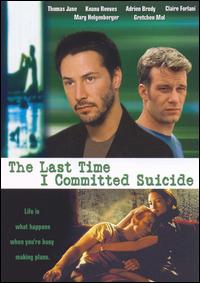
THE LAST TIME I COMMITTED SUICIDE
Artistically appealing, but morally empty and not recommended.
Should You Watch It?
This is a well-directed, artistically appealing drama with witty dialogue and low-light cinematography. But its central character drifts through life, avoids responsibility and commitment, and never discovers a higher meaning. The film presents that carefree existence without supplying a moral center.
The R rating is supported by fornication and nudity, while the film also includes drinking, smoking, obscenities and profanities. Its artistic strengths do not overcome its morally empty vision.
The practical answer is simple: skip it and choose something more nourishing for your time and conscience.
The Story
NO SPOILERS — WE KEEP THE SURPRISESIn 1940s Denver, Neal Cassady moves restlessly from his girlfriend to a dead-end job and toward leaving town. Over the course of a few chaotic weeks, he and his barroom friend Harry run from one situation to another, avoiding responsibility and commitment.
The story follows a charming, selfish, rebellious young man whose life seems to happen to him rather than being shaped by purpose.
Is It Any Good?
Two stars means this film has some genuine artistic appeal but is not a satisfying or worthwhile whole. Stephen Kay’s direction, artful and witty dialogue, and low-light cinematography give the movie a distinctive style.
Still, the film’s moral emptiness weakens its achievement. Its characters move through a chaotic existence without deriving a higher meaning from their lives, leaving the drama artistically pleasing but spiritually vacant.
The Worldview
The film presents an existentialist worldview centered on an immature young man who flees commitment and responsibility. Neal Cassady’s reality is one in which life happens to him, while he avoids authority, moral values, and lasting commitments as much as possible.
That vision exalts an utterly carefree existence, but it offers no higher meaning to replace the responsibilities it rejects. Neal and Harry keep moving from situation to situation rather than asking what their lives are for. The film may find this existence artistically poignant, but the source review judges it morally empty.
Scripture asks a more searching question: “For what does it profit a man to gain the whole world and forfeit his soul?” (Mark 8:36). A life without responsibility or higher meaning cannot satisfy the deeper needs of the human soul.
The Content Guide
The specifics — spoilers included by nature — so you can judge for your own family.
Content Summary
Existentialist worldview of an immature teenager who flees commitment & responsibility; 4 obscenities & 4 profanities; implied & depicted fornication; upper female nudity & upper & lower male nudity; drinking; and, smoking
Talk About It
Questions for the drive home, the dinner table, or the youth group.
The film’s central character avoids commitment and responsibility. Why do those things matter, and what does faithfulness require of us?
Luke 16:10 · Galatians 6:5Neal and Harry move from situation to situation without finding higher meaning. Where does Scripture say lasting purpose comes from?
Ecclesiastes 12:13 · John 17:3The story presents a carefree existence with few moral values. What is the difference between freedom and simply following every desire?
Galatians 5:13 · 1 Peter 2:16The film includes drinking and smoking alongside other harmful choices. How should Christians think about habits that can master a person?
1 Corinthians 6:12 · Ephesians 5:18The Final Word
This drama has artistic strengths, but its aimless worldview and adult content make it a poor use of your family’s time. For a film that offers more moral substance, consider. Our answer is SKIP IT.