
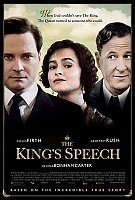
THE KING’S SPEECH
Speaking truth to authority — for adults who can handle strong language.
Should You Watch It?
This is a gripping, patriotic personal story about a king whose private struggle becomes tied to a nation’s public crisis. The performances are superb, and the production convincingly recreates England just before World War II. The film also gives real weight to courage, perseverance, duty, and England’s stand against Hitler’s National Socialism.
But the film earns its R rating through three scenes in which a speech therapist urges the king to use strong foul language—nearly 40 obscenities, including “f” words—as a treatment for stuttering. The movie presents this method as useful. It also often sides with the therapist’s Romantic, anti-authoritarian attitude, while the script meanders and telescopes historical events.
Adults who can weigh those concerns may find much to admire. For family viewing, especially with children or young teens, choose something else. The practical answer: WORTH THE TRIP — ADULTS ONLY.
The Story
NO SPOILERS — WE KEEP THE SURPRISESIn 1927, Prince Albert, known as “Bertie,” makes a terrible speech because of his severe stuttering. His wife, Elizabeth, searches for help and finds Lionel Logue, an unconventional Australian speech therapist who demands that the guarded prince place himself entirely in Lionel’s hands.
Their clashing personalities slowly begin to change their relationship. As Bertie faces pressure from his family and the responsibilities of royalty, he must decide whether he can trust Lionel’s unusual methods.
Is It Any Good?
Four stars means this is a superbly acted and produced period drama, even if it is not quite as good as some acclaim suggests.
The performances are excellent, and the production values convincingly re-create 20th-century England before World War II. The personal story is gripping and patriotic, with a historical crisis giving Bertie’s private struggle profound significance.
The script is more character-focused and meanders somewhat, leading to a longer-than-necessary 118-minute running time. It also telescopes events to make the king’s first war speech more dramatic than it probably was. Those flaws keep the film from being perfect, but the craft remains first-rate.
The Worldview
The film presents perseverance, courage, duty, and patriotic resistance to Hitler’s National Socialism as moral goods. It also includes brief positive references to God, the Church of England, and Westminster Abbey. Its portrait of a king overcoming fear to serve his people gives the story a strong moral center.
The film also often sides with Lionel Logue’s Romantic, anti-authoritarian attitude. Speaking truth to authority can be good, but the movie’s skepticism toward formal authority is not always balanced. The archbishop comes across as somewhat stuffy, and some of the film’s psychological explanations become humanist “psychobabble.” The treatment of stuttering through strong profanity is another serious worldview and content concern.
The film’s central longing is for a person to overcome fear and faithfully fulfill his calling. Scripture says, “God gave us a spirit not of fear but of power and love and self-control” (2 Timothy 1:7).
The Content Guide
The specifics — spoilers included by nature — so you can judge for your own family.
Content Summary
Light Romantic worldview tending to question and fight authority, rebuked in the instance of one heir to the throne and mitigated by strong patriotic, moral elements (including brief positive references to God) and England takes a stand against National Socialism, plus some Christian references to the Church of England and Westminster Abbey, though archbishop comes across a bit stuffy, and some humanist psychobabble; about 40 or 41 obscenities (including 16 or 17 “f” words), one strong profanity using Jesus and one light profanity, plus several uses of the English word “bloody”; no real violence; no sex; no nudity; light alcohol use; smoking; and, lying and people, including his own family, make fun of man’s stuttering and express impatience with it.
Talk About It
Questions for the drive home, the dinner table, or the youth group.
Bertie must face fear in order to serve others. What helps you act faithfully when fear makes you want to withdraw?
2 Timothy 1:7 · Joshua 1:9Lionel challenges royal authority, while Bertie learns to accept help. When should we speak truth to authority, and when should we show proper respect?
Ephesians 4:15 · Romans 13:1Bertie’s family mocks and grows impatient with his stuttering. How can our words either burden someone who is struggling or help carry that person’s burden?
Ephesians 4:29 · Galatians 6:2The film connects personal courage with public responsibility. What responsibilities has God given you, and how can you pursue them with faithfulness?
Colossians 3:23–24 · Micah 6:8The Final Word
This is a gripping, beautifully acted patriotic drama with real moral weight. Its strong language and Romantic, anti-authoritarian elements make it unsuitable for children and young teens. For discerning adults, it is WORTH THE TRIP — ADULTS ONLY. For other family choices, see.