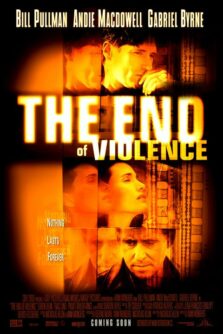
THE END OF VIOLENCE
A slow, surreal search for peace beyond violence and technology.
Should You Watch It?
THE END OF VIOLENCE takes violence seriously. It argues that violence surrounds us, that media exploits it, and that even sophisticated technology cannot finally stop it. It also refuses to glorify violence or make heroes of the people who use it.
The film’s most hopeful idea comes through a Mexican Christian family whose sense of place, peace, prayer, and security creates room for healing. But the movie is slow, talky, moody, surreal, and dramatically distracted by supporting-character storylines. Its solution to peacemaking is esoteric, even if the film suggests a truthful answer in Christ rather than technology.
Because of its adult content and uneven execution, watch it at home if you are an adult willing to engage its difficult ideas.
The Story
NO SPOILERS — WE KEEP THE SURPRISESMike Max is a successful Hollywood producer of action movies who treats people as harshly as the films he makes. After two hired thugs abduct him, he disappears into a strange new life while a sophisticated surveillance system observes events across Los Angeles.
As Mike hides from a murder investigation, Ray, the surveillance expert who witnessed the attack, struggles to conceal the secrets of his profession. Around them, questions about media, technology, violence, marriage, and peace begin to collide.
Is It Any Good?
Two stars means this is a thoughtful but dramatically uneven film. Wim Wenders brings his familiar slow, surreal style and emotionally tortured characters to a thriller about violence and surveillance. The movie has serious thematic ambitions and does not treat violence as glamorous or heroic.
It stumbles when it follows supporting characters into distracting rabbit trails. The result is quasi-intellectual, talky, and moody rather than consistently compelling. The film may offer a truthful insight about peacemaking, but its slow-moving approach and scattered drama make it better suited to a patient adult viewer at home.
The Worldview
THE END OF VIOLENCE argues that violence is always around us and will always be exploited by the media. It also argues that no crime-deterrent technology, however sophisticated, can finally prevent violence. The film does not glorify violence; instead, it shows that violence debases humanity, whether it is artificial violence in movies or violence used to stop other violence.
The film’s strongest alternative is a Mexican Christian family whose strong sense of place and security breeds peace and allows room for healing. Their prayers and behavior suggest that Christ himself, not technology, is the end of violence. The movie’s answer remains indirect and esoteric, but it points beyond human systems toward love and peace.
Scripture identifies Christ as the source of the peace this film only hints at: “Peace I leave with you; my peace I give you” (John 14:27).
The Content Guide
The specifics — spoilers included by nature — so you can judge for your own family.
Content Summary
Mild Christian worldview suggesting that peace comes through love, not technology; 30 obscenities & 4 profanities; moderate violence including abduction, threats with guns, shooting with implied murder, shooting without murder, & bar fight; briefly depicted adultery & some sexual talk; woman in underwear & bathing suit; alcohol use; smoking; and, covert government surveillance
Talk About It
Questions for the drive home, the dinner table, or the youth group.
The film suggests that technology cannot finally end violence. Where do you look for lasting peace, and how does Jesus describe the peace he gives?
John 14:27 · Philippians 4:6–7The movie presents violence in entertainment as something that can debase humanity. How should Christians think about what they watch and create?
Philippians 4:8 · Psalm 101:3The Mexican family makes room for healing through peace, security, and prayer. What practices can make your home a place of refuge for others?
Romans 12:18 · Colossians 3:15Mike recognizes that his own choices have harmed other people. What is the difference between admitting wrong and seeking reconciliation?
Matthew 5:23–24 · 2 Corinthians 5:18–20The Final Word
This is a serious, searching film with a hopeful Christian hint, but its adult content, slow pace, and scattered drama limit its audience. Watch it at home, not as a family selection. WAIT FOR HOME — ADULTS ONLY. For other options, see.