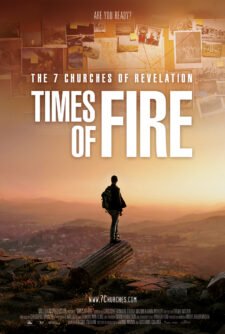
THE 7 CHURCHES OF REVELATION: TIMES OF FIRE
An engaging journey through Revelation’s first three letters.
Should You Watch It?
If you want a serious, visually engaging introduction to the first three letters in Revelation, this documentary is worth your time. It combines historical details, theological beliefs, and a picturesque journey through the setting once called Asia Minor, now modern-day Turkey.
The film is strongly Christian and encourages believers to remain steadfast during persecution. It also discusses pagan and occult practices, gruesome torture techniques, the crucifixion and burning of Christians, references to Roman orgies, and brief Holocaust imagery. Those elements call for discernment with older children.
You should see it with older children and adults who can handle these subjects and want to consider Revelation’s message to persecuted Christians.
The Story
NO SPOILERS — WE KEEP THE SURPRISESInvestigative filmmaker Christophe Hanauer travels to present-day Turkey to explore the history and message of the seven churches addressed in Revelation. Guided by scholars, the documentary begins on the island of Patmos and examines the first three churches discussed in Chapter Two: Ephesus, Smyrna, and Pergamon.
The film connects the letters’ historical setting with their spiritual instruction for Christians facing persecution.
Is It Any Good?
Three stars means a good, engaging documentary with meaningful strengths and some limitations. The film offers a visually informative and aesthetically pleasing depiction of the early church through the lens of Revelation.
Its historical and theological details are interesting, and the journey through the breathtaking setting adds depth to the investigation. Dr. Mark Wilson’s expertise and Hanauer’s travels help connect the messages given to John with the historical record of the First Century.
The documentary’s focus is narrower than the whole message of Revelation. It emphasizes persecution and the early Church, while the review notes that Revelation also speaks to salvation through the Gospel of Jesus Christ and to the universal Christian Church for all time.
The Worldview
This documentary presents a very strong Christian, biblical worldview. It examines the Book of Revelation and its letters to the seven churches, emphasizing the call to remain steadfast in Christian faith during persecution. It also draws connections between the messages given by Jesus to the Apostle John and events recorded in the First Century.
The film sometimes takes positions on Revelation with which Christians from other eschatological traditions may disagree. It discusses pagan and occult practices, including human sacrifice, among Romans during the two centuries before and after the birth of Jesus. The review also notes that the film’s emphasis on early Church persecution and present-day issues can leave Revelation’s broader message of salvation less fully explored.
The documentary’s central call is perseverance under pressure. Christ says, “Be faithful unto death, and I will give you the crown of life” (Revelation 2:10).
The Content Guide
The specifics — spoilers included by nature — so you can judge for your own family.
Dominant Worldview and Other Worldview Content/Elements
Very strong Christian, biblical worldview discusses the Book of Revelation and the letters to the seven churches in Chapters Two and Three and promotes remaining steadfast in the Christian faith during times of persecution, but movie occasionally takes views on Revelation that Christians of other eschatological theologies may disagree, plus some discussion of pagan, occult practices, including human sacrifice, of the Romans during the two centuries before and after the birth of Jesus
Foul Language
No foul language
Violence
Some gruesome torture techniques are described in dialogue, there’s drawings of Christians being crucified or being prepared for being burned at the stake, and there are brief images of dead bodies in one photo from the Holocaust engineered by Adolf Hitler in Nazi Germany during World War II
Sex
Brief references in dialogue regarding “orgiastic” practices of pagan and occult practitioners during the reign of the Roman Empire
Nudity
Upper and rear male nudity in two photos of Jewish prisoners in a death camp during the Holocaust and upper male nudity of pagans having a party
Alcohol Use
No alcohol use
Smoking and/or Drug Use and Abuse
Two men smoke long Turkish pipes but no drugs;
Miscellaneous Immorality
Nothing else objectionable.
Talk About It
Questions for the drive home, the dinner table, or the youth group.
The documentary emphasizes remaining steadfast during persecution. What helps Christians remain faithful when following Christ becomes costly?
Revelation 2:10 · Hebrews 10:23–25The film connects historical events with Jesus’ messages to the churches. Why should Christians learn from the faithfulness and suffering of believers who came before them?
Hebrews 12:1–2 · Romans 15:4The documentary discusses pagan and occult practices surrounding the early churches. How can Christians remain faithful to God while living in a culture that worships other things?
Exodus 20:3–5 · 1 Corinthians 10:14The film examines the letters to Ephesus, Smyrna, and Pergamon. What does it look like to remain faithful while also examining the spiritual condition of your own church and heart?
Revelation 2:1–5 · 2 Corinthians 13:5The Final Word
This is a thoughtful, visually pleasing journey into Revelation’s first three church letters. It offers historical and theological insight while calling Christians to remain steadfast under persecution. Because of its mature themes and brief disturbing images, WORTH THE TRIP — OLDER CHILDREN AND ADULTS.