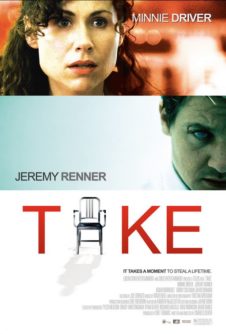
TAKE
A powerful, disturbing story of forgiveness—for adults only.
Should You Watch It?
TAKE is a serious, emotionally demanding drama about guilt, grief, grace and forgiveness. Minnie Driver and Jeremy Renner give superb performances, and the writing and direction make both Ana’s heartache and Saul’s guilt feel complex and genuine. Saul is never excused for his crimes, but the film creates empathy for him as he wrestles with God, responsibility and redemption.
The film also asks you to sit with painful violence, a child’s death and the depiction of a lethal injection. Its Christian themes are meaningful, though Jesus and the Gospel remain more implied than overtly expressed. Adults may find it a powerful way to consider forgiveness or introduce non-Christian viewers to Christian theology and Scripture.
If you are an adult who can handle disturbing material, TAKE is worth experiencing; it is not suitable for children or young teens.
The Story
NO SPOILERS — WE KEEP THE SURPRISESAna drives toward the execution of Saul, the man who kidnapped and accidentally killed her son. She carries her son’s belongings in a small trailer and remains haunted by memories of the day their lives crossed.
As Saul spends his final day speaking with a young prison chaplain, he wrestles with guilt and asks whether God can love him or still have a plan for his life. Their conversations and Ana’s memories gradually reveal the desperate choices that brought them to this moment.
Is It Any Good?
Three stars means TAKE is a strong, worthwhile film with serious weaknesses in its content. The acting by Minnie Driver and Jeremy Renner is superb, conveying the heartache, guilt and grace-filled struggle of complex characters. The writing and direction are top notch.
The film is powerful, disturbing and gentle at the same time. Its well-crafted treatment of forgiveness and repentance gives the drama lasting weight. The violence, however, is sometimes disturbing, and the depiction of lethal injection limits the audience to adults.
The Worldview
TAKE presents a strong moral and biblical worldview centered on repentance and forgiveness. Its Christian and redemptive elements are strong, especially as Saul takes responsibility for his actions rather than being portrayed as a victim. The film makes room for empathy without condoning his crimes.
The chaplain speaks with Saul about whether God loves him and has a plan for his life. Scripture, including Psalm 23 and Matthew 6, enters those conversations. Still, the film expresses Jesus and the Gospel more by implication than direct proclamation, and Saul voices light anti-God sentiments while speaking with the chaplain.
The film’s central longing is for forgiveness that can release people from guilt and grief. Scripture says, “He restores my soul” (Psalm 23:3).
The Content Guide
The specifics — spoilers included by nature — so you can judge for your own family.
Content Summary
Very strong moral, biblical worldview about repentance and forgiveness with strong Christian, redemptive elements (though Jesus and the Gospel are more implied than overtly expressed), mixed with light anti-God sentiments by a character on death row talking to a chaplain; two mild obscenities and no profanities; strong, sometimes disturbing violence includes fist fight between two men, man shot at close range, man and boy in car crash, (though mostly off camera), and man receives lethal injection; no sex; no nudity; no alcohol; smoking; and, gambling addiction, stealing car, robbing store, kidnapping, loan sharks.
Talk About It
Questions for the drive home, the dinner table, or the youth group.
Saul is forced to face responsibility for what he has done. How is repentance different from simply feeling guilty?
2 Corinthians 7:10 · Psalm 51Ana carries memories of her son until forgiveness changes what she is carrying. What does Christian forgiveness require, and what does it not require?
Ephesians 4:32 · Romans 12:19Saul asks whether God can love him and have a plan for his life. What do Scripture’s promises say to people who feel defined by their worst actions?
Psalm 23:4 · Romans 8:38–39The chaplain reads from Matthew 6 and Psalm 23. Which words from those passages would you want to remember during grief or fear?
Matthew 6:25–34 · Psalm 23The Final Word
TAKE is a well-made, emotionally powerful drama about repentance, forgiveness and redemption. Its violence and execution scene make it unsuitable for children and young teens, but adults prepared for the material may find it worth experiencing. WORTH THE TRIP — ADULTS ONLY. For a gentler family movie night, see.