
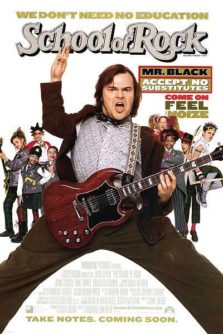
SCHOOL OF ROCK
A funny, rebellious music comedy best suited to middle schoolers and up.
Should You Watch It?
SCHOOL OF ROCK is a cheerful, energetic comedy about a washed-up rocker who discovers that his students have musical gifts—and that encouraging those gifts can change them. The film’s strongest note is its warm opposition to legalism. Its teacher is rebellious but not mean, and he draws shy, uptight children into confidence, creativity, and individuality.
The movie also treats rock music too generously, especially music connected with rebellion and skuzzy groups. Dewey begins with a serious deception, neglects the children’s regular studies, and teaches them that rock is about venting anger against “the man.” The language adds another layer of concern.
If your family includes middle schoolers or high schoolers, this can be a lively movie-night choice with a conversation afterward. Younger children are unlikely to find it acceptable or interesting.
The Story
NO SPOILERS — WE KEEP THE SURPRISESDewey Finn is a down-and-out rock star who has been fired from his band and is buried in debt. When a private school needs a substitute teacher, he takes the job under his roommate Ned’s name.
Dewey soon discovers that his fifth-grade students are talented musicians. He secretly forms them into a rock band, assigns everyone a role, and prepares them for a local Battle of the Bands contest while the school and parents remain unaware.
Is It Any Good?
Three stars means a fun, appealing comedy with real strengths and some clear limitations. Jack Black brings abundant energy, musical talent, hilarious gyrations, and screechy rock screams to Dewey. Joan Cusack nearly steals the show as the rules-oriented principal whose insecurities lie beneath her strict exterior.
The children are adorable and talented, and they do a fine job. The story leaves audiences smiling, and its light, silly, tongue-in-cheek tone keeps the rebellion from becoming mean-spirited. Still, the film’s celebration of rock music and its educationally questionable choices keep it from being an uncomplicated family favorite.
The Worldview
The film pushes back against an uptight, confining, legalistic, intimidating, elitist school environment where rules matter more than relationships. It celebrates life, individuality, creativity, and drawing people out of their shells. Dewey is sensitive and kind to the children, recognizes their talents, and speaks a future to them.
That positive emphasis is mixed with a love of rock ’n’ roll and rebellious, skuzzy musical influences. The film also includes scattered politically correct, environmentalist language. Dewey’s deception is a significant moral problem, although he eventually recognizes that lying is not cool. His prayer before the performance—“Oh, God of rock, give us the power”—is playful but spiritually confused.
The movie gets relationship over rules partly right, but it does not fully recognize that children also need math, history, and literature to prepare for life. Scripture calls believers to pursue love in every part of life: “Let all that you do be done in love” (1 Corinthians 16:14).
The Content Guide
The specifics — spoilers included by nature — so you can judge for your own family.
Content Summary
Light humanist worldview with love of rock n' roll and all its corresponding rebellious, skuzzy groups countered by some moral, biblical themes espousing relationship over rules, life over legalism and elitism, and rebuke of lying at end, but scattered moments of politically correct, environmentalist language; about 14 obscenities and four "Oh, my God's"; violence includes the smashing of guitars and falling off rock stages; and, miscellaneous immorality includes deception, which is rebuked at end. GENRE: Comedy H B PC E LL M V
Talk About It
Questions for the drive home, the dinner table, or the youth group.
Dewey helps his students discover talents they did not know they had. How can you encourage someone without turning their talent into an excuse to neglect other responsibilities?
1 Peter 4:10 · Colossians 3:23The school values rules, while Dewey values relationships and self-expression. How can a family honor wise rules without becoming legalistic?
Matthew 23:23 · Romans 13:10Dewey begins by deceiving the school and the parents, then learns that lying is not cool. Why does truth matter even when deception seems useful?
Ephesians 4:25 · Proverbs 12:22The children are taught to direct anger toward “the man.” How should Christians respond to injustice, environmental concerns, and anger?
Micah 6:8 · Ephesians 4:26The Final Word
SCHOOL OF ROCK is lively, funny, and genuinely warm toward children who need someone to see their gifts. Its rebellious music, language, and deception deserve discussion, and younger children should stay home. For middle schoolers and up, WORTH THE TRIP — MIDDLE SCHOOL AND UP.