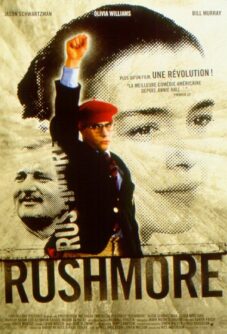
RUSHMORE
Act your age in a smart, biting comedy for adults.
Should You Watch It?
RUSHMORE is a smart adult comedy with sharp writing, unusual characters, excellent performances, and a visual style the source calls top notch. It avoids much of the gross content common in popular comedies, and its central moral message is sound: act your age and do your work.
But the film’s content is not suitable for children or young teens. Its story centers on two May-December pursuits of the same woman, and the older man leaves his wife for her. The movie also includes sexual talk, foul language, obscene gestures, topless photographs, alcohol, smoking, and a pattern of lying and irresponsibility.
You may find much to enjoy if you are an adult who can weigh those concerns carefully; for family viewing, choose something else. The practical answer is: WORTH THE TRIP — ADULTS ONLY.
The Story
NO SPOILERS — WE KEEP THE SURPRISESFifteen-year-old Max Fischer is a creative, ambitious student at Rushmore Academy. He leads nearly every extracurricular club, edits the newspaper and yearbook, and stages lavish plays, but his schoolwork suffers badly.
When Max pursues Rosemary Cross, a young first-grade teacher, his mentor Herman Blume begins pursuing her too. Max’s expulsion from Rushmore changes the contest, setting off a bitter series of immature acts between the teenager and the unhappy tycoon.
Is It Any Good?
Three stars means RUSHMORE is very good, though uneven. The performances are excellent, especially Jason Schwartzman’s fantastic portrayal of Max and Bill Murray’s hilarious turn as Herman Blume. The photography is top notch, and the characters are original, strange, clever, and whimsical.
The movie moves through one funny situation after another, but its second half drags as it approaches the resolution. It is also difficult to believe Max could manage all his activities while pursuing romance. The rock score, built from pop songs of the late 1960s and 1970s, seems aimed at an older audience.
The Worldview
RUSHMORE presents a largely pagan worldview, but it also contains moral elements about accepting responsibility and growing toward maturity. Max is intelligent, creative, ambitious, and capable of giving other students joy through his leadership. He is also deeply flawed: he neglects his studies, lies about his father, deceives his classmates, and pursues an inappropriate romance.
The story rebukes Max’s immaturity and eventually moves him toward confession, forgiveness, and a more suitable relationship. It also treats Herman Blume’s decision to leave his wife for Rosemary as distasteful. The film’s moral vision is limited, however, because it frames these lessons around entertainment rather than a distinctly biblical understanding of sin and repentance.
The film’s central call to accept responsibility aligns with Scripture’s command to abandon falsehood: “Therefore, having put away falsehood, let each one of you speak the truth with his neighbor” (Ephesians 4:25).
The Content Guide
The specifics — spoilers included by nature — so you can judge for your own family.
Content Summary
Pagan worldview of cavalier teenager with moral elements of accepting responsibility & maturity; 19 obscenities, 3 profanities, some sexual remarks & some obscene gestures; mild action violence including boy punches man, boy lets bees lose in man’s room, & boy puts on realistic plays of war & crime; no sex; a few pictures of topless women; alcohol use; smoking; and, lying, cheating, man leaves wife for younger woman (adulterous intent), & avoiding responsibility which is rebuked.
Talk About It
Questions for the drive home, the dinner table, or the youth group.
Max’s many activities distract him from his schoolwork. What responsibilities might you be tempted to avoid when pursuing something exciting?
Luke 16:10 · Colossians 3:23Max lies to his classmates and later seeks forgiveness. Why does confession matter, and what makes an apology genuine?
Proverbs 28:13 · 1 John 1:9Rosemary tells Max and Herman that they are acting like children. What does growing in maturity look like in the way we handle disappointment?
1 Corinthians 13:11 · James 1:19–20Herman leaves his wife for Rosemary. How does Scripture describe faithfulness in marriage?
Matthew 19:4–6 · Hebrews 13:4The Final Word
RUSHMORE is a clever, well-acted, beautifully photographed comedy with a worthwhile call to accept responsibility and maturity. Its adultery, sexual remarks, language, and other content make it unsuitable for children and young teens. For discerning adults, it is WORTH THE TRIP — ADULTS ONLY. For family viewing, consider.