
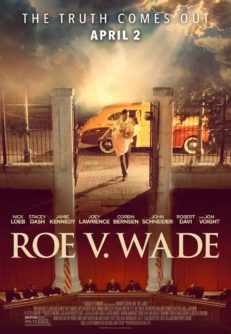
ROE V. WADE
Gritty, compelling, and deeply unsettling history—for adults only.
Should You Watch It?
ROE V. WADE offers a unique and ultimately powerful perspective on the 1973 Supreme Court case by telling the story largely through Dr. Bernard Nathanson’s changing viewpoint. Its central themes—protecting the unborn, honesty, redemption, justice, and Christian faith—give the historical drama serious moral weight.
The movie is also intentionally unsettling. Its realistic depictions of abortion in the 1970s are difficult to watch, and some of the detailed storytelling and timeline become muddled. This is not a strictly faith-based movie, but it asks direct questions about morality, racism, and the role of Christian faith in public life.
If you are a discerning adult prepared for disturbing abortion imagery, it may be worth watching. For children and younger viewers, choose something else.
The Story
NO SPOILERS — WE KEEP THE SURPRISESROE V. WADE begins with Dr. Bernard Nathanson being questioned about his views on abortion. From there, Nathanson narrates the events surrounding the Women’s Rights movement and the effort to legalize abortion.
He joins Larry Lader and Betty Friedan in a national campaign. Their work leads to a case involving Norma McCorvey, known as “Jane Roe,” and Henry Wade, the district attorney of Dallas County. Opposing them is Dr. Mildred Jefferson, who leads a pro-life cause.
Is It Any Good?
Three stars means this is a compelling, worthwhile film with noticeable flaws. ROE V. WADE is stylistically compelling and offers a powerful perspective by viewing the historical events through Dr. Nathanson’s changing viewpoint.
The detailed narrative sometimes muddles the story and timeline, making the movie harder to follow. Still, its historical subject, moral questions, and emotionally forceful perspective give it real weight.
The Worldview
ROE V. WADE presents a strong moral worldview and a strong pro-life message about the reality of abortion. Rather than relying only on emotional argument, the film seeks to use objective fact to make its case. It stresses protecting the unborn, honesty, justice, and redemption.
The movie also raises questions about the motivations and connections surrounding the case. It presents different motivations among the people working to legalize abortion, including women’s rights and financial interests. It asks viewers to consider the role of racism in the case, as well as the moral responsibilities of medicine, law, and public activism.
Though it is not a strictly religious film, it includes themes of faith, a conversion scene, and a baptism scene in a church. Its movement toward Christian faith and redemption aligns with biblical concerns, while its historical and political framing leaves the viewer to weigh those themes within a broader national debate.
The film’s concern for unborn life connects with Scripture’s affirmation of God’s work in the womb: “For you formed my inward parts; you knitted me together in my mother’s womb” (Psalm 139:13).
The Content Guide
The specifics — spoilers included by nature — so you can judge for your own family.
Dominant Worldview and Other Worldview Content/Elements
Strong moral worldview with strong pro-life message about the horrific reality of abortion, although it relies on objective fact to convey this message, plus there is a conversion scene and a baptism scene in a church, as well as themes of faith, honesty, justice, and redemption
Foul Language
No foul language
Violence
All abortion related violence, a suction machine is shown sucking out blood from women at an illegal abortion clinic, buckets of what is assumed to be aborted babies is show, a dismembered baby is shown, and there are several other scenes that depict abortions without blood, plus descriptions of abortion and a mention of suicide
Sex
No implied or depicted sex, but some discussion regarding sex in the context of the abortion argument and one brief crude joke
Nudity
No explicit nudity, but several scenes on a beach include women in bathing suits
Alcohol Use
Alcohol is consumed several times
Smoking and/or Drug Use and Abuse
No smoking or drugs
Miscellaneous Immorality
Most of the caution comes from both the intentionally unsettling description and depiction of the abortions is intentionally upsetting, but there is also some lying.
Talk About It
Questions for the drive home, the dinner table, or the youth group.
The film presents different motives behind the abortion debate. How should Christians examine both their motives and their methods when standing for truth?
Philippians 1:15–18 · Ephesians 4:15The story emphasizes protecting unborn life. What does Scripture teach about God’s knowledge and care for human beings before birth?
Psalm 139:13–16 · Jeremiah 1:5The movie includes themes of honesty, redemption, and Christian faith. How are confession and changed actions connected in a life turning toward God?
2 Corinthians 7:10 · 1 John 1:9The film raises questions about justice and racism. What does it mean to pursue justice without partiality?
Micah 6:8 · James 2:1–9The Final Word
ROE V. WADE is a compelling, morally serious historical drama with a powerful pro-life perspective. Its abortion imagery is intentionally upsetting, and its detailed storytelling can become muddled. For discerning adults prepared for its content, it is WORTH THE TRIP — ADULTS ONLY.















