
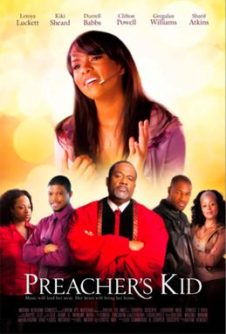
PREACHER’S KID
A heartfelt Christian musical about repentance, hope, and coming home.
Should You Watch It?
PREACHER'S KID is a Christian musical drama with a rougher first half and a powerful finish. The lower-than-average budget shows in serviceable photography, editing glitches, and one badly performed major scene. But the acting is mostly excellent, the music by Tim Miner is wonderful, and the cast’s singing exceeds expectations.
The movie takes sexual immorality seriously while showing how deception, desire, and the fear of losing someone can pull a person away from home and faith. Its ending rises to an emotional high, offering hope, repentance, deliverance from sin, forgiveness, and reconciliation.
You should see it if you are a teenager or adult who can handle the mature subject matter. Parents should use discernment for younger children.
The Story
NO SPOILERS — WE KEEP THE SURPRISESAngie King is the daughter of a beloved pastor in Augusta, Georgia, and the soloist in her church choir. After seeing a Christian play touring the country, she leaves home to join its cast as an understudy.
On the road, Angie becomes drawn to Devlin, the play’s handsome and charismatic male lead. His promises of romance and a singing contract lead her far from the Christian values the production claims to represent. Meanwhile, Angie’s father has told her not to return home.
Is It Any Good?
Four stars means this is a strongly entertaining film whose rough edges do not overcome its emotional and musical strengths. The first half sometimes looks limited by its budget, with merely serviceable photography, editing glitches, and one poorly performed scene.
The rest is much stronger. The acting varies from fine to excellent, the script is well structured, and the third act soars with clever writing and crowd-pleasing acting flourishes. Tim Miner’s music is worthy of crossover hits, and the cast sings exceptionally well. LeToya Luckett emerges as a real star in the making, while the final duet with Sharif Atkins is especially effective.
The Worldview
PREACHER'S KID presents a very strong Christian worldview within a morality play. It rebukes romantic idealism, paganism, and moral lawlessness, though the rebuke could have been stronger. The film includes worship scenes in church, comments that God is good, and repeated questions about what Jesus would do.
The story also confronts lying, sexual immorality, jealousy, and destructive choices. The villain’s persistent lying is ultimately rebuked, and he receives his comeuppance. The conflict between Angie and her pastor father eventually gives way to reconciliation through an implied reference to Jesus’ story of the Prodigal Son.
The film’s central message is that repentance can lead to forgiveness, restoration, and a return home. Jesus said, “For this my son was dead, and is alive again; he was lost, and is found” (Luke 15:24).
The Content Guide
The specifics — spoilers included by nature — so you can judge for your own family.
Content Summary
Very strong Christian worldview in a very strong morality play where Romanticism, paganism, and anti-nomianism, or moral lawlessness, are rebuked, though the rebuking could have been stronger, with comments that God is good, worship scenes set in church, and What Would Jesus Do? is asked several times; six mostly light obscenities (including a couple “d” words and some “h” words) and three light profanities; man slaps woman hard and knocks her down and man punches woman who’s standing behind a curtain, plus woman has a black eye, but viewers never really see any of the actual blows; implied fornication or pre-marital sex, and man seduces and sleeps with more than one woman, a comment is made that many of the men in a Christian play touring the country pay for dirty movies in the hotels where the cast and crew stay, and confusing scene where young females in audience of a supposed Christian play are ecstatic when a male singer sings a love song with his shirt off; upper male nudity in two scenes and some female cleavage; alcohol use and man is drunk in one scene; no tobacco smoking really seen, but man smokes a marijuana cigarette and eventually seduces and cajoles a preacher’s daughter to start smoking one too in another scene (she doesn’t want to lose him, so it’s a turning point for her in the second act); and, perpetual lying by villain but it’s ultimately rebuked and the liar gets his comeuppance, jealousy not really rebuked, friction between pastor and his adult daughter but they are eventually reconciled in an implied reference to the biblical story of the Prodigal Son told by Jesus, and a young woman thinks she’s pregnant but this plot problem is resolved in a positive way.
Talk About It
Questions for the drive home, the dinner table, or the youth group.
Angie leaves home seeking opportunity and affection. When can a desire become a temptation, and how can wisdom protect us?
Proverbs 4:23 · James 1:14–16The film’s ending emphasizes repentance, forgiveness, and reconciliation. What makes repentance different from merely feeling sorry?
2 Corinthians 7:10 · 1 John 1:9Bishop King and Angie experience painful distance before they are reconciled. What can families learn from the father in Jesus’ parable of the Prodigal Son?
Luke 15:20–24The story asks what Jesus would do. How should Christians let Jesus’ teachings shape decisions about relationships and entertainment?
John 13:34–35 · Philippians 4:8The Final Word
PREACHER'S KID has rough edges, but its music, acting, and emotionally powerful third act make its message of hope worth hearing. Because of the mature subject matter, it is best for teenagers and adults. WORTH THE TRIP — TEENS AND ADULTS.