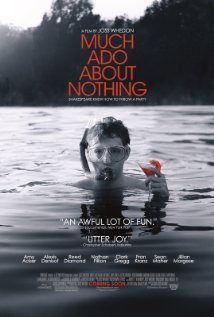
MUCH ADO ABOUT NOTHING (2013)
Shakespeare’s witty Christian comedy, marred by one lewd addition.
Should You Watch It?
Joss Whedon’s black-and-white adaptation is a witty, sophisticated version of Shakespeare’s comedy. The play’s Christian worldview shines through its concern for truth, chastity, justice, and the protection of an innocent woman. A Christian friar works to save a broken wedding, while a bumbling constable helps expose a villain’s lies.
The problem is a gratuitously lewd modern addition. A clothed couple appears to have intercourse, with sexual movement under their clothes. There is also sensual kissing and an implied sexual situation near the beginning. That one scene seriously mars an otherwise excellent comedy.
This is worth seeing only for discerning adults who can weigh the content and its effect on their conscience. It is not suitable for children or young teens.
The Story
NO SPOILERS — WE KEEP THE SURPRISESIn Messina, Sicily, a young soldier plans to marry Hero, the daughter of the governor. Meanwhile, Hero’s cousin Beatrice and the committed bachelor Benedick trade sharp verbal barbs while others scheme to bring them together.
But the jealous Don John plots to destroy Hero’s reputation by making her fiancé believe she has been unfaithful. As the wedding begins to collapse, a Christian friar and a bumbling constable become central to uncovering the truth.
Is It Any Good?
Four stars means this is an excellent film with a serious flaw. Shot in black and white, MUCH ADO ABOUT NOTHING is witty, amusing, and sophisticated. Shakespeare’s comedy remains accessible through the lively courtship plot, the verbal sparring between Beatrice and Benedick, and the comic work of the constable.
The cast’s familiarity with Joss Whedon’s earlier science-fiction and fantasy productions serves the movie well. Nathan Fillion is brilliantly funny as the bumbling constable. The film’s quality is strong enough to make its gratuitous sexual additions especially disappointing.
The Worldview
The Christian worldview of Shakespeare’s play comes through clearly in its concern for truth and moral character. The story condemns lies, deceit, false accusation, jealousy, and the damage done when a man believes an accusation against an innocent woman. Hero’s father and the Christian friar work to restore her reputation, and the friar devises a plan to show the soldier that he has been deceived.
The bumbling constable also has positive motives. His comedy does not prevent him from helping expose the villain’s plot. The story therefore values justice, fidelity, repentance from foolish judgment, and the protection of a woman’s chastity.
However, the adaptation weakens that moral clarity with modern sexual additions. The lewd scene between the maid and the villain’s aide is especially gratuitous, and sensuality between the villain and his female aide further lowers the film’s moral accessibility. The Christian worldview could have been stronger without these crude additions.
The film’s central conflict asks whether people will believe lies or pursue truth. Scripture says, “Therefore, having put away falsehood, let each one of you speak the truth with his neighbor” (Ephesians 4:25).
The Content Guide
The specifics — spoilers included by nature — so you can judge for your own family.
Content Summary
Strong Christian worldview with strong moral elements in a Shakespeare adaptation about exposing lies and protecting a woman’s chastity, with a positive priest figure, but marred by some gratuitous sexual content; zero obscenities and four or five light profanities, a couple of which might rather be considered appeals to God; woman asks man to kill a bad guy, but he refuses; depicted fornication between a clothed couple with some lewd pelvic thrusting under the clothes (the woman is a maid wearing the heroine’s gown and is mistaken for the heroine, which causes the plot problem), sensual kissing between villain and his female aide, and implied fornication in a scene near the beginning as a man wakes up next to a sleeping woman when you don’t know who the characters are; upper male nudity in one or two scenes; some alcohol use; no smoking or drugs; and, lying, deceit, false accusation, jealousy, and a ruse is used to punish a groom who didn’t believe his bride-to-be when she was falsely accused but all’s well that ends well.
Talk About It
Questions for the drive home, the dinner table, or the youth group.
The story turns on a false accusation. Why can lies about another person be so destructive, and what does Scripture require when you hear one?
Exodus 23:1 · Ephesians 4:25The Christian friar works to protect an innocent woman and restore a broken wedding. What does this show about the responsibilities of wise counsel?
Proverbs 12:18 · James 3:17The soldier believes a lie about his bride. What should help us test what we hear before judging someone?
Proverbs 18:13 · 1 Thessalonians 5:21The film includes sexual content that was added to Shakespeare’s play. How can entertainment shape our sense of what is acceptable, and how should Christians guard their minds?
Philippians 4:8 · 1 Corinthians 6:18The Final Word
MUCH ADO ABOUT NOTHING is a beautifully performed, witty Shakespeare adaptation with a strong moral center. But one gratuitous lewd scene, along with other sexual content, makes it inappropriate for children and young teens. For discerning adults, it remains WORTH THE TRIP — ADULTS ONLY. For a cleaner family choice, see.