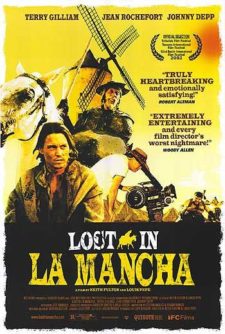
LOST IN LA MANCHA
An enjoyable filmmaking comedy of errors for older teens and adults.
Should You Watch It?
If you enjoy seeing how movies are made, Lost in La Mancha offers an unusually revealing and entertaining look at the process. It follows Terry Gilliam’s long effort to film Don Quixote and shows how scheduling problems, health concerns, technical difficulties, noise, weather, and finances can overwhelm even a determined production.
The documentary’s comedy of errors is enjoyable, and its portrait of Gilliam as an idealistic artist gives the setbacks a larger emotional shape. But the film also includes strong foul language, including vulgarity in scenes from the planned script. That language feels especially out of place beside a beloved literary masterpiece.
The practical answer: see it if you are an older teenager or adult who can handle the content and wants an engaging filmmaking documentary.
The Story
NO SPOILERS — WE KEEP THE SURPRISESTerry Gilliam has spent more than a decade trying to make a new theatrical version of Miguel de Cervantes’ Don Quixote. Once production finally begins in Europe, a series of unexpected problems threatens the long-awaited project.
Lost in La Mancha follows the filmmakers as they contend with creative, financial, technical, weather, and health-related obstacles. It becomes a behind-the-scenes portrait of one artist’s determined attempt to bring a difficult literary dream to the screen.
Is It Any Good?
Three stars means this is an enjoyable, worthwhile documentary with noticeable weaknesses. Its strongest feature is the access it provides to the filmmaking process, including the financial side of production. The escalating setbacks create an entertaining comedy of errors.
The documentary also captures Terry Gilliam’s terrific imagination and presents him as a determined, idealistic artist. However, the actor chosen to play Don Quixote does not seem to have the strongest vocal or acting talent during the shooting, even though he looks the part. A silent screen test comes close to the image of Quixote viewers might hope to see, making the unrealized project especially frustrating.
The Worldview
The film presents a Romantic worldview centered on the idealistic artist. Terry Gilliam is depicted as battling social forces, nature, financial realities, technical problems, and even God Himself to realize his creative dream.
That picture celebrates imagination, persistence, and the desire to bring a beloved literary work to life. It also risks treating the artist’s personal vision as the highest good, even when circumstances may expose limits that determination cannot overcome. The documentary does not present a clearly biblical understanding of calling, providence, or submission to God; instead, it largely frames Gilliam’s struggle as the heroic fight of an individual against impersonal obstacles.
The film’s central longing is the desire to create something meaningful despite resistance. Scripture honors faithful work but reminds us that human effort remains dependent on God: “Unless the LORD builds the house, those who build it labor in vain” (Psalm 127:1).
The Content Guide
The specifics — spoilers included by nature — so you can judge for your own family.
Content Summary
Romantic worldview of the idealistic artist who battles social forces, nature and God; 18 mostly strong obscenities and one strong profanity; light violence such as brief fighting and pretend swordplay; smoking; and, brief discussion about there being a curse associated with a famous literary work. GENRE: Documentary RoRo LL V D M
Talk About It
Questions for the drive home, the dinner table, or the youth group.
Gilliam keeps pursuing a difficult creative dream despite repeated obstacles. When is persistence faithful, and when might it become refusal to listen?
Proverbs 3:5–6 · Psalm 127:1The documentary shows how many people, practical details, and financial decisions shape a film. How can ambition affect the way we treat the people and responsibilities around us?
Philippians 2:3–4 · Luke 14:28The film presents the artist battling nature and even God Himself. What does it look like to pursue meaningful work while still trusting God’s authority?
Colossians 3:23–24 · James 4:13–15The planned film adapts a beloved literary masterpiece. How should we honor works of art while also discerning the values and language they contain?
Philippians 4:8 · 1 Thessalonians 5:21The Final Word
Lost in La Mancha is an enjoyable, revealing look at filmmaking and creative ambition. Its strong foul language keeps it from younger viewers, but older teenagers and adults may find its comedy of errors and portrait of artistic persistence worthwhile. Our answer is WORTH THE TRIP — OLDER TEENS AND ADULTS.