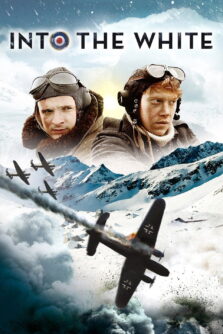
INTO THE WHITE
Enemies Forced to Put Aside Their Hatred to Survive
What You Need To Know
INTO THE WHITE is inspired by a true story of the conflict between the Germans and the British during World War II who are both seeking to control Norway and thus a lucrative Norwegian iron ore export.
The opening scene is a snowy white, mountain landscape in Norway in 1940 as gunfire from warplanes flying overhead pierces the serenity. A German plane crashes, and three airmen have survived as a snowstorm persists. They track through the snow and manage to stay together and eventually stumble upon an abandoned hunting cabin.
Moments later, the plane of a British admiral and his gunman is shot down, and they seek shelter in the same cabin as their German enemies. Hors, the leader of the German soldiers, decides to let the British live and take shelter with them in the cabin, but only as German prisoners. Because the Germans, Lieutenant Horst Schopis, Strunk and Josef have three guns and Admiral Davenport and gunman Smith haven’t any, the British have no other choice but to comply.
As the five men struggle to find food and firewood to survive, they also struggle to work together and realize that they are not so different from each other.
The production quality of INTO THE WHITE is excellent with panoramic views of the snowy mountains, as well as the close-up shots of the men as they fight and learn to cooperate with each other. The camera shots capture the sentiment of each of the soldiers as they each outwardly express or internally process their own feelings about their situation. MOVIEGUIDE® advises extreme caution for INTO THE WHITE due to some obscenities, some scatological content and the dismemberment of a soldier’s rotting limb.
INTO THE WHITE has a light moral worldview as mercy and compassion override the wartime ideal of justice by violence, power and control. Although in the beginning Hors, the German lieutenant is convinced that the British will be prisoners of Germany, he is the character who most wants to get along peaceably. There are also some light National Socialist elements when Josef speaks with deep patriotism and adoration of Hitler and is inspired as he reads from Hitler’s MEIN KAMPF. Along with this, there is a capitalist theme present as Admiral Davenport speaks of his childhood and family that was quite privileged, as well as when the men argue about the flaws of the other’s home country or government. In the end, however, the men come to understand one another and bond together as friends who unfortunately were made enemies only because of the orders given them by their country’s leaders.