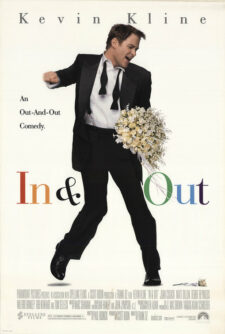
IN & OUT
A slick comedy that asks you to embrace what it normalizes.
Should You Watch It?
IN & OUT has a strong cast, a good many laughs, and a premise built for broad appeal. Its small-town setting and wedding preparations give the comedy a familiar, winsome surface.
But the film is not merely presenting a character or situation. According to the source review, it asks viewers to embrace the homosexual lifestyle while portraying conservative Judeo-Christian attitudes toward homosexuality as old-fashioned and foolish. The on-screen kiss and sexually suggestive behavior were also applauded by much of the audience at the Atlanta screening.
The practical answer is clear: skip it, especially if you want entertainment that respects your family’s convictions about sexuality.
The Story
NO SPOILERS — WE KEEP THE SURPRISESHoward Brackett is a beloved Indiana drama teacher preparing to marry his longtime girlfriend. His former student, Cameron, is about to accept an Academy Award, and Howard expects the ceremony to clear the way for his wedding.
Instead, Cameron makes a shocking public claim about Howard. Howard must then defend his identity before his fiancée, family, students, community, and an aggressive reporter descend on his life.
Is It Any Good?
Two stars means IN & OUT has some entertainment value but falls well short overall. The source review describes it as well-cast, winsome, slick, and capable of producing a good many laughs. Joan Cusack’s performance is specifically praised as delightful.
The movie also boasts a great trailer and a familiar romantic-comedy setup. But those strengths serve what the review calls a propagandistic message. Its conservative characters are painted in stereotypical ways, while its central agenda is force-fed rather than thoughtfully explored. The result is a funny, polished movie that the source review finds deeply offensive in its treatment of sacred sexual convictions.
The Worldview
The film promotes homosexuality, rebukes what it calls homophobia, and normalizes a politically correct agenda. It presents unconditional love as an important theme, but the source review argues that the movie is hypocritical because it condemns people who stand opposed to homosexuality.
The film also judges conservative Judeo-Christian attitudes toward homosexuality as old-fashioned and dumb. Its humor and romantic framework encourage the viewer to accept the film’s preferred sexual ethic rather than consider competing moral convictions. According to the source review, this is why the movie becomes an insult to viewers who hold sacred views of sexuality.
The film’s central appeal to unconditional love points toward something Scripture does affirm: God’s love extends to individuals without reserve. But biblical love does not erase moral truth. “Let all that you do be done in love” (1 Corinthians 16:14).
The Content Guide
The specifics — spoilers included by nature — so you can judge for your own family.
Content Summary
Strong homosexual worldview to promote homosexuality, rebuke homophobia & normalize a politically correct agenda; 1 obscenities & 1 profanity; no violence; strong homosexual innuendo with graphic descriptions, sexual humor, & one homosexual kiss; non-sexual upper male nudity; alcohol use; smoking; and, lying
Talk About It
Questions for the drive home, the dinner table, or the youth group.
The film presents unconditional love as a major theme. How can Christians show love without surrendering biblical convictions?
1 Corinthians 16:14 · Ephesians 4:15The source review says the movie portrays conservative Judeo-Christian attitudes as old-fashioned and dumb. How should you respond when entertainment mocks convictions you hold sacred?
1 Peter 3:15–16 · Romans 12:2The film asks viewers to adopt its understanding of sexuality. How should Christians evaluate the messages entertainment places before them?
Philippians 4:8 · 1 Thessalonians 5:21The Final Word
IN & OUT may offer laughs and a capable cast, but its message and sexual content make it a poor choice for viewers seeking entertainment consistent with biblical convictions. Our answer is simple: SKIP IT. For better options, see.