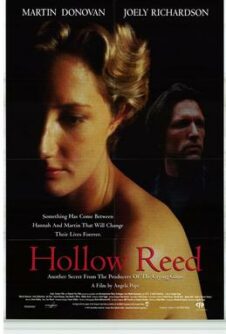
HOLLOW REED
A well-acted custody drama with morally troubling ideas and content.
Should You Watch It?
HOLLOW REED is a serious, bitter drama about an abused boy caught between two dangerous situations. Martyn is caring and financially secure, but he lives with a male lover. Frank, his ex-wife’s partner, is abusive and manipulative. Hannah remains attached to Frank despite the harm he causes, while Oliver hides the truth because he wants to preserve his mother’s perceived happiness.
The film raises real questions about child safety, parental care, and the need for secure relationships. Its performances and writing give those questions weight. But its treatment of homosexual activity, its pagan worldview, and its ultimate argument about homosexual men caring for young boys make the movie morally difficult.
The practical answer is clear: despite its dramatic strengths, skip HOLLOW REED.
The Story
NO SPOILERS — WE KEEP THE SURPRISESMartyn takes his son, Oliver, to the hospital after noticing troubling bruises. Oliver first blames school boys, but further injuries point toward an adult in his mother Hannah’s home.
Martyn seeks custody to protect his son. The case becomes complicated because Hannah’s live-in partner, Frank, is abusive, while the court is unwilling to place Oliver with Martyn because Martyn lives with a male lover. The custody battle forces the family to confront what makes a home safe.
Is It Any Good?
Three stars means HOLLOW REED is a solid, thought-provoking drama, even though its moral framework is deeply troubling. The performances are strong, with Martin Donovan, Joely Richardson, and the rest of the all-British cast giving the story serious weight.
The writing also provides a sober examination of parental care, abuse, manipulation, and the need for secure relationships. The film is complex and intense, though it offers no clear explanation of the title. Its highbrow treatment may also limit its appeal to American audiences.
The Worldview
HOLLOW REED presents lost people struggling to find security and care. It condemns Frank’s abuse and manipulation, recognizes Oliver’s need for a safe home, and portrays Martyn as caring and financially secure. It also shows Hannah clinging to an abusive relationship and Oliver hiding his abuse to protect his mother’s happiness.
The film’s central argument is that Martyn’s relationship with a male partner should not prevent him from caring for Oliver. The review considers this a propaganda point for homosexuals taking care of young children, especially because the movie includes implied and briefly depicted homosexual sex. Its pagan worldview and homosexual elements further distance it from a biblical understanding of family and moral order.
The film rightly insists that a child deserves safety, but it does not resolve the deeper moral questions raised by the home it ultimately endorses. Scripture calls people to protect the vulnerable: “Give justice to the weak and the fatherless; maintain the right of the afflicted and the destitute” (Psalm 82:3).
The Content Guide
The specifics — spoilers included by nature — so you can judge for your own family.
Content Summary
Pagan worldview of lost people with some homosexual elements; 7 obscenities, 3 vulgarities & 5 profanities; moderate violence including child abuse, boy attacks man & men fight; urination, homosexual kissing, implied homosexual fornication, man talks about homosexual sex to child, & implied adulterous living situation; and, upper male & rear male nudity
Talk About It
Questions for the drive home, the dinner table, or the youth group.
Oliver hides his abuse because he wants to protect his mother’s happiness. How should adults respond when a child is afraid to tell the truth?
Proverbs 31:8–9 · Ephesians 5:11The film places child safety at the center of a difficult custody dispute. What responsibilities do parents and courts have toward vulnerable children?
Psalm 82:3–4 · Mark 9:37Hannah remains in a relationship marked by abuse and manipulation. Why can people cling to destructive relationships, and how can others help wisely?
Psalm 34:18 · Galatians 6:2The movie argues that caring behavior settles the question of what kind of home is best for a child. What additional questions should Christians ask about family, morality, and a child’s formation?
Deuteronomy 6:6–7 · Ephesians 6:4The Final Word
HOLLOW REED is well acted and thought-provoking, but its child abuse, sexual content, pagan worldview, and troubling moral argument outweigh its strengths. Bless your family by choosing something else. For more suitable options, see.