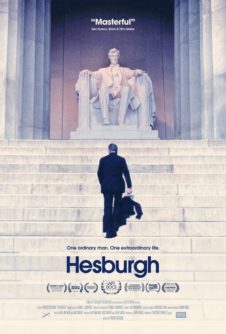
HESBURGH
A remarkable life of faith and influence, recommended for teenagers and adults.
Should You Watch It?
HESBURGH tells the story of Father Theodore Hesburgh, a priest who led Notre Dame University from 1952 to 1987 and became a powerful voice on civil rights, education, and other major issues. The documentary presents a man whose friendships with Pope Paul VI and six American presidents gave him unusual influence, while also showing that he challenged powerful people when he believed it was necessary.
The film is especially strong as history. It gathers remarkable footage and photos, moves at a rapid but manageable pace, and brings Hesburgh’s journals to life through compelling narration. His relationships with students and his friendship with journalist Robert Sam Anson give the story emotional weight.
The main concerns are limited but real: two “GD” profanities from President Richard Nixon and some politically liberal causes associated with Hesburgh. Teenagers and adults should find much to learn from this engaging portrait, so WORTH THE TRIP — TEENAGERS AND ADULTS.
The Story
NO SPOILERS — WE KEEP THE SURPRISESFather Theodore Hesburgh knew from childhood that he wanted to become a priest. After serving as a military chaplain, he was sent to lead Notre Dame University, then a school that lacked national respect.
Through academic reforms, fundraising, friendships with presidents and popes, and outspoken positions on civil rights and other moral issues, Hesburgh helped make Notre Dame a major national force. The documentary follows his public influence, his controversies, and his deeply personal relationships with students and friends.
Is It Any Good?
Four stars means this is an excellent documentary. Director Patrick Creadon moves quickly without losing control of Hesburgh’s complicated story, filling the film with a stunning array of historical footage and photographs.
The narration is one of the film’s finest elements. Readings from Hesburgh’s journals make his intimate thoughts compelling, while Alex Mansour’s boisterous jazz score matches the pace and energy of his life. The documentary also makes room for quieter, emotionally effective moments, especially in its attention to Hesburgh’s students and friendships.
The Worldview
HESBURGH presents a strong Christian and moral worldview. It portrays priesthood, spiritual conviction, civil rights advocacy, academic honesty, service, friendship, and concern for students as meaningful goods. Hesburgh appears willing to use power for what he considered positive social change, while also challenging presidents, the Vatican, and university authorities when he believed they were wrong.
The film also acknowledges that his positions were complicated. He supported policies limiting student protests during the Vietnam War, backed an immigration-reform finding that required border security, and served on the advisory board of People for the American Way, which the source describes as a radical left-wing anti-Christian group favoring illegal immigration. His endorsement of Notre Dame’s invitation to President Barack Obama, despite Obama’s openly pro-choice position on abortion, was another significant controversy among Catholics.
The documentary therefore celebrates Hesburgh’s moral seriousness and Christian influence while noting that some of his political causes were liberal and politically correct. Its central picture is of a man trying to bring faith, leadership, education, and public responsibility together. Scripture says, “Let your light shine before others, so that they may see your good works and give glory to your Father who is in heaven” (Matthew 5:16).
The Content Guide
The specifics — spoilers included by nature — so you can judge for your own family.
Dominant Worldview and Other Worldview Content/Elements
Strong Christian, moral worldview in a documentary recounting the remarkable life story of Father Theodore Hesburgh, who wielded tremendous spiritual and political power as the head of Notre Dame University, but with some politically correct elements as Hesburgh was involved in some liberal political causes as well
Foul Language
Two uses of “GD” are heard by President Richard Nixon, and these are subtitled along with the rest of Nixon’s comments for clarification
Violence
Historical footage of a US nuclear bomb detonating on Japan, and photos and video of dead student at Kent State University after he was shot by National Guard, with big pool of blood visible in photos and video
Sex
No sex
Nudity
No nudity
Alcohol Use
No alcohol use
Smoking and/or Drug Use and Abuse
No smoking or drugs;
Miscellaneous Immorality
Nothing else objectionable.
Talk About It
Questions for the drive home, the dinner table, or the youth group.
Hesburgh used positions of influence to pursue what he believed were positive social changes. How can Christians use influence without making power more important than faithfulness?
Mark 10:42–45 · Philippians 2:3–4The film presents civil rights advocacy as part of Hesburgh’s moral work. What does Scripture require of people who have power to protect or defend others?
Micah 6:8 · Proverbs 31:8–9Hesburgh tried to balance academic honesty and spiritual purity. Where might truth and conviction require courage at school, work, or church?
Ephesians 4:25 · Acts 5:29Hesburgh supported limits on student protests while also taking strong public positions himself. How should Christians pursue justice while showing respect for order and other people?
Romans 12:18 · 1 Peter 2:17The Final Word
HESBURGH is a fast-moving, beautifully assembled portrait of a priest whose faith and leadership shaped Notre Dame and American public life. Two profanities and some liberal political causes call for discernment, but the documentary’s history, narration, score, and moral seriousness make it worthwhile for its intended audience. WORTH THE TRIP — TEENAGERS AND ADULTS.