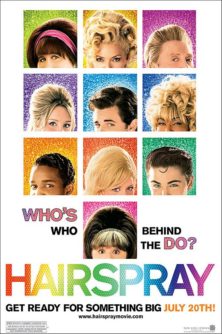
HAIRSPRAY
An infectious musical with strong themes and adult-only content.
Should You Watch It?
HAIRSPRAY is a lively, toe-tapping musical with a strong stand against racism and segregation. Its story also encourages people to embrace those who are treated as different, including Tracy Turnblad, an overweight teenager criticized by popular culture. The music is infectious, and “I Know Where I’ve Been” offers a particularly moving picture of people overcoming fear and joining together for change.
The cost is a mixed worldview and content unsuitable for children and young teens. The film makes some positive references to God as the source of hope and help, but it portrays a strict Christian mother negatively. It also includes obscenities, profanities, suggestive behavior, smoking, and teenage disobedience.
Adults who can weigh those concerns may find the film’s energy and moral themes worthwhile. For family viewing with children or young teens, choose something else.
The Story
NO SPOILERS — WE KEEP THE SURPRISESTracy Turnblad is an overweight Baltimore teenager who dreams of becoming a local television star. After winning a place on a popular rock-and-roll television show, she uses her opportunity to challenge racial segregation and push for white and Black teenagers to dance together.
With help from her friend Penny Pingleton, Tracy reaches for her dreams while facing criticism about her appearance and resistance to social change.
Is It Any Good?
Three stars means HAIRSPRAY is enjoyable and effective, though uneven. The acting, singing, dancing, and subject matter are deliberately melodramatic. That heightened style may take time to appreciate, but it fits the movie’s nostalgic setting.
The musical numbers are infectious and exciting. “Run and Tell That” and “Welcome to the 60s” are strong crowd-pleasers, while Queen Latifah’s “I Know Where I’ve Been” is especially powerful and moving. The song’s focus on fear, hope, unity, and community change gives the film some of its most effective moments.
The Worldview
HAIRSPRAY strongly opposes racism and racial segregation and repeatedly argues for embracing people who are treated as different. Tracy’s struggle with weight and popularity becomes part of that message, as the film shows teenagers accepting and even preferring her over thinner, more conventionally popular girls. The story also includes positive references to God as the source of hope and help, along with strong moral elements against racial injustice.
At the same time, the film has a mixed pagan and Romantic worldview. References to Christ appear mostly through Penny Pingleton’s straight-laced mother, who opposes sin and cultural change. Religious texts, “The Lord’s Prayer,” and holy water are used in comedic scenes, and the character is portrayed in a mostly negative light. The film does not express that Jesus Christ loves and accepts all His children, and that love covers a multitude of sins.
The review also finds John Travolta’s casting as Tracy’s mother distracting and ineffective. The performance pulls attention away from the story, and a kiss on the cheek becomes particularly distracting to a young audience member.
The film’s longing for acceptance and change points toward a truth Scripture states plainly: “love covers a multitude of sins” (1 Peter 4:8).
The Content Guide
The specifics — spoilers included by nature — so you can judge for your own family.
Content Summary
Mixed pagan and Romantic worldview with some positive references to God being the source of hope and help and some strong moral elements against racism and racial segregation, but with anti-Christian elements where a straight-laced Christian female character is viewed in a negative stereotypical light because she believes dancing and having fun is sinful; five obscenities and eight light profanities; minimal violence during a march against segregation; one scene where a female character attempts to seduce a male character that depicts inappropriate proximity, some suggestive comments, some sexual dance moves are performed throughout the movie, and heterosexual couples are shown kissing as well; no nudity; a drunken man is bypassed during the opening number; momentary teen smoking; and, teenagers lie, sneak out, disobey their parents’ wishes, disrespect authorities, etc., all in the name of a “worthy” cause.
Talk About It
Questions for the drive home, the dinner table, or the youth group.
The film asks viewers to embrace people who are treated as different. How does Scripture call you to welcome and honor others?
Romans 15:7 · James 2:1–4Tracy works to end racial segregation. What does it look like to pursue justice without treating people as enemies?
Micah 6:8 · Ephesians 4:15The film presents God as a source of hope and help. Where do you turn when you need courage to do what is right?
Psalm 121:1–2 · Hebrews 4:16Several teenagers lie, sneak out, and disobey their parents for a cause they consider worthy. Can a good goal make a wrong action right?
Romans 3:8 · Ephesians 6:1–3The Final Word
HAIRSPRAY offers infectious music and commendable themes about rejecting racism and embracing those who are different. Its mixed worldview and mature content make it a film for discerning adults, not children or young teens. Our answer is WORTH THE TRIP — ADULTS ONLY. For other options, see.