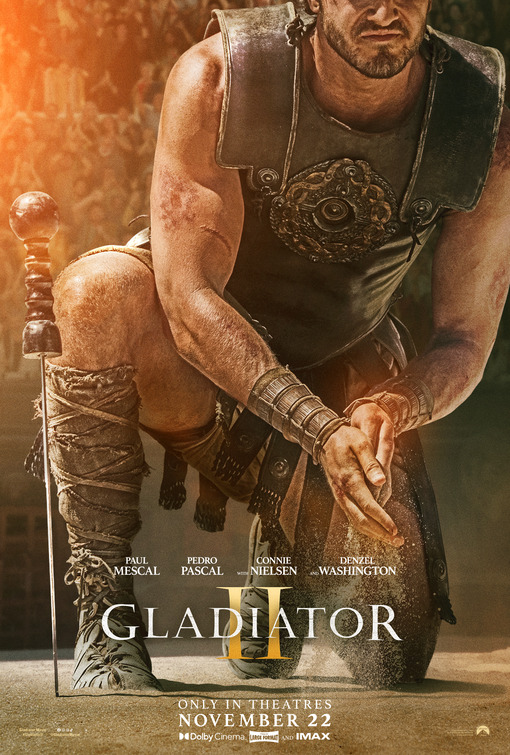
GLADIATOR
Brilliantly made, brutally violent — and missing the one Name that matters.
Should You Watch It?
Here's the honest tension at the heart of this one. Gladiator is nearly a four-star film — well-directed, beautifully acted, carrying real virtues in its dialogue: mercy over vengeance, republic over tyranny, sacrifice for others. Conservative viewers will find plenty to admire in its bones.
But the violence is extreme by design, not incident. Decapitations, dismemberment, and blood-soaked arena combat are staged to be lingered over, not merely witnessed — the same spectacle the film claims to condemn. Add incest suggestions, chants of worship to Roman gods, and discussions of homosexuality, and the content outweighs the craft.
Worst of all: the story is set in 180 A.D. — the year of our Lord — and never once acknowledges the Lord. Rome's collapse is real history, but the film erases the very faith that eventually overcame it. That absence, paired with the extreme content, is why we can't recommend this one, however well it's made. Skip it.
The Story
NO SPOILERS — WE KEEP THE SURPRISESMaximus is a Roman general at the height of his service, trusted by the aging emperor Marcus Aurelius to lead Rome's legions — and, Marcus hopes, to eventually hand power back to the Senate and restore the Republic. But Marcus's son Commodus wants the throne for himself, and he is not willing to wait for his father to change his mind. When ambition and succession collide, Maximus finds himself standing between a dying emperor's wishes and a son's hunger for power.
Is It Any Good?
Three stars means this is genuinely strong filmmaking that falls just short of greatness — and that's exactly right here. The battle scenes are well filmed, Russell Crowe delivers his usual commanding work, Connie Nielsen is terrific as Lucilla, and the late Oliver Reed is unsurpassed as Proximo. Ridley Scott's direction shows real care throughout, and the quality of the ensemble reflects it.
What keeps it from four stars is pacing: several stretches drag, particularly when the fight choreography runs longer than the story needs. The result is a film with real craft and real muscle, but one that occasionally tests the patience it demands.
The Worldview
Gladiator wants credit for its virtues, and in some ways it earns it. The film rebukes dictatorship and mob rule, commends republican government, and gives Maximus a conscience — mercy when killing isn't necessary, laying down his life for others, monogamy honored over incest. Those are real, biblical goods, and the film states them plainly.
But the film also seems to know exactly what it's doing: selling a "blood and guts" epic while parading virtue in the dialogue, as if the two could be separated. The gladiatorial games are condemned as spectacle even as the movie asks its own audience to feast on the same spectacle in slow motion.
The deeper worldview problem is historical, not just moral. The film compresses and reshapes real events — a fictional composite gladiator stands in for what was actually a broader conspiracy, and the many real Christians in Rome at this time, including within Commodus's own household, are simply written out. What's left is a carefully built pagan universe, complete with prayers to ancestors and Roman gods, a heaven and hell of its own devising — but no Christ, and no Christians, in the very year they were there.
That's the film's real omission. It can stage sacrifice, but it cannot name the Sacrifice that actually overthrew Rome's cruelty. "For God so loved the world that he gave his only Son" (John 3:16) — a truth this story's own century knew, and this story never says.
The Content Guide
The specifics — spoilers included by nature — so you can judge for your own family.
Content Summary
Pagan worldview with many moral, redemptive & revisionist history elements as well as evil rebuked; 3 mild obscenities & chants of worship to Roman gods; extreme violence including decapitation, blood spurting, bodies cut in half, arms & legs hacked to pieces, constant violence in warfare & gladiatorial games, threats of violence, patricide, & attempted patricide; suggestions of incest but never consummated & discussions of homosexuality; upper male nudity; alcohol use; potions; and, deception, greed, envy, & gambling.
Talk About It
Questions for the drive home, the dinner table, or the youth group.
Maximus shows mercy even while pursuing revenge. What does Scripture say about vengeance belonging to God, and how does that compare to how Maximus handles his enemies?
Romans 12:19 · Deuteronomy 32:35The film argues that Rome's arena bloodsport distracted a struggling public from real problems. What are the "bread and circuses" of our own time, and how do we guard against being entertained by cruelty?
Philippians 4:8This story is set in the very year of our Lord, yet Christ is never mentioned. What difference would the gospel have made to a story built entirely on revenge and empire?
Romans 5:8 · Colossians 1:16–17The film praises republican government over tyranny. What does the Bible say about a ruler's responsibility, and what makes a government just before God?
Romans 13:1–4The Final Word
Gladiator is a genuinely well-made film — strong performances, sweeping battle sequences, real virtue in its dialogue. But it's also an extremely violent, R-rated epic with incest suggestions and pagan ritual, set in the very year of Christ without a single word about Him. Our answer stands: skip it. Looking for something the whole family — or your own conscience — can watch in peace? Start with our latest family-friendly picks.