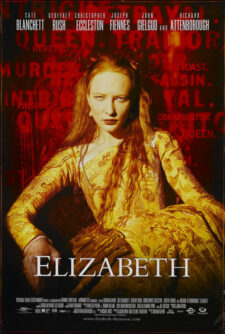
ELIZABETH
Cate Blanchett commands a costly crown in this adult historical drama.
Should You Watch It?
Cate Blanchett gives an excellent performance as Elizabeth, and the film sympathizes with a woman who gives up private happiness to protect herself and serve her country. It honors that moral decision while allowing sadness to remain in the story. The political conflicts and Elizabeth’s determination give the drama weight.
But this is an R-rated film with excessive violence, sexual content, and nudity. Its view of sex, politics, and religious conflict is pagan, even though it does not attack essential Christian beliefs or the Bible. Some plot developments and character motives are also not fully explained, which diminishes the entertainment quality.
For your family, this is not a theatrical or family-night choice. Adults who remain interested should wait for home viewing, where they can control the experience.
The Story
NO SPOILERS — WE KEEP THE SURPRISESIn 16th-century England, Elizabeth, daughter of King Henry VIII, is jailed for possible treason by her half-sister, Queen Mary. When Mary dies, Elizabeth takes the throne and faces pressure to marry for protection.
Still in love with Lord Robert Dudley, Elizabeth must weigh her private desires against the demands of ruling an unstable country. As traitors plot around her, she turns to Sir Francis Walsingham, her Master of Spies and protector.
Is It Any Good?
Three stars means a worthwhile but flawed historical drama. Cate Blanchett does an excellent job in the title role, carrying the film’s sympathy for Elizabeth and the sadness of her decision to surrender a private life for public duty.
The film’s political and religious conflicts provide serious material, but plot developments and character motives are sometimes not fully explained. That lack of clarity diminishes the entertainment quality. The excessive violence, sexual content, and nudity also make the film a difficult recommendation, despite its strong central performance.
The Worldview
The film presents Elizabeth’s decision to give up her private life and serve England as morally significant. It sympathizes with her need to protect herself and her country, and it honors her decision even as it brings sadness to the story. Public duty and personal sacrifice are treated seriously.
At the same time, the movie’s view of sex, politics, and 16th-century religious conflict is pagan. Sexual relationships are depicted outside a biblical moral framework, and political power is pursued through spying, assassination, revenge, and brutal punishment. The film is critical of some religious leaders and religious violence, but it does not attack essential Christian beliefs or the Bible. It also presents the conflict between Catholics and Protestants through political struggle and personal motives rather than a clearly biblical pursuit of the righteousness of God.
Elizabeth’s longing to devote herself completely to her country raises a question Scripture asks more deeply: what is a person’s highest allegiance? Jesus says, “For what does it profit a man to gain the whole world and forfeit his soul?” (Mark 8:36)
The Content Guide
The specifics — spoilers included by nature — so you can judge for your own family.
Content Summary
Mild Pagan worldview of religious & political battles in 16th Century England & of famous queen who gives up her private life to serve her country plus some moral & Christian elements; 4 mild obscenities & 1 mild profanity plus one crude sexual remark; moderately gory scenes of battlefield of corpses & corpse of woman killed by poisoned dress that cut into her flesh with excessively violent scenes of three Protestant “heretics” burned at stake, heads on sticks & brief torture scene of Roman Catholic assassin/priest; several scenes of depicted & implied fornication, one of which turns out to also be adultery; upper female & male nudity during scenes of implied & depicted fornication; alcohol use; and, miscellaneous immorality such as Roman Catholic Queen persecutes Protestants, Pope allegedly uses priest to try to assassinate a Protestant Queen, Protestant Queen allegedly gets revenge by killing off treasonous rivals, & noble Frenchman dresses in women’s clothes in one scene.
Talk About It
Questions for the drive home, the dinner table, or the youth group.
Elizabeth gives up private happiness for public duty. What responsibilities has God given you, and how can you serve without making your work your highest allegiance?
Mark 8:36 · Colossians 3:23–24The film portrays religious conflict shaped by political power and personal motives. How should Christians pursue truth and righteousness when leaders act unjustly?
Micah 6:8 · James 3:17The story includes sexual relationships that do not follow biblical faithfulness. What does Scripture teach about honoring God with your body and relationships?
1 Corinthians 6:18–20 · Hebrews 13:4Elizabeth’s choices involve sacrifice and loss. When is sacrifice faithful service, and when might it become an attempt to control everything yourself?
Romans 12:1 · Proverbs 3:5–6The Final Word
Elizabeth offers a strong central performance and a sympathetic portrait of costly public duty. But excessive violence, sexual content, nudity, and pagan moral framing make it unsuitable for children and young teens. For discerning adults, WAIT FOR HOME — ADULTS ONLY. For other options, see.