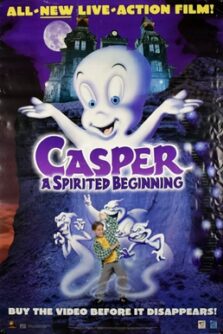
CASPER: A SPIRITED BEGINNING
A friendly ghost, an occult worldview, and a clear reason to skip it.
Should You Watch It?
The film has a child-friendly premise on the surface: a lost ghost befriends a lonely fifth grader who is not afraid of ghosts. It also includes a friendship between Chris and Casper, a father-son reconciliation, and a preservationist fight over a haunted mansion.
But the movie’s central idea is the problem. Casper is a disembodied spirit who interacts with a human boy, while other ghosts and demons use occult powers to scare people and influence events. The source review says this worldview directly conflicts with biblical truth.
Even though the film has three-star entertainment quality, the −4 Family Content rating controls the decision. If you want to guide your family toward friendship with Jesus Christ rather than friendship with demons, SKIP IT.
The Story
NO SPOILERS — WE KEEP THE SURPRISESCasper is a lost ghost traveling toward Ghost Central Station when a hostile ghost drops him from a death train. He lands in Deeds Town, where frightened townspeople avoid him—but lonely fifth grader Chris Carson is willing to talk.
Casper and Chris become friends as Chris faces school bullies and Casper tries to find his place. At the same time, Chris’s father manages a plan to demolish a haunted mansion while local preservationists fight to save it.
Is It Any Good?
Three stars means this is a reasonably substantial fantasy video with a big-budget feel, recognizable performers, and a clear story about friendship, family reconciliation, and preserving a landmark.
The source review also describes the ending as predictable and hokey. Casper’s attempt to become a friendly ghost is built around an occult premise that overwhelms the film’s more positive story elements.
The Worldview
The film’s worldview is directly opposed to biblical truth. It presents disembodied spirits as beings who live in spiritual limbo, interact with human beings, and use supernatural powers. Casper befriends a human boy, while the Ghostly Trio and Kibosh are treated as characters within a supernatural system rather than as beings to be rejected.
The film also portrays demons as entertaining or useful. The Ghostly Trio scare away a demolition crew, Casper uses occult powers to help people, and a giant green spirit trains ghosts to frighten others. The review identifies anti-capitalist politics of envy alongside this occult framework.
The movie does affirm friendship, family reconciliation, and the preservation of a historic home. But those themes are carried by a story that treats ghosts and demons as companions and helpers. Scripture gives the clearer boundary: “I do not want you to be participants with demons” (1 Corinthians 10:20).
The Content Guide
The specifics — spoilers included by nature — so you can judge for your own family.
Content Summary
Anti-Christian, occult worldview of a lost ghost befriending a lonely boy with anti-capitalist politics of envy; ghost violence as demons harass people outside a haunted house & demons scare people; and, a boy interacts with a ghost
Talk About It
Questions for the drive home, the dinner table, or the youth group.
What does the film suggest about ghosts and demons, and how does that compare with what Scripture teaches?
1 Corinthians 10:20 · Ephesians 6:12Why might a friendship between a child and a disembodied spirit seem appealing? What kind of friendship does Jesus offer instead?
John 15:13–15 · James 2:23The story includes a father and son who need reconciliation. What does biblical reconciliation require?
Ephesians 4:31–32 · Colossians 3:13How should Christians respond when a story makes dangerous spiritual ideas look friendly or harmless?
1 Thessalonians 5:21–22 · Philippians 4:8The Final Word
This film offers friendship and family themes, but it builds them on an occult worldview that Scripture rejects. For a family seeking entertainment that points children toward Christ, the answer is SKIP IT. Find another choice here: