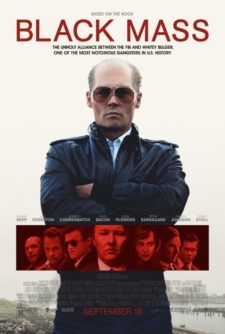
BLACK MASS
A well-acted gangster morality tale too corrupt for your family.
Should You Watch It?
BLACK MASS is a well-made film about a murderous Boston gangster and the FBI agent who protects him for the sake of a larger investigation. The acting, filming, and history are captivating, and the story clearly shows that the ends do not justify the means.
But the film gives you no positive protagonist or real antagonist to identify with. Its nearly constant foul language includes many, many “f” words, while the violence is very strong, sometimes bloody, and often disturbing. Some of Jimmy Bolger’s actions may also seem cool to impressionable or wicked viewers.
The movie has a moral lesson, but its content is excessive. The practical answer is simple: skip BLACK MASS.
The Story
NO SPOILERS — WE KEEP THE SURPRISESJimmy “Whitey” Bolger is a murderous Boston gangster who later spends 16 years on the FBI’s Most Wanted List. His childhood friend, FBI Agent John Chandler, makes a deal with him: Bolger will inform on his Mafia rivals, while the FBI looks away from Bolger’s crimes.
That arrangement places Bolger, the FBI, and Boston’s powerful political and criminal interests on a collision course. As Bolger’s influence grows, a new U.S. prosecutor begins asking questions.
Is It Any Good?
Three stars means BLACK MASS is compelling and skillfully made, even though its story and content seriously limit its value. Johnny Depp gives a chilling performance as Jimmy Bolger, and the acting and filming are first-rate. The history is also captivating.
The film’s weakness is dramatic rather than technical. Because it focuses so heavily on the bad guy and his criminal behavior, there is no real conflict and no positive protagonist or antagonist to identify with. It remains an effective morality tale, but an unpleasant one.
The Worldview
BLACK MASS presents a light moral worldview about the evils of a renowned, real-life gangster. Bolger’s behavior is clearly wicked, and the story shows that corruption, murder, racketeering, and political influence cannot make evil right. His lesson to his young son—that wrongdoing does not count if nobody sees it—reveals the film’s moral emptiness.
The film also includes overt Christian content in two scenes. There is a Catholic funeral for Jimmy and Billy’s mother, including a Holy Trinity blessing, and Jimmy later sits quietly in the same church while considering his future. Yet the title connects both to the corruption represented in Boston, Massachusetts, and to the Irish Catholic background of the South Boston community where these men lived and originated.
The movie’s central moral truth is sound: pursuing a supposedly greater good does not excuse evil means. Scripture asks, “Why not do evil that good may come?” (Romans 3:8).
The Content Guide
The specifics — spoilers included by nature — so you can judge for your own family.
Content Summary
Light moral worldview about the evils of a renowned, real-life gangster, with some overt positive Christian content in two scenes, including a Christian funeral with a Holy Trinity blessing, with very strong immoral behavior that’s rebuked; at least 242 obscenities (mostly “f” words), 12 strong profanities, and two light profanities; very strong, often bloody and disturbing violence includes pointblank headshot and other assassinations/executions, bloody fighting, men have clearly been beaten around the face, villain protagonist begins to strangle young woman and camera pans to his cohort’s face as he completes the strangulation, threats of violence, mother says she wants to “pull the plug” on her “brain dead” young child, man kicks chair and overturns table; crude reference to oral sex between man and his stepdaughter, who’s been arrested for prostitution; alcohol and brief drunkenness; smoking, cocaine use in one scene and talk about gangster selling drugs and introducing drugs to local schoolchildren; and, lots of gangster behavior, corruption, racketeering mentioned but rebuked.
Talk About It
Questions for the drive home, the dinner table, or the youth group.
The film shows people excusing evil because they believe it serves a larger goal. When are you tempted to justify wrong actions for a supposedly good result?
Romans 3:8 · Micah 6:8Bolger teaches his son that wrongdoing does not count if no one sees it. How does God’s view of hidden sin differ from that idea?
Luke 12:2–3 · Hebrews 4:13The FBI looks away from Bolger’s crimes, and his wrongdoing grows worse. What can happen when people tolerate evil instead of confronting it?
Isaiah 5:20 · Ephesians 5:11The story includes a Christian funeral and a church scene, but its central world remains deeply corrupt. How should Christians distinguish between Christian symbols and genuine repentance?
Matthew 7:16–20 · 2 Corinthians 7:10The Final Word
BLACK MASS is captivatingly acted and filmed, but its nearly constant profanity and very strong violence overwhelm its moral lesson. Because the content is excessive, our answer is SKIP IT. If you are looking for another choice, see.