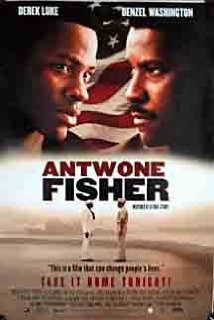
ANTWONE FISHER
Powerful drama about surviving abuse and choosing forgiveness.
Should You Watch It?
ANTWONE FISHER is a powerful, emotionally satisfying drama about a young sailor whose uncontrolled anger threatens his future. The acting is excellent throughout, and the film develops its themes of family connection and forgiveness with unusual emotional force.
But this is not an easy family movie. Scenes of physical and emotional child abuse, implied sexual abuse, a gory shooting, strong language, and sexual content make the film unsuitable for children. Its mature material is part of the story’s painful honesty, but it still requires discernment.
If you are an older teenager or adult who can handle these subjects, this is worth seeing for its moving story of healing and forgiveness. For children, choose something else.
The Story
NO SPOILERS — WE KEEP THE SURPRISESAntwone Fisher is a young sailor with a hair-trigger temper. After repeated fights with fellow Navy men, he is ordered to see a Navy psychiatrist.
At first, Antwone refuses to cooperate. But when he finally begins telling the doctor about his past, he starts to understand the abandonment, betrayal, and anger that have shaped his life. He must decide how to respond to the memories haunting him and the people around him.
Is It Any Good?
Four stars means this is an excellent film, and the source review’s praise is clear. The acting is excellent throughout, the story is emotionally charged, and the climax is powerful and emotionally satisfying.
The film also gives its central themes room to matter. Antwone’s need for family connection and his struggle to forgive are developed through a personal story of pain and recovery. The mature content is difficult, but the drama has genuine emotional weight.
The Worldview
The film presents forgiveness as a moral power that can free a person from anger. Antwone’s story emphasizes the need to be connected to one’s family, the wounds caused by abandonment and abuse, and the responsibility to choose how to respond to painful memories.
The source review also notes that the film includes a Thanksgiving prayer in Jesus Christ’s name. At the same time, its moral worldview is marred by the depiction of a villainous Pentecostal “Christian” family, Romantic and pagan elements, and a man falsely taunting another man about possibly being homosexual. The film’s treatment of fornication also glorifies the loss of virginity rather than presenting sexual restraint as a virtue.
Its strongest moral insight is that anger can imprison a wounded person, while forgiveness offers a path toward freedom. Scripture calls believers to forgive one another: “as the Lord has forgiven you, so you also must forgive” (Colossians 3:13).
The Content Guide
The specifics — spoilers included by nature — so you can judge for your own family.
Content Summary
Moral worldview where the biblical principle of forgiveness frees the soul and including Thanksgiving prayer in Jesus Christ’s name, marred by depiction of villainous Pentecostal “Christian” family and Romantic, pagan elements and man falsely taunts another man about possibly being homosexual; about 20 obscenities, one strong profanity, two mild profanities, and use of derogatory terms, including one “faggot” and 10 “n” words; child abuse both physical and emotional, woman ties up boys and beats them with a wet towel, woman threatens to burn a boy with a flaming newspaper, man gets into three short fist fights when taunted by others, in self defense a storekeeper shoots a young man in the head – blood is everywhere, another man is gunned to death, at close range, and falls down a flight of stairs; implied fornication, man embarrassed by virginity and later proud of losing it – his “triumph” acknowledged by father figure, implied repeated statutory rape of young boy by an older teenage woman; upper male nudity in shower room with lots of men with towels around their waists; brief alcohol use; man smokes cigar; and, attempted robbery, preacher’s wife mistreats foster children and psychotherapy scenes.
Talk About It
Questions for the drive home, the dinner table, or the youth group.
Antwone’s anger grows out of abandonment and abuse. How can bringing suffering into the light begin the work of healing?
Psalm 34:18 · James 5:16The film centers on forgiveness. What does it mean to forgive someone who has caused real harm, and how is forgiveness different from pretending the harm did not happen?
Colossians 3:13 · Ephesians 4:31–32Antwone longs to discover his family and ancestors. Why does belonging matter so deeply, and where does Scripture say our deepest identity is found?
Psalm 27:10 · Ephesians 2:19How should Christians respond when people use religious language or identity while mistreating others?
Matthew 7:15–20 · James 1:27The Final Word
ANTWONE FISHER is excellent, emotionally powerful, and centered on the hard-won freedom of forgiveness. Its abuse, sexual content, graphic violence, and language make it unsuitable for children, but discerning older teens and adults may find its story deeply worthwhile. Our answer is WORTH THE TRIP — OLDER TEENS AND ADULTS.