
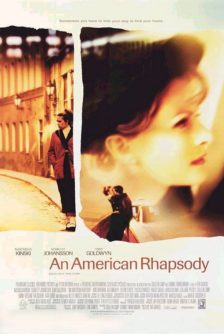
AN AMERICAN RHAPSODY
Because of our past, freedom becomes precious.
Should You Watch It?
AN AMERICAN RHAPSODY is a moving story about alienation, family separation, immigration, and the preciousness of freedom. Its strongest element is its emotional portrait of parents and children struggling to understand one another across years, countries, and painful misunderstandings.
The film is low budget and its true-story plot can feel slightly convoluted. Still, the performances give the story lasting power, especially Nastassja Kinski’s portrayal of Margit. The content is relatively mild for a PG-13 movie, though teenage drinking, smoking, four light obscenities, limited kissing, and obscured violence call for parental discernment.
If your teenager or family can handle serious historical drama, AN AMERICAN RHAPSODY is worth the trip for ages 13 and up.
The Story
NO SPOILERS — WE KEEP THE SURPRISESIn Communist Hungary, baby Suzanne is separated from her parents when they flee to freedom in the United States. She remains with a loving foster family until her parents find a way to bring her to America.
But Suzanne does not immediately feel at home with her biological family. As she grows older, her longing for Hungary creates deep family tensions and forces her to confront the past that shaped them all.
Is It Any Good?
Three stars means a good, emotionally resonant film with noticeable imperfections. Though clearly low budget, AN AMERICAN RHAPSODY is well crafted and leaves a deep emotional imprint.
The film’s power lies in its characterizations. Scarlett Johansson gives a strong performance as teenage Suzanne, though the transition from rebellious teenager to loving daughter is less convincing near the end. Nastassja Kinski gives the performance of a lifetime as Margit. The true story makes the plot slightly convoluted at times, but the emotional core remains compelling.
The Worldview
AN AMERICAN RHAPSODY presents a moral worldview with a strong anti-Communist perspective and redemptive elements. It condemns political oppression, totalitarianism, and the suffering inflicted on families by an unjust system. It also emphasizes the sacrifices parents make to protect their children and the importance of confronting painful history rather than forgetting it.
The film celebrates freedom, family love, perseverance, repentance, and reconciliation. It portrays America as a place of safety and freedom for people fleeing persecution, while warning that those who forget oppression may become vulnerable to it again. The story’s redemptive movement comes as Suzanne learns more about her parents’ sacrifices and begins to understand the love behind their difficult choices.
The film aligns with a biblical concern for truth, family responsibility, justice, and remembering the past. Its political message is forceful, while its hope remains centered on human family bonds rather than a fully developed account of redemption through God. Its central reminder is worth taking seriously: “Remember the days of old; consider the years of many generations” (Deuteronomy 32:7).
The Content Guide
The specifics — spoilers included by nature — so you can judge for your own family.
Content Summary
Moral worldview with a strong anti-Communist perspective & redemptive elements; no profanities, 4 light obscenities & two positive appeals to God; brief violence, including girl shoots gun at door, but repents, man shot by soldier in flashback sequence but not explicit, escape through barb wire fence with man cutting woman's hair to facilitate escape; no sexual immorality, kissing; no nudity but tight clothes; lots of teenage drinking (condemned); lots of smoking; and, girl rebels against mother, but eventually repents/recants, communists sieze several homes, woman lies to communist police to protect her children, grandmother takes child from foster parents who claim that grandmother stole child, & child reunited with true parents.
Talk About It
Questions for the drive home, the dinner table, or the youth group.
Suzanne struggles to understand the sacrifices her parents made for her. How can learning our family’s history help us practice gratitude?
Deuteronomy 32:7 · Psalm 78:4–7The film portrays freedom as precious because people suffered to obtain it. What freedoms do you sometimes take for granted, and how should Christians use freedom responsibly?
Galatians 5:1, 13Suzanne’s anger and rebellion eventually give way to a deeper understanding of her parents. What is the difference between simply feeling sorry and truly turning around?
2 Corinthians 7:10 · Proverbs 28:13The characters carry grief, displacement, and family wounds across generations. How can forgiveness begin healing those wounds?
Ephesians 4:31–32 · Colossians 3:12–13The Final Word
AN AMERICAN RHAPSODY is a poignant, character-driven reminder that freedom is costly and family history matters. Its imperfections and mature content call for discernment, but teenagers and adults can find much to discuss and appreciate. Our answer is WORTH THE TRIP — AGES 13 AND UP.