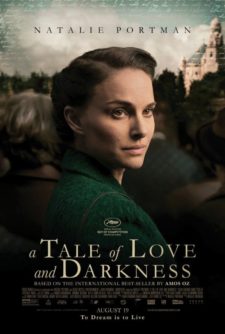
A TALE OF LOVE AND DARKNESS
A troubled mother-son portrait in fragmented, disturbing vignettes.
Should You Watch It?
A Tale of Love and Darkness offers intimate glimpses into a mother’s influence on her son and the struggles of Israel after World War II. Amos is fascinated by Fania’s stories and moral lessons, while the family around them struggles with disappointment, violence, and deepening depression.
The film’s two-star quality rating matters here. Natalie Portman’s writing and directing provide interesting vignettes, and the performances are generally good, but the movie lacks a cohesive story or a logical sequence explaining Fania’s depression. Its disturbing content also includes startling violence, suicide, self-punishment, sexual references, smoking, and wartime trauma.
Adults who are curious about the film’s historical and personal perspective should watch it at home, where they can pause or turn away; families with children or young teens should choose something else.
The Story
NO SPOILERS — WE KEEP THE SURPRISESFania, raised in an upper-class family in Poland, once dreamed of marrying a handsome man from the novels she read. Instead, she builds a life with Arieh, a struggling Jewish author, in Jerusalem during the violence surrounding Israel’s independence.
Their son Amos absorbs Fania’s stories and moral tales while watching his parents face poverty, war, family pressure, and emotional suffering. As the danger around them grows, Fania’s depression deepens, leaving Amos unable to save her.
Is It Any Good?
Two stars means this film has worthwhile material but does not fully come together. Its vignettes offer interesting insight into Israel after World War II, and the performances are generally good. Stories Fania tells Amos become vivid imagined sequences, shifting from dull cinematography into worlds of vibrant color.
But the movie lacks a cohesive story and a logical sequence explaining Fania’s deepening depression. Some humor may be lost on viewers unfamiliar with Israeli or Polish tradition. Portman’s performance lacks luster, creating a thin, mysterious cloud over the film.
The Worldview
The film presents a light moral worldview centered on a Jewish woman’s growing depression and its effect on her young son. Fania teaches Amos moral lessons, and her stories explore suicide, sexual slavery, and including people whom society teaches us to hate. A Christian monk appears briefly, while antisemitic sentiment is expressed by Arabs and other countries.
Although the setting is Israel, the Jewish religion is not addressed beyond scenes of Jews being slaughtered and persecuted by Arabs. The film’s personal focus is Fania’s depression and Amos’s effort to understand her, but it does not provide a clear explanation for her decline or a religious answer to her suffering.
The story’s central longing is for love, understanding, and relief from emotional darkness. Scripture offers this assurance: “The LORD is near to the brokenhearted and saves the crushed in spirit” (Psalm 34:18).
The Content Guide
The specifics — spoilers included by nature — so you can judge for your own family.
Content Summary
Light moral worldview about a Jewish woman’s growing depression and its effect on her young son includes scenes where mother teaches moral lessons to her son, plus a Christian monk is shown in one scene, and there’s some Anti-Semitic sentiment expressed by Arabs and other countries; strong, sometimes disturbing violence includes character commits suicide by burning in a barn, child hit by a playground swing, bombs can be heard going off in the distance, historical footage shows injured or dead people when Israel was bombed in 1947, a woman hits herself as punishment, a boy hits himself as punishment, boys bully another boy in the school yard and shove him around, pigeon wounded by a gunshot, boy shot dead by a sniper, woman shot dead by a sniper, soldier uses his pistol to kill Jews, and then it’s implied he kills himself; some brief sexual content includes a woman is referred to as a “whore” and it’s implied men are selling women for sex in one scene; natural upper male nudity during a bath; one scene shows drinking wine at dinner; a few scenes depict smoking; and, a mother scolds her daughter for not marrying into a wealthy family, man talks about “betting” a woman during a poker game, a married man sees another woman secretly in one scene.
Talk About It
Questions for the drive home, the dinner table, or the youth group.
Amos learns moral lessons through his mother’s stories. What makes a moral lesson wise, and how can adults model what they teach?
Deuteronomy 6:6–7 · James 1:22Fania is deeply affected by family expectations and disappointment. How should families respond when someone is struggling emotionally?
Galatians 6:2 · Psalm 34:18The film depicts violence against civilians and people living through war. What does Scripture call us to do when we encounter suffering and injustice?
Micah 6:8 · Romans 12:15The story includes people being taught to hate others. How does Jesus’ command to love our enemies challenge that way of thinking?
Matthew 5:43–48The Final Word
A Tale of Love and Darkness offers personal insight and good performances, but its fragmented structure and disturbing content make it unsuitable for children and young teens. Watch it at home only if you are an adult prepared for its difficult material. WAIT FOR HOME — ADULTS ONLY. For a gentler family night, see.