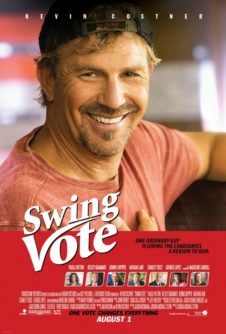
SWING VOTE
A funny political circus with adult-only language and moral compromises.
Should You Watch It?
Swing Vote is an entertaining political comedy with an exceptional cast led by Kevin Costner. It brings fun and smiles while making a worthwhile point: Americans should participate in the political process. It also skewers both Republican and Democratic candidates, rather than simply targeting one side.
The cost is substantial. The movie contains much foul language, frequent drinking by its alcoholic main character, and a major lie involving voter fraud. The characters repeatedly discuss keeping the truth secret, and the film presents that deception as acceptable. The story also has plot holes and remains mostly predictable.
Watch it only if you are an adult who can handle those concerns and wants a popcorn movie that may prompt political discussion. For family viewing, choose something else.
The Story
NO SPOILERS — WE KEEP THE SURPRISESBud is an alcoholic father who has lost his job and is largely cared for by his politically interested 12-year-old daughter, Molly. When Bud fails to vote, circumstances surrounding Molly’s attempt to vote for him create an extraordinary problem with the ballot.
The election becomes a complete tie, leaving Bud’s vote to decide the result. Both presidential candidates descend on Bud and his small town for a ten-day political circus.
Is It Any Good?
Three stars means Swing Vote is entertaining and enjoyable, though limited by plot problems and predictability. Kevin Costner leads an exceptional cast that brings fun and smiles to the movie.
The political comedy works best when both candidates are equally skewered and their morally questionable campaign managers drown in their own spin doctoring. The basic storyline makes suspension of disbelief difficult, especially because of questions about how Bud’s vote is handled. As a movie to discuss politics afterward, it has value; as a film offering something new about the political process, it does not deliver.
The Worldview
The film presents civic participation as important and treats responsibility as a central moral concern. Bud struggles with alcoholism and with both civic and personal responsibility. The candidates are portrayed as men with integrity and vision, while their campaign managers are morally questionable.
The movie also treats deception as an acceptable solution to a serious problem. Bud and Molly agree to lie about who actually attempted to cast the ballot, and the secret remains hidden. This lie leads to voter fraud, while other characters also participate in efforts to fool Child Protective Services.
Politically, the film gives attention to poverty and the working poor. It also includes liberal, politically correct sentiments about the President of the United States needing to address those problems. The movie’s call to civic involvement has merit, but its treatment of lying under oath departs sharply from a biblical view of truth: “Lying lips are an abomination to the LORD” (Proverbs 12:22).
The Content Guide
The specifics — spoilers included by nature — so you can judge for your own family.
Content Summary
Strong moral worldview as character struggles with alcoholism and responsibility both civic and personal, but mitigated by one major lie leading to voter fraud, some miscellaneous problems, and by some liberal, politically correct sentiments about the President of the United States needing to do something about poverty and the working poor; 30 obscenities and seven profanities, though daughter tells father not to use Jesus as a cuss word; no violence; no sexual content; no nudity; much drinking, main character is alcoholic; no smoking; and, lying under oath, major lie solves major plot problem, man and daughter try to fool Child Protective Services, and voter fraud.
Talk About It
Questions for the drive home, the dinner table, or the youth group.
The film argues that citizens should participate in the political process. What responsibilities do Christians have toward their government and community?
Romans 13:1–7 · 1 Peter 2:13–17Bud and Molly choose to hide the truth about the ballot. Why is a lie still wrong when someone believes it will solve a larger problem?
Proverbs 12:22 · Ephesians 4:25Bud’s alcoholism affects his family and his responsibilities. What kinds of help, honesty, and accountability are needed when someone’s choices harm others?
Galatians 6:1–2 · James 5:16The candidates focus on poverty and the working poor. What does Scripture require of leaders and ordinary citizens toward people in need?
Micah 6:8 · James 2:14–17The Final Word
Swing Vote offers an entertaining cast, a useful political discussion starter, and a few smiles. But its heavy language, drinking, and approval of a major lie make it unsuitable for children and young teens. For discerning adults, the answer is WORTH THE TRIP — ADULTS ONLY. For a family-friendly alternative, see.