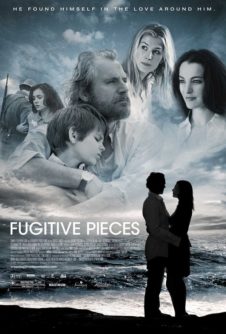
FUGITIVE PIECES
Poetic Holocaust drama with real emotional power—for adults only.
Should You Watch It?
FUGITIVE PIECES is a poetic, emotional drama about Holocaust survival, familial love, memory, and the search for hope. Its strongest material is deeply humane: Athos sacrifices to raise Jakob, and his gentleness toward the troubled boy is tender. The love between them gives the film its emotional center.
The film also leaves a significant spiritual absence. Against the backdrop of the Holocaust, Jakob and the other main characters do not turn toward God or visibly wrestle with faith. Instead, the movie presents love for other people as sacred and offers a humanistic, Romantic answer to suffering.
The R rating is well deserved. Two sex scenes are graphic and erotic, with upper female nudity and couples in bed together. If you are an adult who can engage those concerns thoughtfully, it is worth seeing; otherwise, choose something else.
The Story
NO SPOILERS — WE KEEP THE SURPRISESJakob is a Jewish Polish boy who escapes the Nazis after his father is killed and his mother and sister are taken away. Athos, a Greek archaeologist, discovers him, adopts him, and raises him as his own son.
As Jakob grows up, haunting memories of the war shape his quiet, reclusive life. The story moves backward and forward through his struggle to overcome the past, find meaning, and begin to hope again.
Is It Any Good?
Three stars means this is a well-made, emotionally affecting film with notable artistic strengths, though its slow pace keeps it from being fully satisfying.
FUGITIVE PIECES is delicately and artfully crafted, with eloquent characters and lyrical filmmaking. The cast gives wonderful performances, especially Stephen Dillane as Jakob, whose troubled character slowly comes out of his shell. The love between Athos and Jakob is powerful, and the film’s music and production elements are understated.
Its pacing is slow, and the backward-and-forward structure can require patience. Still, the film’s emotional performances and tender treatment of family love give it real value.
The Worldview
FUGITIVE PIECES presents a light Romantic worldview with light humanist elements. The film’s central moral strength is its belief in familial love and adoption. Athos makes sacrifices to raise Jakob, and his gentleness with the troubled boy becomes a picture of love’s healing power.
Yet the film’s main characters, most of whom are Jewish, show no signs of faith in God. Jakob struggles with the horrors of his past without calling to God, and his ultimate salvation is humanistic. Rather than connecting Jakob to the faith of the family he lost, the story elevates love for other people to the sacred.
The film’s longing for healing and connection is understandable, but Scripture directs broken people beyond human love to God’s nearness: “The LORD is near to the brokenhearted and saves the crushed in spirit” (Psalm 34:18).
The Content Guide
The specifics — spoilers included by nature — so you can judge for your own family.
Content Summary
Light Romantic worldview with light humanist elements but also some moral themes about the positive qualities of family love and adoption; three mild obscenities; light violent content where Nazi soldier kills a man off screen and Nazis take boy’s mother and sister away; two depicted sex scenes include a fornication scene and a married sex scene; upper female nudity and scenes with couples in bed together; use of wine; smoking; and, wife abandons husband who can’t let go of troubled past as a Jewish boy living under Hitler’s National Socialist tyranny.
Talk About It
Questions for the drive home, the dinner table, or the youth group.
Athos adopts Jakob and raises him with gentleness and sacrifice. What makes love of family more than a feeling?
1 Corinthians 13:4–7 · James 1:27Jakob tries to overcome memories of suffering without turning toward God. Where can someone bring grief that other people cannot fully carry?
Psalm 34:18 · 1 Peter 5:7The film treats love for other people as sacred. How is human love a gift from God, and where can it never replace Him?
1 John 4:7–12 · Matthew 22:37–39Jakob searches for meaning and hope after terrible loss. What kind of hope does Scripture offer to people who are suffering?
Romans 5:3–5 · Revelation 21:4The Final Word
FUGITIVE PIECES is beautifully acted and tender in its portrayal of adoption and family love, but its spiritual emptiness and graphic sexual content make it unsuitable for children and young teens. For discerning adults, it is WORTH THE TRIP — ADULTS ONLY. For other family viewing, see.