
LAST DAYS
A missionary's fatal zeal, beautifully filmed, deliberately left unresolved.
Should You See It?
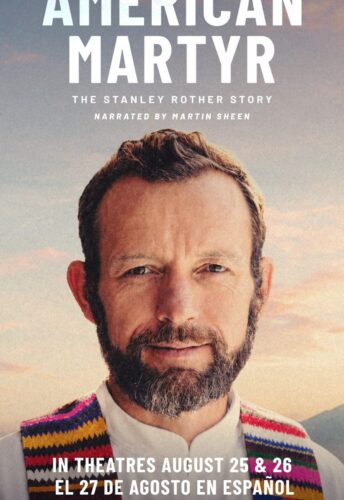
This is a hard film to rate simply, because it's trying to do a hard thing: tell the true story of John Chau, the missionary killed attempting to reach North Sentinel Island's isolated Sentinelese people, without flattening him into either a saint or a fool. It largely succeeds. The craft is real — strong performances, careful direction, a story told with patience.
Where it gets uncomfortable is in the question it keeps circling: is John driven by love for the lost, or by a need for his own life to mean something? The film refuses to answer for you, and even John's fellow missionaries doubt his choice. That honesty is worth something. So is its clear respect for prayer, Scripture, and the missionary call itself.
But this isn't family viewing. Seven obscenities, a slightly explicit scene, and real violence put it firmly in adult territory. If you can sit with moral ambiguity and want a serious conversation afterward, this delivers. If you need your movies to resolve cleanly, it won't.
The Story
NO SPOILERS — WE KEEP THE SURPRISESThree years before his final journey, John Chau is a college graduate torn between the medical career his father wants and a lifelong dream of missionary work. He chooses medicine, then abandons it. His first mission takes him to Kurdistan, where two seasoned missionaries working in the world's hardest fields challenge him to stop settling for easy ground. John takes the dare seriously — and sets his sights on the most unreached place he can find: a forbidden island near India, home to a people who have never heard the Gospel, and who kill outsiders on sight.
Is It Any Good?
Three stars means this is a genuinely well-made film with a real flaw at its center. The direction is confident, the cinematography striking, and the cast — including Sky Yang in the lead — tells the story with skill and restraint. It earns its praise as filmmaking.
The flaw is thematic, not technical: the movie is unclear whether John is a hero or a cautionary tale. Even his own missionary mentors doubt his choice, and the film seems to suggest his zeal may be more about his need for significance than a pure desire to reach the lost. That ambiguity is likely intentional, and it's honest — but it also means the film asks more questions than it answers.
The Worldview
This film takes Christian faith seriously in a way few mainstream releases do. Characters return again and again to Scripture and prayer. Missionary work is treated as a high and worthy calling, not a punchline. John's willingness to keep loving and pursuing people who tried to kill him echoes Christ's hardest command — to love your enemies.
But the film also complicates its own hero. It raises a real and uncomfortable question: was John spreading the Gospel out of love for the Sentinelese, or out of a need to make his own life matter? The movie doesn't resolve this, and that ambiguity is the reason for real caution here, not just the content. Separately, one supporting character, a lesbian, is portrayed as resentful that Christianity "stifles" her sexuality — a single moment worth knowing about going in, presented as the film's counterpoint rather than its center.
Scripture offers the test this film only gestures toward: motive matters as much as mission. "If I have not love, I am nothing" (1 Corinthians 13:2). A man can travel to the ends of the earth for the Gospel and still need to ask himself whose glory he's really seeking. That's the question this film leaves hanging — and it's a good one for any believer to sit with.
The Content Guide
The specifics — spoilers included by nature — so you can judge for your own family.
Strong Christian, biblical worldview as characters live the call of the missionary life and prioritize spreading the word of the Gospel with the world, characters constantly refer back to the Bible and go to the Lord in prayer for guidance, but it’s unclear whether the lead male character is a hero, plus a lesbian character is upset about Christians stifling her perverted sexuality
Seven obscenities (including an “f” word and five “s” words)
Moderate violence as the main character is shown being attacked by spear-wielding indigenous people, which pierce him and put his life in jeopardy
One example of a slightly explicit sex scene, though the characters do not actually end up having sex, one character is also a homosexual who is upset at religion for stifling her sexuality
No explicit nudity, but multiple instances of upper male nudity, and one instance of a man shown wearing nothing but underwear
Social drinking throughout the movie, though the main character does not drink
Multiple characters smoke cigarettes throughout the movie, but there is no drug content;
Moderate miscellaneous immorality includes lying, sexism, fraud, dysfunctional family, and hypocrisy.
Talk About It
Questions for the drive home, the dinner table, or the youth group.
The film never fully resolves whether John's mission came from love for the lost or a need for his life to feel meaningful. How do you tell the difference in your own motives, even in good things you do?
1 Corinthians 13:1–3John's mentors, other missionaries who've served in hard places, doubt his specific plan even while they share his calling. What's the difference between godly caution and a lack of faith?
Proverbs 15:22 · Luke 14:28John keeps returning to people who tried to kill him. Where do you see the command to love your enemies as costly rather than comfortable?
Matthew 5:44The film depicts a character who resents Christianity for "stifling" her identity. How would you want to respond, in truth and in love, to someone who feels that way?
Ephesians 4:15 · John 8:32The Final Word
This is a serious, well-made film about a real man's costly conviction — and it asks a question it's brave enough not to answer neatly. That honesty, paired with real content concerns, is why our answer is worth the trip — adults only. If you're planning family movie night instead, start with our latest family-friendly picks.