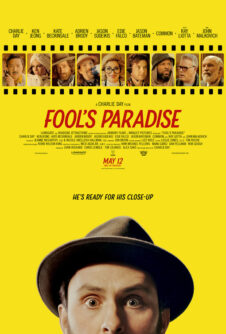
FOOL’S PARADISE
A satire that becomes the thing it mocks.
Should You Watch It?
Here is the decision, plainly. Charlie Day set out to satirize the entertainment industry — its hunger for fame, money, and pleasure — and there are moments where the film does point at real pitfalls. But a satire only works when it condemns what it exposes, and this one never does.
Instead it revels in the immorality it claims to attack. There's abundant foul language, constant drinking and drunkenness, a cocaine scene, and strong sexual content threaded throughout. And the reward for sitting through it all is a movie that gets less funny the longer it runs.
So the practical answer is no. Whether you're choosing for your family or for yourself, this one isn't worth your time or your conscience. Skip it.
The Story
NO SPOILERS — WE KEEP THE SURPRISESA failing Hollywood publicist stumbles onto the opportunity of a lifetime: a man, fresh out of a mental institution, who happens to look exactly like a reclusive method actor who never leaves his trailer.
The two team up and race toward fame and fortune, doing whatever it takes to make it. But the party scene has a way of collecting its debts — and a serious injury eventually forces a reckoning with what actually matters.
Is It Any Good?
Two stars, and here is what they mean. The premise has satirical teeth, and Day occasionally lands a real observation about the emptiness of celebrity culture. But the film never becomes more than a collection of half-baked comedy sketches forced together into something movie-shaped.
The performances are over-the-top, the pacing drags, and the jokes wear thin as the runtime stretches on. Worse, the satire collapses in on itself: instead of skewering self-gratification and greed, the movie ends up promoting the very things it set out to mock. A fool's paradise indeed — the further it goes, the less it has to say.
The Worldview
The film wants to be a moral critique of Hollywood, and in flashes it gestures at genuine truth: fame corrodes, greed hollows people out, and the pursuit of personal pleasure with disregard for others carries a cost. Scripture would agree with all of that.
But the movie can't hold its own line. It makes light of the immorality it claims to attack, showing self-gratification, drunkenness, drug use, and sexual sin in a flippant way while never truly condemning any of it. By the end, the satire has curdled into celebration — the film glorifies exactly what it pretended to expose. That's what earns it the label of excessive and unacceptable: not merely that the content is heavy, but that the story refuses to mean anything by it.
Beneath the noise sits a hunger the film can name but never satisfy — the ache for something more than fame and pleasure can give. Jesus put the question the movie never answers: "For what will it profit a man if he gains the whole world and forfeits his soul?" (Matthew 16:26).
The Content Guide
The specifics — spoilers included by nature — so you can judge for your own family.
Dominant Worldview and Other Worldview Content/Elements
Mixed pagan worldview that does show some of the pitfalls of fame and immorality that often comes with fame and for those who pursue their personal pleasure with disregard for anyone else, but it often makes light of the immorality that it attacks
Foul Language
At least 40 obscenities (including many “f” words) and several strong profanities
Violence
Some comedic violence, characters go to jail, character falls from a building and goes to the hospital, a character beats up a photographer, and a man accidentally hangs himself
Sex
Strong sexual content overall includes a scene where a character hired for a pornographic movie watches a video with depicted fornication, characters shown lying in bed after implied fornication, some crass sexual dialogue, including references to death by autoeroticism
Nudity
No explicit nudity, but a woman drops her robe in front of main character, and her shoulder is seen, and a woman’s back is shown during a sex scene
Alcohol Use
Constant drinking throughout at parties, with some scenes of drunkenness
Smoking and/or Drug Use and Abuse
Brief cigarette smoking, and characters snort cocaine in one scene
Miscellaneous Immorality
The movie ends up glorifying the immorality it tries to satirize.
Talk About It
Questions for the drive home, the dinner table, or the youth group.
The characters chase fame and fortune and are willing to do whatever it takes. What does Scripture say the love of money actually does to a person?
1 Timothy 6:9–10 · Ecclesiastes 5:10This movie tries to satirize immorality but ends up celebrating it. Where's the line between exposing sin and reveling in it, and how do we tell the difference in the stories we consume?
Ephesians 5:11–12 · Philippians 4:8The story pushes its characters to a crisis before they'll reflect on what matters. Why does it so often take a hard fall to get our attention, and what does true repentance look like afterward?
Luke 15:17–20 · 2 Corinthians 7:10Jesus asked what it profits a man to gain the world and lose his soul. What does the world offer that looks like paradise but turns out to be a fool's?
Matthew 16:26 · Matthew 7:24–27The Final Word
Charlie Day aimed at Hollywood's emptiness and ended up embodying it — a shapeless string of sketches that glorifies the very sins it pretends to mock, wrapped in heavy language, drunkenness, drugs, and sexual content. There's nothing here worth your evening. Our answer, the same one we opened with: skip it. Looking for something better for the whole household? Try our latest family-friendly picks.