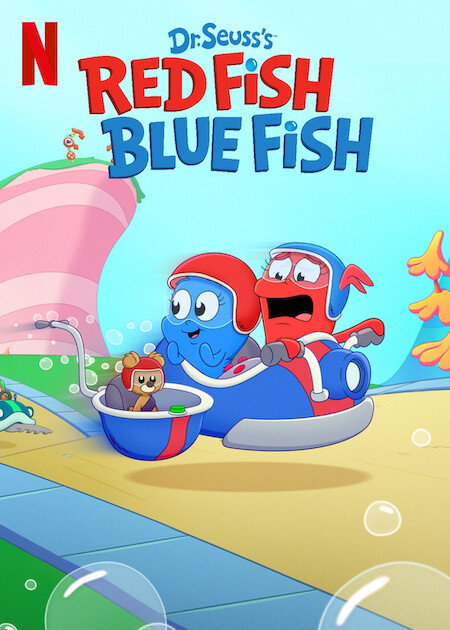
DR. SUESS’S RED FISH, BLUE FISH: Episodes 3.1-3.3
A splashy undersea cartoon where opposites collide!
Should You See It?
Yes. Red and Blue embark on fun adventures to discuss opposites and overcome obstacles, showcasing friendship and teamwork for young children. They take on responsibilities such as babysitting for their friend Whale and taking Blue’s little cousin to the zoo. These storylines teach young children the importance of staying with the group and playing gently with others.
However, the show subtly encourages bad behavior when characters do not face consequences for their actions. There's light cartoon violence but nothing too scary. Children can watch on their own but very young chlidren should watch with an adult nearby. This one offers the perfect oppotunty to talk with littles about knowing right from wrong, along with opposites like high and low.
The Story
NO SPOILERS — WE KEEP THE SURPRISESRed Fish and Blue Fish explore their under-the-sea world as they discover opposites like fear and bravery, up and down, and rough and gentle. In episode one, they rescue a cat from a tree, bake a pie, and visit the zoo. In episode two, they perform in a circus, go camping, and Blue cares for Red when he gets sick. In episode three, they babysit their friend Whale, visit the doctor, and conquer an obstacle course.
Is It Any Good?
Four stars means good educational content, despite some light cartoon violence. Each episode is well structured, containing three mini-stories with complete arcs that illustrate the differences between the opposites discussed. Characters rarely talk, mainly acting out the opposites covered in each episode.
The script entertains with clever rhymes, and the episodes offer a nostalgic revival of beloved Dr. Seuss characters in new and fun ways. Minor cartoon violence occurs when Red falls out of a tree, and a crab fights Red and Blue for some apples. Otherwise, these episodes are light and make learning fun.
The Worldview
This show primarily promotes a moral worldview that stresses friendship and teamwork, showcasing Red Fish and Blue Fish as they work together to care for others and overcome fear. It promotes generosity, featuring neighbors who bring gift baskets to their sick friend and Blue, who selflessly takes care of Red. They confront their fears together, embodying the support that God calls us to exhibit in Philippians 4. Red and Blue are silly fish who bump into objects, so there's some slapstick violence.
The Content Guide
The specifics — spoilers included by nature — so you can judge for your own family.
Moral worldview that stresses friendship and teamwork, showcasing characters work together to care for others and overcome fear. It promotes generosity, featuring neighbors who bring gift baskets to their sick friend and a character, who selflessly takes care of the other. They confront their fears together
No foul language
Light cartoon violence including Blue falling out of a tree, a hermit crab fighting with them over some apples, Red and Blue get shocked by a jellyfish and a lion being shot at with a tennis-ball arrow
No nudity but a starfish takes his shirt off and uses it as a parachute
No alcohol use
No smoking or drug use;
A crab steals their apples and they fight over it. Blue uses puppy-dog eyes to get whatever they want . Baby Whale breaks her toys and destroys the play room but doesn't get disciplined for it. The Starfish cheat at the obstacle course but lose, showing that cheating doesn't work.
Talk About It
Questions for the drive home, the dinner table, or the youth group.
In episode 2, Blue takes care of Red when he is sick. How can we care for the sick in the selfless manner that God has called us to? Matthew 25:36
The Final Word
This one makes learning fun with well-structured stories that teach opposites while promoting friendship, teamwork, generosity, and caring for others. Clever rhymes and nostalgic Dr. Seuss characters add charm. Light slapstick and cartoon violence occur, but nothing frightening. Overall, it’s a fun, educational choice for young children.